Does gravity affect nuclear reactions?

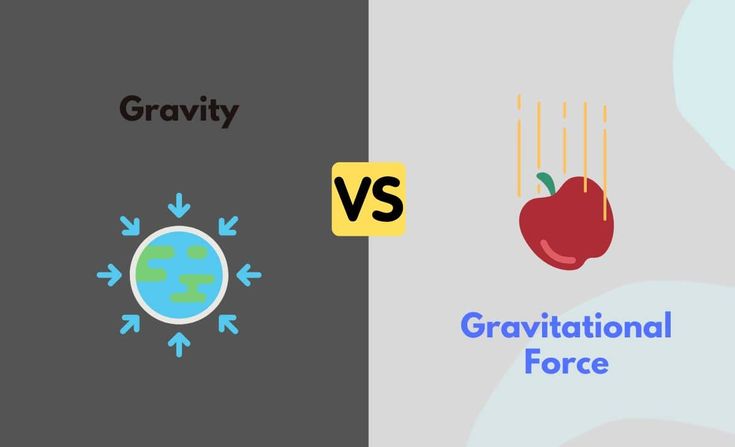
Definition of Gravity and Nuclear Reactions Gravity is a universal force that influences the motion of planets, stars, and galaxies, shaping the large-scale structure of the universe. Nuclear reactions, on the other hand, involve transformations within atomic nuclei, often accompanied by the release or absorption of energy. These reactions include processes such as nuclear fusion, […]

Read More →

How would you describe the three subatomic particles?

Definition of Subatomic Particles Subatomic particles are the fundamental constituents that compose all matter in the universe. The three primary types-protons, neutrons, and electrons-each possess distinct properties and roles that collectively define the structure and behavior of atoms. Understanding these particles is essential to grasping the nature of matter and the forces that govern it. […]

Read More →

I’m 14. How can I learn nuclear engineering?

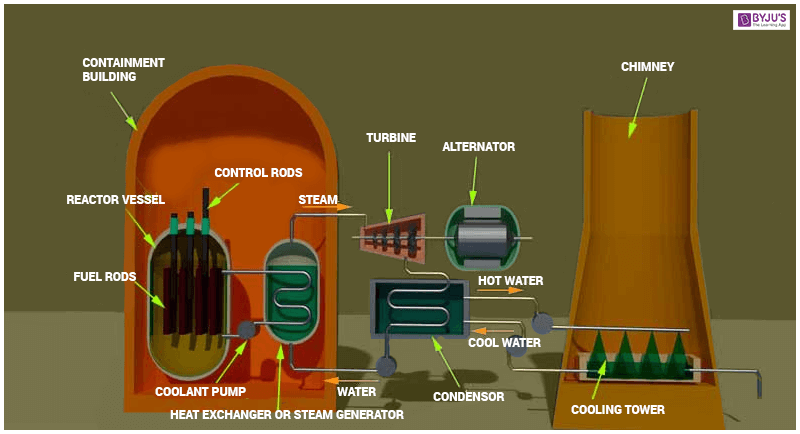
Definition of Nuclear Engineering Nuclear engineering is a specialized branch of engineering focused on the design, development, and operation of nuclear reactors, alongside the safe management of radioactive substances. This field integrates advanced scientific principles with innovative technology to harness nuclear reactions for energy production and other applications. Scope: Encompasses reactor design, radiation safety, nuclear […]

Read More →

How was the strong nuclear force discovered?

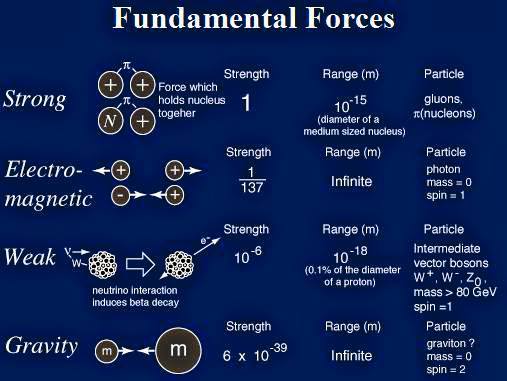
Definition of the Strong Nuclear Force The strong nuclear force is a fundamental interaction responsible for binding protons and neutrons within an atomic nucleus. It overcomes the electromagnetic repulsion between positively charged protons, ensuring the stability of the nucleus. This force operates at extremely short ranges, typically on the order of femtometers (10-15 meters), and […]

Read More →

Does nuclear physics come under classical physics?

Definition of Classical and Nuclear Physics Classical physics is a branch of physics that encompasses the theories and principles developed before the 20th century. It primarily deals with macroscopic phenomena observable in everyday life, such as motion, forces, and energy, using continuous and deterministic models. In contrast, nuclear physics is a specialized field that investigates […]

Read More →

GLUONS – Theo-Astro Physics?

Definition of Gluons Gluons are fundamental particles that act as the force carriers responsible for binding quarks together within atomic nuclei. They operate within the framework of quantum chromodynamics (QCD), the theory describing the strong interaction, one of the four fundamental forces of nature. Unlike other force carriers, gluons are unique in their ability to […]

Read More →

Are microwave ovens particle accelerators?

Definition and Overview Microwave ovens and particle accelerators are two distinct technologies that both utilize electromagnetic principles but serve vastly different functions. Microwave ovens are common kitchen appliances designed for rapid food heating using microwave radiation. Particle accelerators, on the other hand, are sophisticated scientific instruments used to propel charged particles to near-light speeds for […]

Read More →

What term replaced a barn in nuclear physics?

Definition of the Barn and Its Role in Nuclear Physics In nuclear physics, the term “barn” historically referred to a unit of area used to quantify the effective cross-sectional size of nuclear interactions, especially in particle scattering experiments. It was defined as 10-28 square meters and served as a convenient measure to express the likelihood […]

Read More →