Physicists Protest: Austria’s Flip-Flop on CERN Sparks Outcry

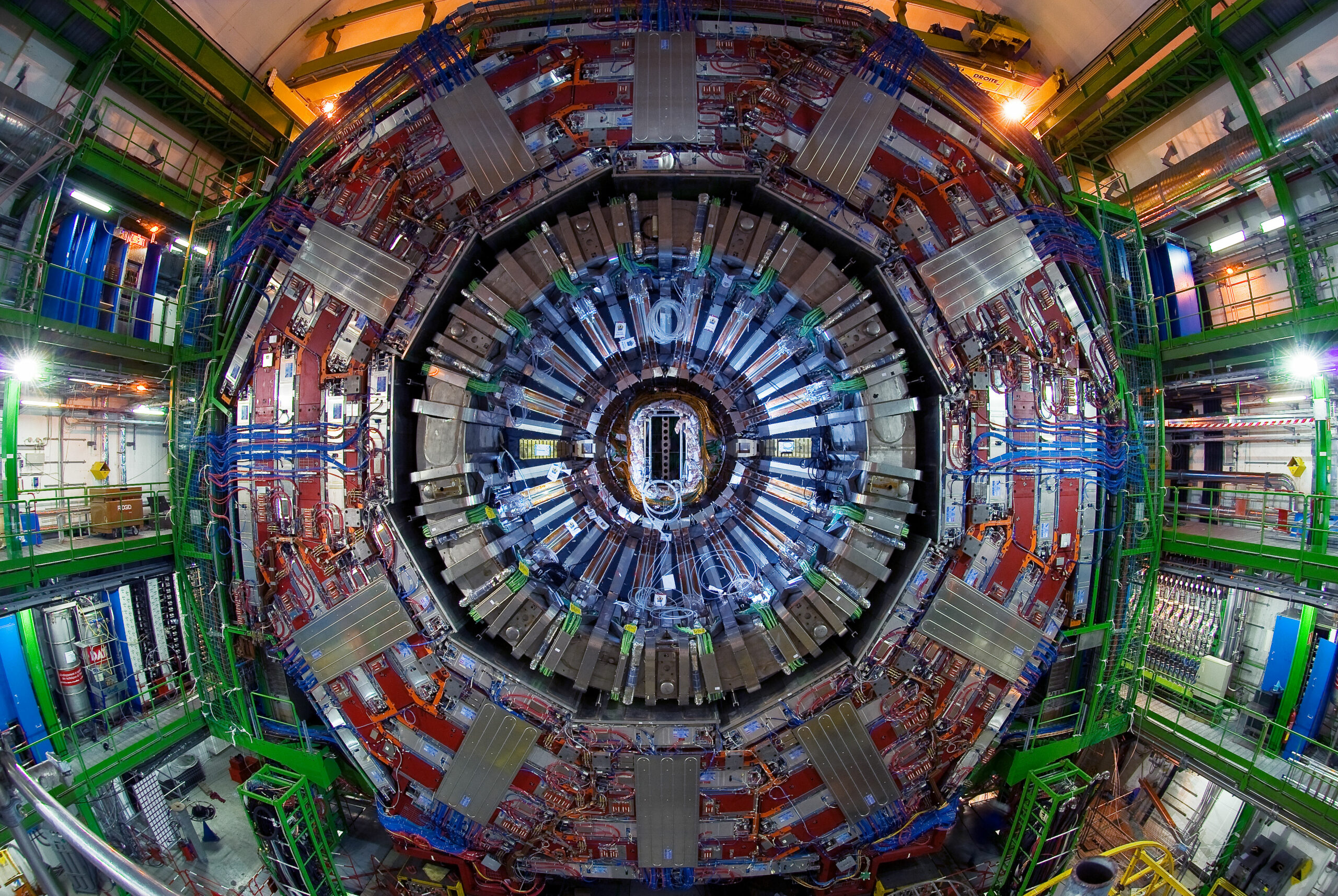
Overview of Austria’s Involvement with CERN The intersection of scientific progress and governmental policy often leads to significant consequences, as exemplified by Austria’s recent challenges regarding its participation in the European Organization for Nuclear Research (CERN). Historically, Austria has been a committed member of CERN, valuing its contributions to high-energy physics and the technological innovations […]

Read More →

Who are the most talented people at LLNL? Why?

Overview of Lawrence Livermore National Laboratory Lawrence Livermore National Laboratory (LLNL) is renowned as a hub of scientific excellence and innovation. It operates through a multidisciplinary framework, bringing together experts from various fields to address complex scientific and technological challenges. The laboratory’s team is composed of highly skilled professionals whose groundbreaking work significantly advances knowledge […]

Read More →

How do atomic and nuclear physics relate to each other?

Definition and Scope of Atomic and Nuclear Physics Atomic and nuclear physics are closely linked disciplines within modern physics, each focusing on different aspects of matter at the smallest scales. Atomic physics primarily investigates the structure and behavior of atoms, especially the dynamics of electrons surrounding the nucleus. In contrast, nuclear physics centers on the […]

Read More →

How to make sense of ‘elementary particles’?

Definition of Elementary Particles Elementary particles are the most fundamental units of matter, serving as the foundational components from which all physical substances arise. Unlike composite particles, these entities are not made up of smaller constituents; they exist in their simplest, indivisible form. The Standard Model of particle physics categorizes these particles into quarks, leptons, […]

Read More →

Does CERN really do time travel?

Overview of CERN and Its Scientific Mission The European Organization for Nuclear Research, widely known as CERN, stands at the forefront of scientific exploration, merging rigorous research with widespread public intrigue. As a premier institution dedicated to probing the fundamental building blocks of the universe, CERN holds a distinctive role in the field of particle […]

Read More →

What does the Large Hadron Collider do in layman’s terms?

Overview of the Large Hadron Collider The Large Hadron Collider (LHC) represents a pinnacle achievement in particle physics, designed to explore the universe at its most fundamental level. Situated beneath the Franco-Swiss border near Geneva, this massive particle accelerator functions as a gateway to the earliest moments of the cosmos. By accelerating protons to velocities […]

Read More →

CERN and Fermilab Face Off: Who Found It First?

Overview of CERN and Fermilab in Particle Physics Particle physics is a field marked by monumental experiments and transformative discoveries that deepen our understanding of the universe’s fundamental building blocks. Two of the most influential institutions in this domain are CERN (the European Organization for Nuclear Research) and Fermilab (Fermi National Accelerator Laboratory). Both have […]

Read More →

How do physicists identify which type of particle it is?

Overview of Particle Classification in Physics Identifying and categorizing particles in physics is a complex task that integrates theoretical models, experimental methods, and cutting-edge technology. This process is essential for understanding the fundamental components of matter and the forces governing their interactions. The following sections explore the various approaches and instruments physicists use to analyze […]

Read More →