
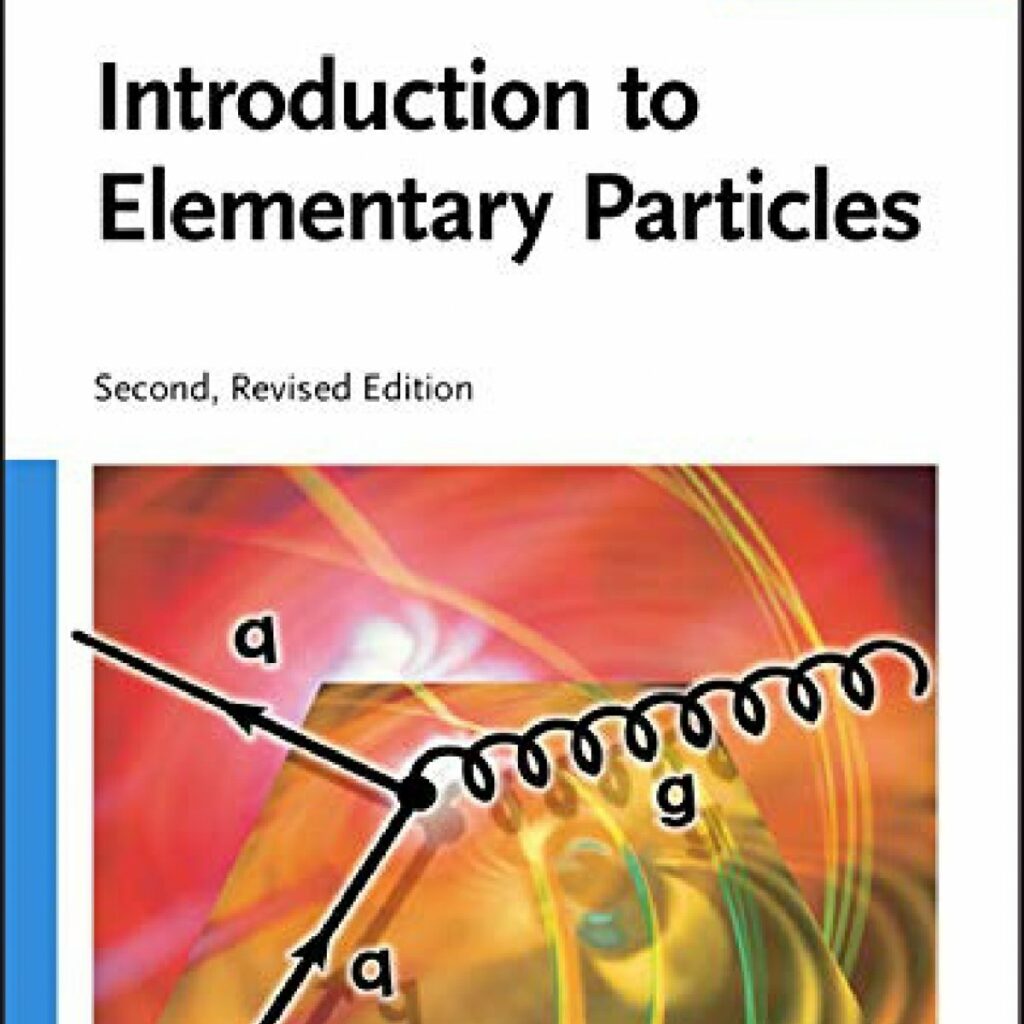
Short Answer
Definition of Elementary Particles
Elementary particles are the most fundamental units of matter, serving as the foundational components from which all physical substances arise. Unlike composite particles, these entities are not made up of smaller constituents; they exist in their simplest, indivisible form. The Standard Model of particle physics categorizes these particles into quarks, leptons, and gauge bosons, each playing a unique role in the structure and dynamics of the universe.
- Quarks:
Fundamental particles that combine to form protons and neutrons, the building blocks of atomic nuclei. - Leptons:
A family of particles including electrons and neutrinos, which do not participate in strong interactions but are essential to matter and radiation. - Gauge Bosons:
Force-carrying particles responsible for mediating the fundamental interactions between matter particles.
Classification and Characteristics
Elementary particles are broadly divided into two main groups based on their intrinsic spin and statistical behavior: fermions and bosons.
- Fermions:
These particles, which include quarks and leptons, have half-integer spin values (e.g., 1/2) and obey the Pauli exclusion principle. This principle prohibits identical fermions from occupying the same quantum state simultaneously, thereby giving rise to the structure and stability of matter. - Bosons:
Characterized by integer spin (e.g., 0, 1), bosons act as force carriers. Examples include photons, gluons, and W and Z bosons. Unlike fermions, bosons can occupy the same quantum state, enabling them to mediate forces effectively.
Fundamental Forces and Particle Interactions
Elementary particles interact through four fundamental forces, each mediated by specific bosons. These interactions govern the behavior and relationships of particles within the universe.
- Gravitational Force:
Although not yet experimentally confirmed, gravitons are hypothesized as the quantum carriers of gravity, influencing mass and spacetime curvature. - Electromagnetic Force:
Mediated by photons, this force acts between charged particles and is responsible for phenomena such as light, electricity, and magnetism. - Strong Nuclear Force:
Gluons transmit this force, which binds quarks together within protons and neutrons, and holds atomic nuclei intact. - Weak Nuclear Force:
Carried by W and Z bosons, this force governs processes like radioactive decay and neutrino interactions.
Experimental Exploration and Discoveries
Advancements in experimental physics, particularly through particle accelerators like the Large Hadron Collider (LHC), have been pivotal in probing the nature of elementary particles. By colliding particles at extremely high energies, scientists recreate conditions similar to those just after the Big Bang, enabling the detection of rare and previously unknown particles.
A landmark achievement was the 2012 discovery of the Higgs boson, which confirmed the existence of the Higgs field-a crucial element that imparts mass to other particles within the Standard Model. Despite such breakthroughs, many questions remain unanswered, motivating ongoing research to uncover new particles and phenomena beyond current theoretical frameworks.
Quantum Mechanics and Particle Behavior
The behavior of elementary particles is governed by the principles of quantum mechanics, which reveal a dual wave-particle nature. This duality challenges classical intuitions, as particles exhibit properties of both localized particles and delocalized waves.
Key quantum concepts include:
- Uncertainty Principle:
It is impossible to simultaneously know certain pairs of properties (like position and momentum) with arbitrary precision. - Superposition:
Particles can exist in multiple states or locations simultaneously until measured or observed.
These principles introduce fundamental limits to predictability and challenge deterministic views of the universe.
Philosophical Interpretations of Quantum Mechanics
The enigmatic nature of quantum phenomena has inspired various interpretations that attempt to explain the underlying reality:
- Copenhagen Interpretation:
Suggests that particles exist in probabilistic states and that measurement causes the collapse of the wavefunction, effectively determining the particle’s state. - Many-Worlds Interpretation:
Proposes that all possible outcomes of quantum events occur, each in a separate, branching universe, thereby eliminating wavefunction collapse.
These perspectives raise profound questions about the role of observation, consciousness, and the nature of reality itself.
Communicating the Complexity of Elementary Particles
Translating the intricate concepts of particle physics into accessible language is essential for fostering public understanding and interest. Analogies and visual models serve as valuable tools to bridge the gap between abstract theory and intuitive comprehension.
For example, leptons can be likened to elusive specters-intangible yet fundamental to the fabric of matter-while bosons act as messengers facilitating interactions. Such metaphors help demystify the subject without oversimplifying its scientific depth.
Significance and Impact
Understanding elementary particles is crucial not only for advancing fundamental physics but also for its broader implications in technology and philosophy. Insights into particle behavior underpin developments in medical imaging, electronics, and materials science. Moreover, exploring these particles deepens our grasp of the universe’s origins and the laws governing existence.
Embracing the mysteries and uncertainties inherent in particle physics encourages a spirit of inquiry and innovation, inspiring future generations to continue unraveling the cosmic tapestry, one fundamental particle at a time.
FAQ
What are elementary particles?
Elementary particles are the smallest known building blocks of matter and energy that cannot be broken down into smaller components.
How are elementary particles classified?
They are classified as fermions, which make up matter, and bosons, which mediate fundamental forces.
Why is the Higgs boson important?
It provides evidence for the Higgs field, which explains why particles have mass.
What role do particle accelerators play?
They simulate high-energy conditions to discover new particles and test theoretical physics models.
What are the fundamental forces that elementary particles interact through?
Gravitational, electromagnetic, strong nuclear, and weak nuclear forces.






Leave a Reply