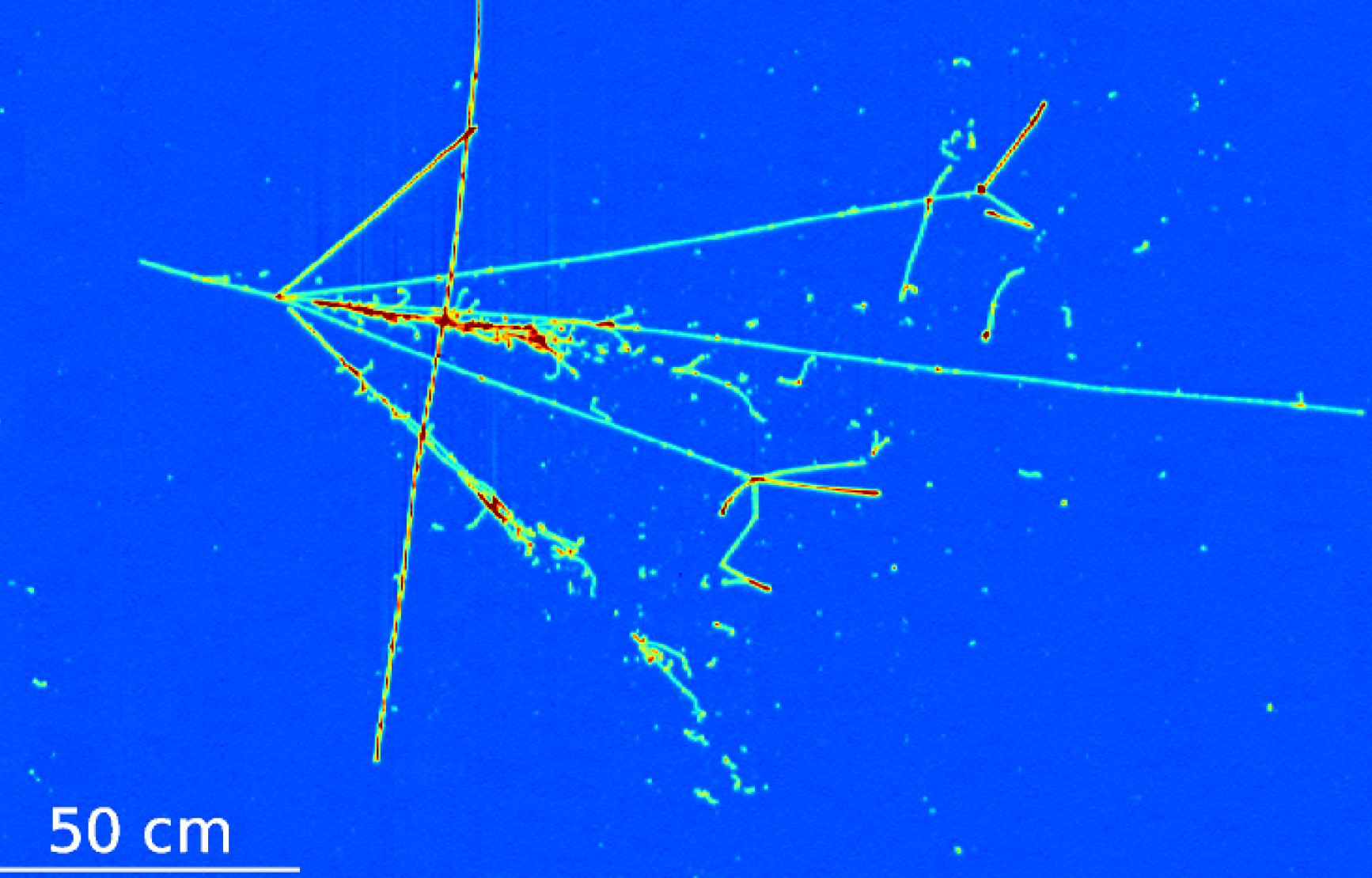
Why do nuclear reactions cause radiation?

Definition of Nuclear Reactions and Radiation Nuclear reactions are processes occurring within the atomic nucleus, where alterations in the arrangement or composition of protons and neutrons lead to the release or absorption of significant amounts of energy. These reactions often result in the emission of radiation, a phenomenon intrinsically linked to changes in nuclear stability. […]

Read More →

Are nuclear reactions part of ordinary chemical reactions?

Definition of Nuclear and Chemical Reactions Nuclear and chemical reactions represent two fundamentally different types of transformations within the physical sciences. Both involve changes in matter, but they operate through distinct mechanisms and produce vastly different outcomes. Understanding these processes requires recognizing the specific components involved and the nature of the changes they undergo. Chemical […]

Read More →

Is it even possible that there’s a « smallest particle »?

Definition of the Smallest Particle The concept of the “smallest particle” refers to the fundamental building blocks of matter-entities that cannot be divided into smaller components. This idea has evolved over centuries, encompassing both scientific and philosophical dimensions. At its core, it seeks to identify the ultimate constituents that form the universe’s material foundation. Fundamental […]

Read More →

CERN Smashes 7 TeV Barrier: Welcome to High-Energy History

Overview of CERN’s 7 TeV Proton Collisions In particle physics, landmark achievements often redefine our comprehension of the universe’s fundamental workings. A groundbreaking moment occurred in 2010 when CERN successfully accelerated and collided protons at an unprecedented energy of 7 teraelectronvolts (TeV). This milestone marked a transformative phase in high-energy physics, sparking widespread enthusiasm among […]

Read More →

Why do nuclear reactors glow blue when they’re underwater?

Definition of Cherenkov Radiation Cherenkov radiation is a distinctive blue glow emitted when charged particles travel through a transparent medium at speeds exceeding the speed of light in that medium. This phenomenon is commonly observed in nuclear reactors submerged in water, where it manifests as an ethereal blue luminescence. It arises from the interaction between […]

Read More →

Boom Science: How Nuclear Weapons Actually Work

Definition of Nuclear Weapons Nuclear weapons are among the most advanced and devastating technological inventions created by humanity, combining complex scientific principles with profound ethical challenges. These weapons derive their immense destructive power from nuclear reactions, specifically nuclear fission and fusion, which release vast amounts of energy by altering atomic nuclei. Understanding nuclear weapons involves […]

Read More →

What is the difference between gravity and the strong force?

Definition of Fundamental Forces The universe is governed by four fundamental interactions: gravitational, electromagnetic, weak nuclear, and strong nuclear forces. Among these, gravity and the strong nuclear force play crucial roles in shaping matter and the cosmos. Gravity influences large-scale structures such as planets and galaxies, while the strong force operates at the subatomic level, […]

Read More →

What is the concept of a strong force?

Definition of the Strong Force The strong force, also referred to as the strong nuclear force or strong interaction, is one of the four fundamental forces governing the universe, alongside gravity, electromagnetism, and the weak nuclear force. It is the essential force responsible for holding protons and neutrons tightly bound within an atom’s nucleus, counteracting […]

Read More →

What sub-atomic particle has no charge?

Definition of the Neutron The neutron is a fundamental subatomic particle found within the atomic nucleus, characterized by its lack of electric charge. It plays a crucial role in the structure and stability of atoms, complementing the positively charged proton. With a mass close to 1.675 × 10⁻²⁷ kilograms, neutrons contribute significantly to the overall […]

Read More →