When was CERN established

Definition and Historical Background of CERN The European Organization for Nuclear Research, commonly known as CERN, is a premier scientific institution dedicated to exploring the fundamental particles and forces that constitute the universe. Situated on the border between France and Switzerland near Geneva, CERN has become a global hub for high-energy physics research. Its foundation […]

Read More →

What is the most massive particle?

Understanding Mass in Particle Physics In the realm of particle physics, mass is a fundamental property that distinguishes elementary particles. These particles vary widely in mass, ranging from the nearly massless electron to much heavier particles such as the Higgs boson. The concept of “massive” in this context refers to particles with significant mass compared […]

Read More →

How important is classical mechanics for a particle physicist?

Definition of Classical Mechanics in Particle Physics Classical mechanics, often perceived as an antiquated branch of physics, actually serves as the essential groundwork for understanding the complex phenomena encountered in particle physics. It is the study of motion, forces, and energy in macroscopic systems, providing the fundamental principles that underpin more advanced theories in modern […]

Read More →

What are sub atomic particles?

Definition of Subatomic Particles Subatomic particles are the most basic constituents of matter, existing at scales smaller than atoms. They form the foundation of all physical substances and are essential to understanding the universe’s structure. These particles are not just components of atoms but also include a variety of entities governed by the principles of […]

Read More →

When does a nuclear reaction occur without a neutron?

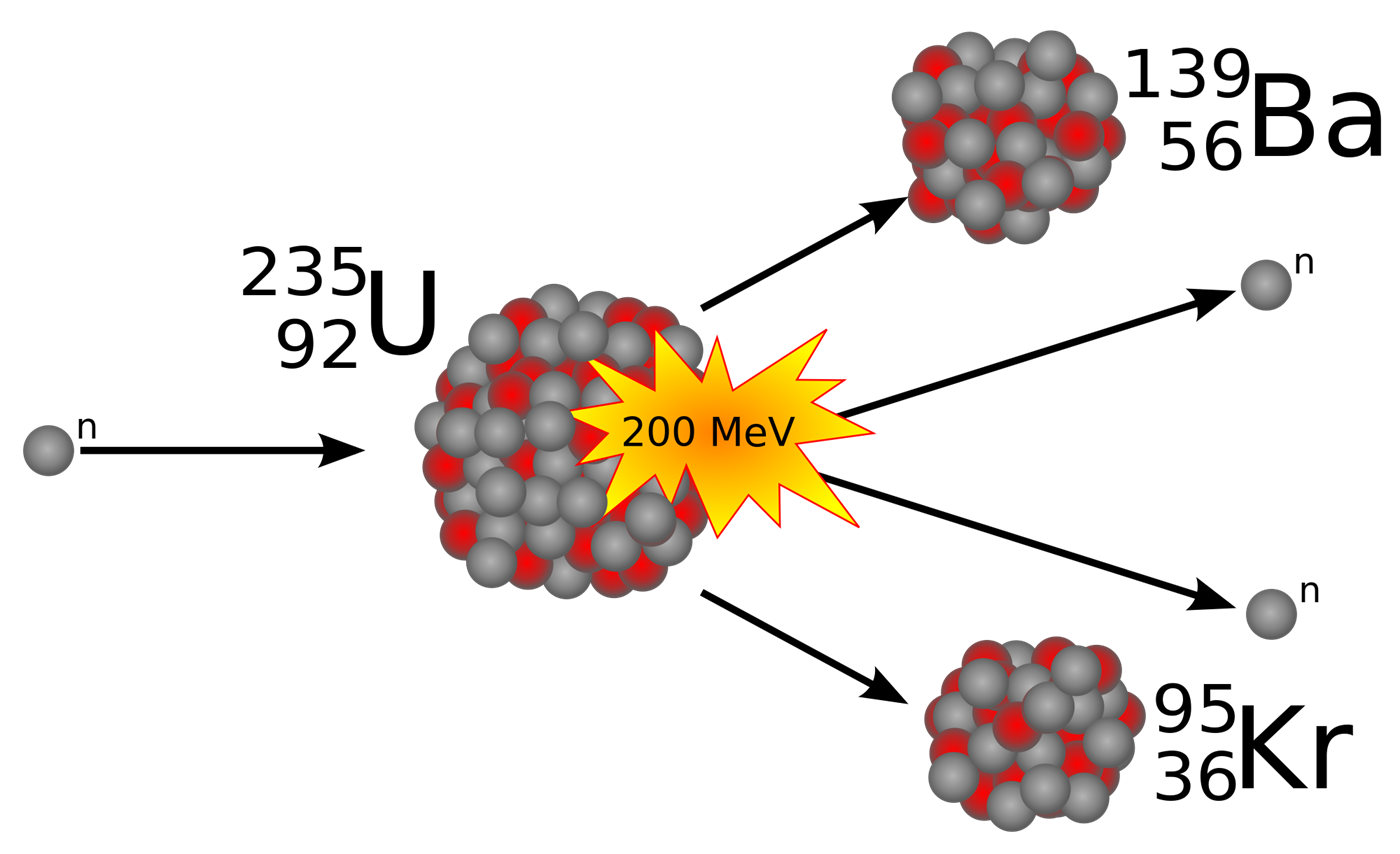
Definition of Nuclear Reactions Without Neutrons Nuclear reactions typically involve changes within atomic nuclei, often facilitated by neutrons. However, certain nuclear processes occur independently of neutron participation. These neutron-free nuclear reactions encompass transformations where protons, alpha particles, or other mechanisms drive the nuclear changes without requiring external neutrons. Understanding these reactions broadens the scope of […]

Read More →

How does the strong nuclear force work?

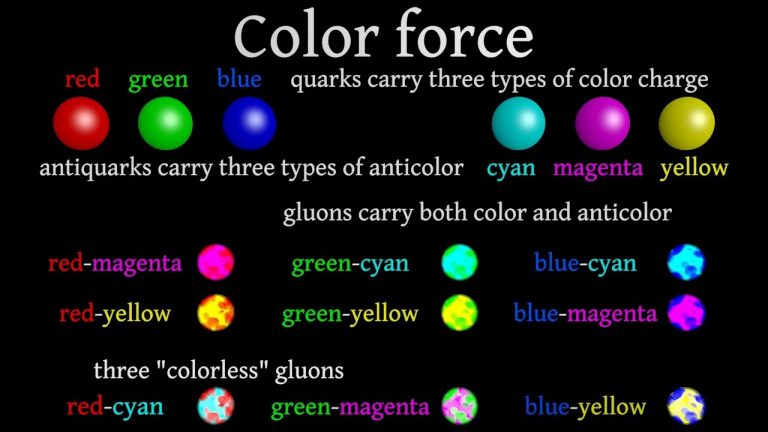
Definition of the Strong Nuclear Force The strong nuclear force, often referred to as the strong interaction or simply the strong force, is one of the four fundamental forces governing the universe, alongside gravity, electromagnetism, and the weak nuclear force. Its primary function is to hold protons and neutrons tightly together within the atomic nucleus, […]

Read More →

Chirality Turns Up in the Nucleus: Nuclear Physics Gets Twisted

Definition of Chirality in Nuclear Physics Chirality is a geometric characteristic describing objects or systems that cannot be superimposed onto their mirror images. While this concept is widely recognized in chemistry-particularly in organic molecules where left- and right-handed forms influence biochemical processes-its application extends intriguingly into nuclear physics. Within the atomic nucleus, chirality refers to […]

Read More →

What are the common example of nuclear force?

Definition of Nuclear Force The nuclear force, also known as the strong interaction or strong nuclear force, is a fundamental force in particle physics responsible for holding the atomic nucleus together. It acts as the powerful attraction that binds protons and neutrons-collectively called nucleons-within the nucleus, overcoming the natural electromagnetic repulsion between positively charged protons. […]

Read More →

Probing the Nucleus: How We Peek Inside the Atom’s Heart

Definition of the Atomic Nucleus The atomic nucleus is the dense, central region of an atom, composed primarily of protons and neutrons, collectively called nucleons. Despite occupying a minuscule fraction of the atom’s volume-approximately 1/100,000th-the nucleus contains nearly all of the atom’s mass. This compact core is held together by the strong nuclear force, a […]

Read More →

Can a neutrino be created in a laboratory?

Definition of Neutrinos Neutrinos are fundamental subatomic particles characterized by their extremely small mass and neutral electric charge. They are produced in a variety of high-energy processes, including cosmic events like supernovae and nuclear reactions. Despite their abundance in the universe, neutrinos interact very weakly with matter, making them notoriously difficult to detect and study. […]

Read More →