
Short Answer
Definition of Deuterium
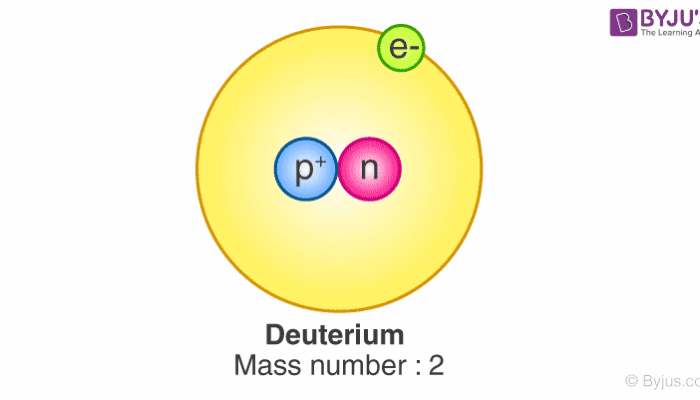
Deuterium, symbolized as D or ²H, is one of the two stable isotopes of hydrogen, the simplest and lightest element on the periodic table. Unlike the most common hydrogen isotope, protium (¹H), which contains only a single proton, deuterium’s nucleus consists of one proton and one neutron. This additional neutron nearly doubles its atomic mass compared to protium, imparting unique nuclear characteristics that distinguish it in various scientific applications.
Fundamental Characteristics and Nuclear Properties
The neutron in deuterium’s nucleus endows it with distinct nuclear behavior, influencing how it participates in isotopic reactions. These nuclear properties result in different energy dynamics compared to protium, making deuterium particularly valuable in nuclear physics and chemistry. Its ability to engage in reactions with altered energy profiles is especially significant in nuclear fusion processes.
Role of Deuterium in Nuclear Fusion
Nuclear fusion, the process powering stars including our sun, involves the merging of light atomic nuclei to form heavier nuclei, releasing vast amounts of energy. Deuterium is a key participant in fusion reactions due to its favorable reaction cross-section, which enhances the likelihood of fusion events. When two deuterium nuclei combine, two main reaction pathways are possible:
- Helium-3 and neutron production:
Fusion of two deuterium nuclei can yield helium-3 (³He) and a free neutron (n). - Tritium and proton production:
Alternatively, the fusion can produce tritium (³H) and a proton (p).
These fusion products, helium-3 and tritium, are themselves valuable fuels for future fusion reactors, offering a promising route toward sustainable and clean energy generation without the environmental drawbacks of fossil fuels.
Natural Abundance and Practical Availability
One of deuterium’s advantages is its natural abundance, constituting approximately 0.0156% of hydrogen atoms in seawater. This widespread availability makes deuterium a practical and accessible resource for nuclear energy applications, particularly in fusion research. Large-scale international projects, such as ITER (International Thermonuclear Experimental Reactor), are actively working to harness deuterium-tritium fusion to develop controlled nuclear fusion as a viable energy source on Earth.
Deuterium in Nuclear Fission and Reactor Technology
Beyond fusion, deuterium plays a critical role in nuclear fission experiments and reactor designs. Fission involves the splitting of heavy atomic nuclei into lighter fragments, releasing energy differently from fusion. In certain nuclear reactors, deuterium is used in the form of heavy water (D₂O) as a neutron moderator. This moderator slows down neutrons without absorbing them, enabling a more controlled and efficient fission reaction. Heavy water reactors, such as Canada’s CANDU reactors, exemplify the successful application of deuterium-based technology in sustainable power generation.
Heavy Water and Its Importance
Heavy water is water in which the hydrogen atoms are replaced by deuterium atoms. This substitution alters the physical properties of water, making it an effective neutron moderator in nuclear reactors. The use of heavy water allows reactors to operate using natural uranium as fuel, enhancing fuel efficiency and reactor safety. Countries employing heavy water reactors benefit from this technology’s ability to sustain nuclear reactions with improved control and reduced radioactive waste.
Applications of Deuterium in Scientific Research
Deuterium’s utility extends beyond energy production into various scientific disciplines. In chemistry, it is widely used for isotopic labeling, a technique that replaces hydrogen atoms in molecules with deuterium to trace chemical reaction pathways. This method provides valuable insights into reaction mechanisms, molecular dynamics, and biological processes, with applications spanning pharmacology, biochemistry, and environmental science.
Deuterium in Cosmology and Astrophysics
Deuterium also holds significance in cosmological studies. Its primordial abundance serves as a critical probe into the conditions of the early universe, particularly during Big Bang nucleosynthesis-the period when the first atomic nuclei formed. Measurements of deuterium levels in cosmic microwave background radiation help scientists refine models of the universe’s origin, composition, and evolution, offering a window into fundamental cosmic processes.
Common Misconceptions About Deuterium
Deuterium is radioactive.
Deuterium is a stable isotope and does not exhibit radioactivity.
Deuterium is rare and difficult to obtain.
Although less abundant than protium, deuterium is naturally present in seawater at measurable concentrations, making it accessible for industrial and scientific use.
Heavy water is toxic.
Heavy water is chemically similar to regular water and only becomes toxic in large quantities due to biological effects, not because of radioactivity or chemical toxicity.
Significance of Deuterium in Modern Science and Technology
Deuterium’s unique nuclear and chemical properties make it indispensable across multiple scientific fields. Its role in advancing nuclear fusion research is pivotal for the future of clean energy, potentially revolutionizing global power generation. Additionally, its applications in nuclear fission, chemical analysis, and cosmology underscore its broad impact on technology and fundamental science. As research continues, deuterium remains a cornerstone in the pursuit of innovative solutions to energy challenges and a deeper understanding of the universe.
FAQ
What is deuterium?
Deuterium is a stable isotope of hydrogen that contains one proton and one neutron in its nucleus, making it heavier than regular hydrogen.
Why is deuterium used in nuclear reactions?
Deuterium's nuclear properties allow it to participate in fusion reactions and act as a neutron moderator in fission reactors, enhancing reaction control and efficiency.
How abundant is deuterium in nature?
Deuterium makes up about 0.0156% of all hydrogen found naturally, primarily in seawater.
What is heavy water and why is it important?
Heavy water (D₂O) contains deuterium atoms replacing regular hydrogen atoms and is used in some nuclear reactors to slow neutrons without capturing them.
How does deuterium contribute to cosmological research?
Deuterium's primordial abundance helps scientists study the early universe and Big Bang nucleosynthesis through cosmic background radiation analyses.






Leave a Reply