Scope of Radiotherapy in India: Expanding Beams of Hope

Definition of Radiotherapy Radiotherapy refers to the medical use of ionizing radiation to treat cancer by destroying malignant cells or inhibiting their growth. This treatment modality employs high-energy photons or particles to target tumors with precision, aiming to maximize damage to cancerous tissues while preserving surrounding healthy cells. Radiotherapy is a cornerstone in oncology, utilized […]

Read More →

Is medical imaging and ultrasonography a good career?

Definition of Medical Imaging and Ultrasonography Medical imaging refers to a collection of techniques used to create visual representations of the interior of the human body for clinical evaluation and treatment planning. This field encompasses various modalities that help healthcare providers diagnose and monitor medical conditions without invasive procedures. Ultrasonography, a specialized branch within medical […]

Read More →

What is the best textbook on medical physics?

Definition of Medical Physics Textbooks Medical physics textbooks are specialized educational resources designed to provide comprehensive knowledge about the application of physics principles in medicine. These texts cover a wide range of topics including radiation therapy, diagnostic imaging, nuclear medicine, and emerging technologies such as proton therapy. They serve as foundational tools for students, educators, […]

Read More →

What do ST ET and RT mean on a MRI scan?

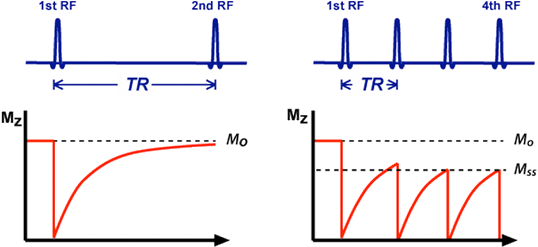
Definition of Key MRI Timing Parameters Magnetic Resonance Imaging (MRI) relies on precise timing parameters to generate detailed images of the body’s internal structures. Among these, Repetition Time (RT), Echo Time (ET), and Short Tau (ST) are fundamental in shaping image contrast and diagnostic clarity. Repetition Time (RT): The duration between consecutive radiofrequency pulses targeting […]

Read More →

Apurva Mittal and the Future of Imaging Innovation

Definition of Imaging Innovation Imaging innovation refers to the development and application of advanced technologies and methodologies that enhance the way visual information is captured, processed, and interpreted. This field encompasses improvements in hardware, software, and interdisciplinary techniques that collectively transform visual representation and data analysis. Technological Evolution: Continuous advancements in imaging devices and algorithms […]

Read More →

What is the role of PET imaging in radiotherapy planning?

Definition of PET Imaging in Radiotherapy Positron Emission Tomography (PET) imaging is a sophisticated diagnostic technique that provides detailed metabolic and functional information about tumors. Unlike conventional imaging methods that focus primarily on anatomical structures, PET reveals the biochemical activity within tissues, making it an essential component in the planning and management of radiotherapy for […]

Read More →

Can a Medical Physicist Study Radiology at the PhD Level? Yes and Here’s How

Definition of a Medical Physicist Pursuing a PhD in Radiology A medical physicist is a professional who applies the principles of physics to medicine, particularly in areas involving imaging and radiation therapy. When such a specialist decides to undertake doctoral studies in radiology, they engage in advanced research and education focused on the technologies and […]

Read More →

What are the importance of physics to biomedical science?

Definition The integration of physics within biomedical science represents a multidisciplinary approach that applies physical principles to understand, diagnose, and treat biological systems and medical conditions. This fusion explores how fundamental laws of physics govern the structure and function of living organisms, thereby enhancing medical technologies and therapeutic strategies. Biomedical Science: The study of biological […]

Read More →

What’s MRI its working principle and its parts?

Definition of Magnetic Resonance Imaging (MRI) Magnetic Resonance Imaging (MRI) is a cutting-edge, non-invasive diagnostic technique that produces highly detailed images of the internal structures of the human body. Unlike traditional imaging methods such as X-rays or computed tomography (CT) scans, MRI does not use ionizing radiation. Instead, it leverages powerful magnetic fields and radiofrequency […]

Read More →