
Short Answer
Definition of Dark Stars
Dark stars are a hypothesized class of celestial objects composed predominantly, or entirely, of dark matter rather than ordinary baryonic matter. Unlike conventional stars that shine through nuclear fusion of hydrogen and helium, dark stars would derive their energy from the annihilation or decay of dark matter particles within their cores. This concept challenges traditional astrophysical models by proposing a fundamentally different mechanism for stellar formation and luminosity.
Understanding Dark Matter and Its Role in the Cosmos
Dark matter is an invisible form of matter that does not emit, absorb, or reflect light, making it undetectable by standard electromagnetic observations. Its existence is inferred primarily through gravitational effects on visible matter, radiation, and the large-scale structure of the universe. Dark matter is believed to form a cosmic scaffold that influences galaxy formation and dynamics.
- Invisible yet influential:
Dark matter interacts very weakly with electromagnetic forces, rendering it invisible to telescopes but detectable through gravitational interactions. - Cosmic framework:
It constitutes approximately 27% of the universe’s mass-energy content, shaping the formation and evolution of galaxies and clusters.
How Dark Stars Form and Operate
Dark stars are theorized to emerge in regions of the early universe where dark matter density was exceptionally high, such as the cores of primordial gas clouds. As these clouds collapse under gravity, dark matter particles trapped within can annihilate each other, releasing energy that heats the surrounding gas. This process differs fundamentally from nuclear fusion, as it does not rely on the fusion of atomic nuclei but on dark matter particle interactions.
This energy release can counterbalance gravitational collapse, creating a stable, luminous object powered by dark matter annihilation rather than fusion. Consequently, dark stars could grow to enormous sizes and exhibit unique luminosity and lifespan characteristics distinct from ordinary stars.
Mechanism Behind Dark Matter Annihilation in Stars
The core principle involves dark matter particles, such as Weakly Interacting Massive Particles (WIMPs), colliding and annihilating each other. This annihilation produces energy in the form of heat and radiation, which can sustain the star’s internal pressure and prevent further collapse.
- Energy source:
Dark matter annihilation releases energy that heats the proto-star’s gas cloud. - Stabilization:
This energy counters gravitational forces, allowing the star to maintain equilibrium without initiating nuclear fusion.
Mathematical Framework and Energy Considerations
The energy generation rate from dark matter annihilation within a star can be expressed as:
Q = ⟨σv⟩ ρDM2 / mDM
- Q: Energy generation rate per unit volume
- ⟨σv⟩: Velocity-averaged annihilation cross-section of dark matter particles
- ρDM: Dark matter density within the star
- mDM: Mass of the dark matter particle
This formula highlights how the annihilation rate depends on the square of the dark matter density and the particle physics properties of dark matter candidates.
Observational Evidence and the Role of the James Webb Space Telescope
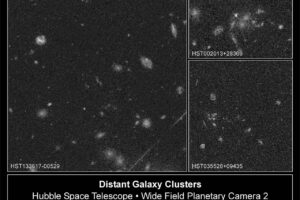
Recent observations by the James Webb Space Telescope (JWST) have provided intriguing data that may support the existence of dark stars. By examining distant, early galaxies with unprecedented sensitivity, JWST has detected unusual spectral signatures and luminosity patterns that deviate from predictions based on conventional stellar populations. Some astrophysicists interpret these anomalies as potential indicators of dark stars, suggesting that dark matter interactions influenced star formation in the early universe.
Implications for Astrophysics and Cosmology
The confirmation of dark stars would have far-reaching consequences for our understanding of both dark matter and stellar evolution:
- Insight into dark matter properties:
Studying dark stars could reveal the particle nature and interaction mechanisms of dark matter, providing empirical data beyond terrestrial experiments. - Influence on galaxy formation:
Dark stars’ gravitational effects might have shaped the early structure of galaxies, acting as seeds for galactic bulges and influencing the distribution of luminous matter. - Revising cosmic history:
The presence of dark stars could alter models of cosmic reionization and the timeline of the universe’s evolution.
Philosophical and Scientific Significance
The concept of dark stars invites a profound reconsideration of the universe’s composition and the forces shaping it. It suggests a cosmos where unseen matter plays an active, dynamic role in creating complex structures, challenging the traditional focus on light-emitting matter. This duality between visible and dark components enriches our cosmic narrative and expands the scope of astrophysical inquiry.
Challenges and Future Directions in Dark Star Research
Despite promising theoretical models and preliminary observations, the study of dark stars is still in its infancy. Key challenges include:
- Detection difficulties:
Differentiating dark stars from conventional stars requires highly sensitive instruments and sophisticated data analysis techniques. - Alternative explanations:
Other astrophysical phenomena might account for observed anomalies, necessitating rigorous validation of the dark star hypothesis. - Interdisciplinary collaboration:
Progress depends on the combined efforts of particle physicists, astronomers, cosmologists, and computational scientists to refine models and interpret data.
Real-World Examples and Simulations
Advanced computational simulations have begun to model the lifecycle of dark stars, exploring how varying dark matter densities and annihilation rates affect their growth and stability. These models predict that dark stars could reach sizes much larger than typical stars and persist for extended periods, potentially observable in the early universe’s deep-field surveys.
Common Misconceptions About Dark Stars
Dark stars are simply black holes or neutron stars.
Dark stars are distinct objects powered by dark matter annihilation, not collapsed remnants of ordinary stars.
Dark matter can be detected directly through electromagnetic radiation.
Dark matter does not interact electromagnetically, making it invisible to traditional telescopes; its presence is inferred through gravitational effects and indirect signatures.
Why the Study of Dark Stars Is Crucial
Exploring dark stars is vital for advancing our comprehension of the universe’s fundamental components and the processes that govern cosmic evolution. By potentially unveiling the nature of dark matter and its role in star formation, this research could bridge gaps between particle physics and cosmology, offering new pathways to understand the universe’s origin, structure, and destiny.


Leave a Reply