
Short Answer
Definition of Lunar Gravity
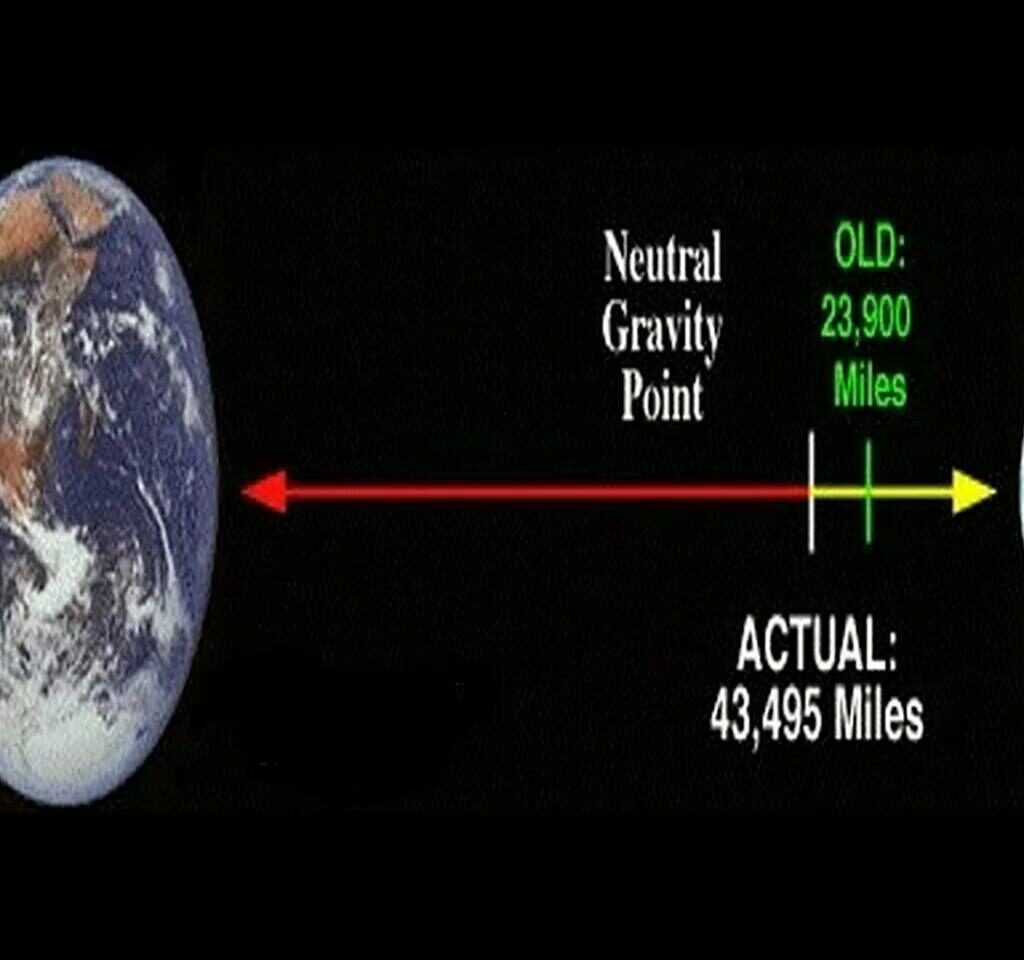
Lunar gravity refers to the gravitational force exerted by the Moon, Earth’s nearest celestial body. Like all objects with mass, the Moon generates a gravitational pull, although it is significantly weaker than Earth’s due to its smaller size and mass. This force influences not only the Moon’s surface environment but also human activities and natural phenomena within the Earth-Moon system.
Fundamentals of Gravity
Gravity is a universal force of attraction acting between masses. Every object with mass, regardless of scale, produces gravitational pull. The strength of this force depends on two main factors: the mass of the object and the distance from its center. Since the Moon’s mass is much less than Earth’s, its gravitational force is correspondingly reduced.
- Mass:
The Moon’s mass is approximately 1.2% that of Earth, directly affecting the intensity of its gravity. - Size:
With a diameter of about 3,474 kilometers, roughly one-quarter of Earth’s diameter, the Moon’s smaller size also contributes to its weaker gravitational field.
Quantifying Lunar Gravity
The gravitational acceleration on the Moon’s surface is about one-sixth that on Earth. This means objects weigh significantly less on the Moon. For example, a person or object weighing 120 pounds on Earth would weigh only about 20 pounds on the lunar surface. This difference has profound implications for movement, equipment handling, and geological processes on the Moon.
Impact on Human Activity and Exploration
The reduced gravity on the Moon dramatically alters how humans move and operate. During the Apollo missions, astronauts experienced the ability to jump higher and carry heavier loads with less effort compared to Earth. Their distinctive “lunar hopping” gait was a direct consequence of the Moon’s weaker gravitational pull, enabling slower, bounding movements that were both efficient and visually striking.
Variations in Lunar Gravity: Mascons
The Moon’s gravitational field is not uniform. Certain regions, known as mascons (mass concentrations), exhibit stronger gravitational pull due to variations in the Moon’s internal structure and geological composition. These anomalies affect the orbits of spacecraft, requiring precise adjustments for navigation and stable lunar orbit maintenance.
The Moon’s Gravitational Influence on Earth
Beyond its own surface, the Moon’s gravity plays a crucial role in shaping Earth’s natural systems. The most notable effect is the generation of ocean tides, caused by the Moon’s gravitational pull on Earth’s water bodies. These tidal movements are essential for coastal ecosystems and human activities such as fishing and navigation. Additionally, the Moon’s gravity subtly influences Earth’s rotation speed and axial tilt, contributing to long-term climate stability.
Geological Effects of Lunar Gravity
The Moon’s lower gravity affects its surface landscape and geological processes. Unlike Earth, the Moon lacks a substantial atmosphere and liquid water, so erosion occurs mainly through micrometeorite impacts and exposure to solar radiation. The weak gravity allows fine dust and debris to settle slowly, creating a unique regolith layer. This environment presents challenges for future lunar missions, particularly regarding dust accumulation on equipment and habitats.
Comparative Gravity in the Solar System
When compared to other celestial bodies, the Moon’s gravity occupies a middle ground. Gas giants like Jupiter and Saturn have gravitational fields far exceeding Earth’s, while small asteroids have negligible gravity. The Moon exemplifies how gravitational forces vary widely across the solar system, illustrating the diversity of environments that spacecraft and explorers may encounter.
Scientific Research and Lunar Gravity
Modern lunar missions employ advanced instruments to map gravitational anomalies and study the Moon’s internal structure. Understanding these variations provides insights into the Moon’s geological history and composition. This knowledge is vital for planning future exploration endeavors, including establishing lunar bases, mining operations, and scientific research stations, ensuring safety and operational efficiency under lunar conditions.
Educational and Multimedia Applications
Educational resources about lunar gravity leverage multimedia tools such as videos, interactive simulations, and virtual reality. These platforms help learners visualize the differences between Earth’s and the Moon’s gravity, offering hands-on experiences that enhance comprehension. Such educational content is instrumental in promoting scientific literacy and inspiring interest in space science across diverse audiences.
Common Misconceptions About Lunar Gravity
The Moon has no gravity.
The Moon does have gravity, but it is weaker than Earth’s due to its smaller mass and size.
Gravity is the same everywhere on the Moon.
Lunar gravity varies across the surface because of mascons, which are regions with higher mass concentrations.
Significance of Lunar Gravity
Lunar gravity is fundamental to understanding the Moon’s environment, human exploration, and its interaction with Earth. It shapes surface conditions, influences astronaut mobility, and affects Earth’s tides and rotational dynamics. Studying lunar gravity enriches our knowledge of planetary science and aids in the development of technologies for future space missions, making it a critical subject in both scientific research and practical applications.
FAQ
Does the Moon have gravity?
Yes, the Moon has gravity, but it is weaker than Earth's due to its smaller mass and size.
How does lunar gravity affect human activities?
Lunar gravity allows for greater jumping ability and easier movement for astronauts, significantly impacting exploration.
What are mascons?
Mascons are regions on the Moon with higher mass concentrations that create variations in gravitational pull.

Leave a Reply