
Short Answer
Definition of Star Formation
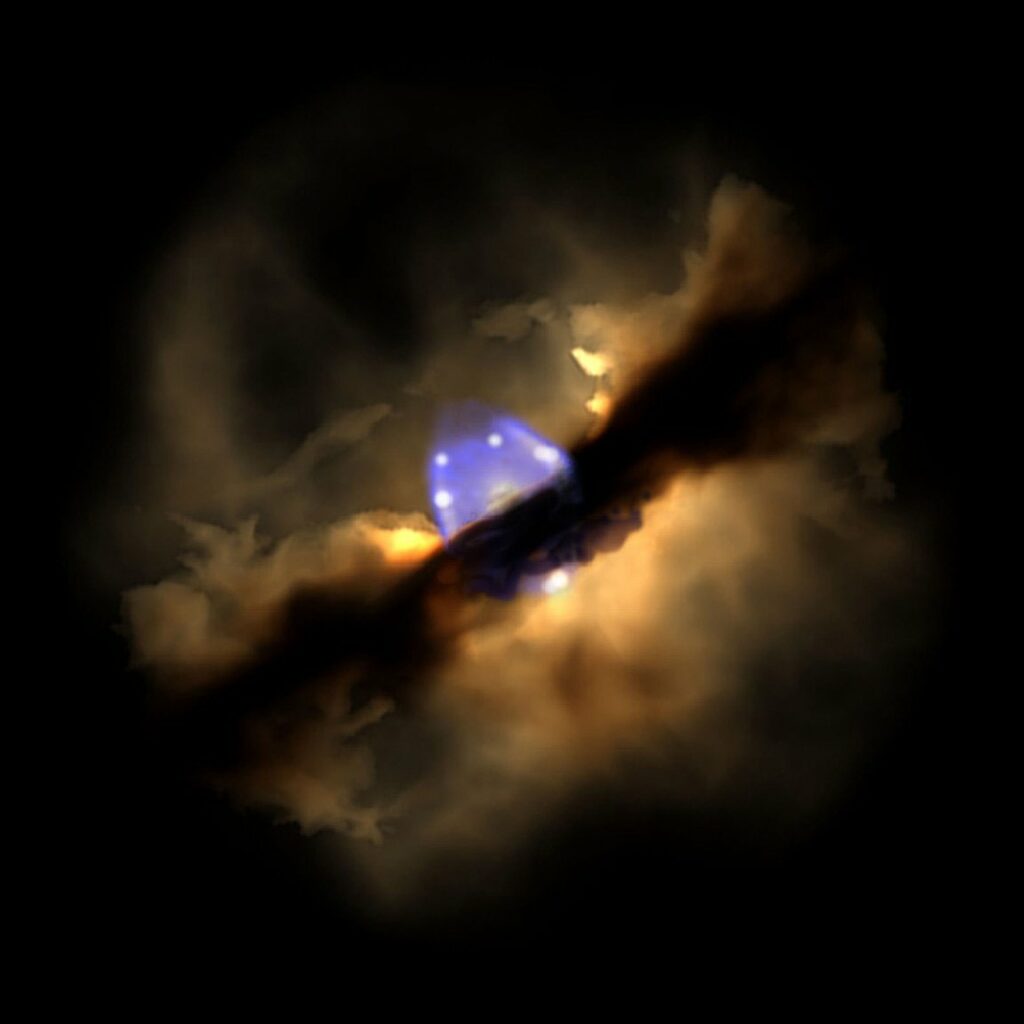
Star formation refers to the complex astrophysical process through which dense regions within molecular clouds collapse under gravity to give birth to new stars. These stellar nurseries, composed primarily of gas and dust, serve as the cradles where stars gradually emerge over extensive periods, ranging from thousands to millions of years. This phenomenon is fundamental to understanding the lifecycle of stars and the evolution of galaxies.
The Process of Stellar Birth
The genesis of a star begins deep within molecular clouds-vast, cold accumulations of gas and dust scattered throughout galaxies. Gravitational forces cause localized pockets of these clouds to contract slowly, initiating a cascade of physical events. As the gas condenses, it heats up, eventually reaching temperatures and pressures sufficient to ignite nuclear fusion in the core, marking the transition from a protostar to a fully-fledged star.
- Gravitational Collapse:
Dense regions within molecular clouds begin to contract under their own gravity, forming protostellar cores. - Protostar Formation:
The collapsing gas heats up, and the object becomes a protostar, still gathering mass from its surroundings. - Ignition of Fusion:
When core temperatures reach millions of degrees, hydrogen fusion starts, and the star enters the main sequence phase.
Challenges in Observing Star Formation in Real Time
Despite the allure of witnessing a star’s birth as it happens, the immense timescales involved pose significant observational challenges. Star formation unfolds over thousands to millions of years, far exceeding a human lifetime. Additionally, the dense clouds that harbor these nascent stars obscure visible light, making direct optical observation nearly impossible. This means that the concept of “real time” in this context must be redefined to accommodate cosmic timescales.
Technological Advances Enabling Deeper Insights
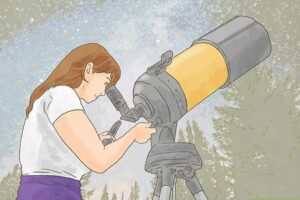
Modern astronomy has made remarkable strides in penetrating the veils of dust that conceal star-forming regions. Instruments operating in infrared and radio wavelengths can peer through these clouds, revealing the hidden processes within. Space telescopes, free from atmospheric interference, provide high-resolution, multi-wavelength data that capture snapshots of various stages of stellar evolution.
- Infrared and Radio Telescopes:
These detect heat and radio emissions from protostars and molecular clouds, bypassing dust obscuration. - Space-Based Observatories:
Telescopes like the Hubble and James Webb Space Telescope offer clear, detailed images across different spectra. - Long-Term Monitoring:
Continuous observation over years tracks changes in brightness and gas dynamics, revealing accretion and outflow events.
Piecing Together the Stellar Formation Timeline
Since direct observation of a star’s birth in a human timescale is unfeasible, astronomers adopt a time-lapse approach by studying multiple star-forming regions at different evolutionary stages. This method allows scientists to reconstruct the sequence of events leading from molecular cloud to mature star.
- Early Stage:
Dense molecular clouds begin collapsing, forming protostars. - Intermediate Stage:
Protostars grow, heat up, and emit jets of charged particles. - Late Stage:
Young stars clear their surroundings and stabilize on the main sequence.
Role of Computational Simulations
Complementing observational data, computational models simulate the physical conditions within molecular clouds, including gas dynamics, magnetic fields, and radiation effects. These virtual experiments help interpret complex phenomena that are difficult to capture directly, providing a dynamic view of star formation processes over cosmic timescales.
Understanding the Concept of “Real Time” in Astronomy
In astronomical terms, “real time” is relative and often extends far beyond human perception. Because light takes years to travel from distant stars to Earth, observing a star’s birth is inherently a look into the past. For example, viewing a star 1,000 light-years away means seeing it as it was a millennium ago. This delay transforms our observations into historical records rather than immediate events.
Transient Phenomena in Young Stars
Occasionally, young stellar objects exhibit rapid, dramatic changes that provide rare glimpses into the dynamic nature of star formation. Events such as FU Orionis outbursts cause sudden increases in brightness over months or years, indicating bursts of material accretion onto the protostar. These episodes serve as the closest analogs to witnessing star birth in accelerated time.
Common Misconceptions About Observing Star Formation
Stars form instantaneously and can be observed forming in moments.
Star formation is a prolonged process spanning thousands to millions of years, making real-time observation within human lifespans impossible.
Optical telescopes can easily observe star formation.
Dense dust clouds obscure visible light, requiring infrared and radio observations to study these regions effectively.
Significance of Studying Star Formation
Understanding how stars form is crucial for comprehending the broader mechanisms governing galaxy evolution, chemical enrichment of the universe, and the origins of planetary systems. Insights into stellar birth inform models of cosmic structure and help contextualize humanity’s place in the universe.
Conclusion: Embracing the Cosmic Timescale
While witnessing a star’s birth in the immediate present remains beyond our reach, the combination of advanced observational techniques, long-term monitoring, and sophisticated simulations allows us to assemble a detailed narrative of stellar genesis. This endeavor challenges our perception of time and highlights the grandeur of cosmic evolution, inviting us to appreciate the universe’s rhythms on scales far exceeding everyday experience.
FAQ
What is star formation?
Star formation is the astrophysical process where regions within molecular clouds collapse under gravity to form stars.
Why can't we see stars forming in real time?
The process takes thousands to millions of years, far exceeding human lifespans, and is often obscured by dust.
Leave a Reply