
Short Answer
Understanding Invisible Matter in Particle Physics
Particle colliders represent the forefront of contemporary physics research, enabling scientists to investigate the universe’s most fundamental building blocks with extraordinary accuracy. A central focus of these experiments is the pursuit of invisible matter-particles that evade direct observation yet exert significant influence on the structure and evolution of the cosmos. This pursuit involves a complex interplay of advanced experimental techniques and theoretical models, shedding light on how collider data can reveal the presence of elusive particles undetectable by conventional means.
Definition of Missing Transverse Energy (MET)
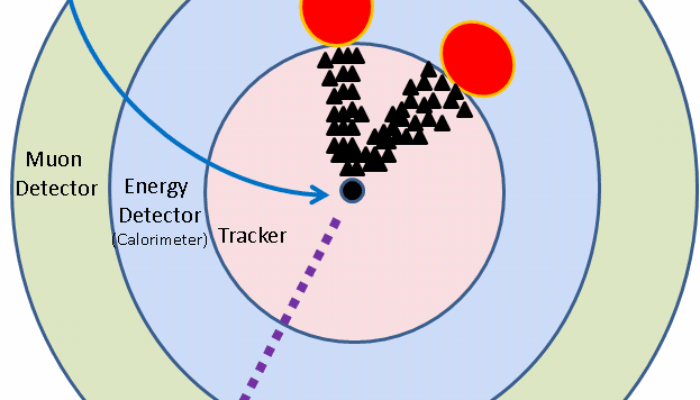
Missing transverse energy (MET) is a crucial concept in collider physics used to infer the existence of particles that do not interact with detectors directly. When two particles collide at extremely high energies, they break apart into numerous secondary particles, which are tracked by sophisticated detector systems. According to the conservation of momentum and energy, the total momentum perpendicular to the beam axis should remain balanced after the collision. Any discrepancy in this balance, observed as MET, indicates that some particles have escaped detection.
- Invisible Particles:
Particles such as neutrinos or theoretical dark matter candidates that do not leave direct signals in detectors but influence MET measurements. - Momentum Conservation:
The principle that the sum of transverse momenta before and after collision must be equal, making MET a signature of undetected particles.
Mechanism Behind MET Detection
In collider experiments, detectors capture the energy and momentum of visible particles produced in collisions. Invisible particles, however, pass through without interaction, causing an imbalance in the measured transverse momentum. By precisely measuring all visible particles and calculating the vector sum of their transverse momenta, physicists identify any missing energy. This missing component is attributed to invisible particles, providing indirect evidence of their existence.
Data Processing and Analysis in Collider Experiments
Collider experiments generate vast amounts of data, which undergo multiple stages of processing to extract meaningful physics insights. Initially, raw data consist of digitized signals from various detector components such as calorimeters, tracking chambers, and muon detectors. These signals are reconstructed into detailed event records, where algorithms classify particle types, determine their momenta, and trace decay pathways. Subsequently, these events are distilled into higher-level physics objects like jets, leptons, and MET vectors, which serve as the foundation for testing theoretical hypotheses.
Visualization and Statistical Tools
To interpret the complex data, physicists employ a variety of visualization and statistical methods. Event displays provide graphical snapshots of collision events, highlighting particle tracks and areas where invisible particles may have escaped detection. Histograms and scatter plots analyze distributions of MET, transverse momentum, and angular correlations, helping researchers identify deviations from Standard Model expectations. These tools are essential for distinguishing genuine signals from background fluctuations and instrumental effects.
Role of Simulations in Invisible Matter Research
Monte Carlo simulations are indispensable in collider physics, replicating both known particle interactions and hypothetical scenarios involving invisible matter. These simulations help calibrate MET measurements by modeling expected backgrounds and signal characteristics. By comparing experimental data with simulated predictions, physicists refine their selection criteria and enhance the sensitivity of their searches for new particles.
Theoretical Foundations and Extensions Beyond the Standard Model
The search for invisible matter is deeply rooted in theoretical physics, with numerous models extending the Standard Model to predict new particle species. Frameworks such as supersymmetry, theories involving extra spatial dimensions, and novel gauge interactions propose particles that interact weakly or not at all with ordinary matter, making them invisible to detectors. Scholarly articles, whitepapers, and phenomenological studies provide detailed predictions of these particles’ production rates, decay modes, and expected signatures, guiding experimental strategies.
Detector Calibration and Performance Documentation
Accurate measurement of MET depends critically on the precise calibration and performance monitoring of detector systems. Technical documentation includes efficiency assessments, noise characterization, and alignment parameters, all of which are vital to minimize systematic errors. Proper calibration ensures that instrumental effects do not mimic or obscure signals of invisible particles, thereby maintaining the integrity of the analysis.
Educational Outreach and Public Engagement
Communicating the complexities of invisible matter research to a broader audience is an essential aspect of particle physics. Educational materials such as infographics, explainer videos, and public lectures demystify MET techniques and highlight the cosmic significance of invisible matter. These resources foster public interest and inspire future generations to engage with fundamental scientific questions.
Integration of Artificial Intelligence and Machine Learning
Recent advancements in artificial intelligence (AI) and machine learning (ML) have significantly enhanced the analysis of collider data. AI algorithms are trained to detect intricate patterns in MET and other event features, improving the discrimination between background noise and potential signals. Documentation related to these technologies includes technical reports, software repositories, and performance evaluations, illustrating the growing synergy between computational innovation and particle physics research.
Significance of Invisible Matter Searches
The quest to detect invisible matter at particle colliders exemplifies the fusion of meticulous data acquisition, innovative analytical methods, and theoretical insight. From raw detector outputs to sophisticated simulations and interpretative models, the diverse content generated supports a comprehensive approach to this profound scientific challenge. Each collision event and every measured imbalance holds the promise of unveiling the universe’s hidden components, deepening our understanding of the fundamental nature of reality.
Ongoing Developments and Future Prospects
As experimental techniques and theoretical models evolve, the body of knowledge surrounding invisible matter continues to expand. New data, refined methodologies, and emerging theoretical paradigms enrich the scientific discourse, driving the search forward. Particle colliders remain indispensable tools in humanity’s endeavor to decode the unseen fabric of the cosmos, with each advancement bringing us closer to groundbreaking discoveries.
FAQ
What is missing transverse energy (MET)?
MET is a concept in collider physics that indicates the presence of invisible particles by showing an imbalance in momentum after high-energy collisions.
How do particle colliders detect invisible matter?
They measure the energy and momentum of visible particles and look for discrepancies that suggest the presence of invisible particles.




Leave a Reply