
Short Answer
Definition
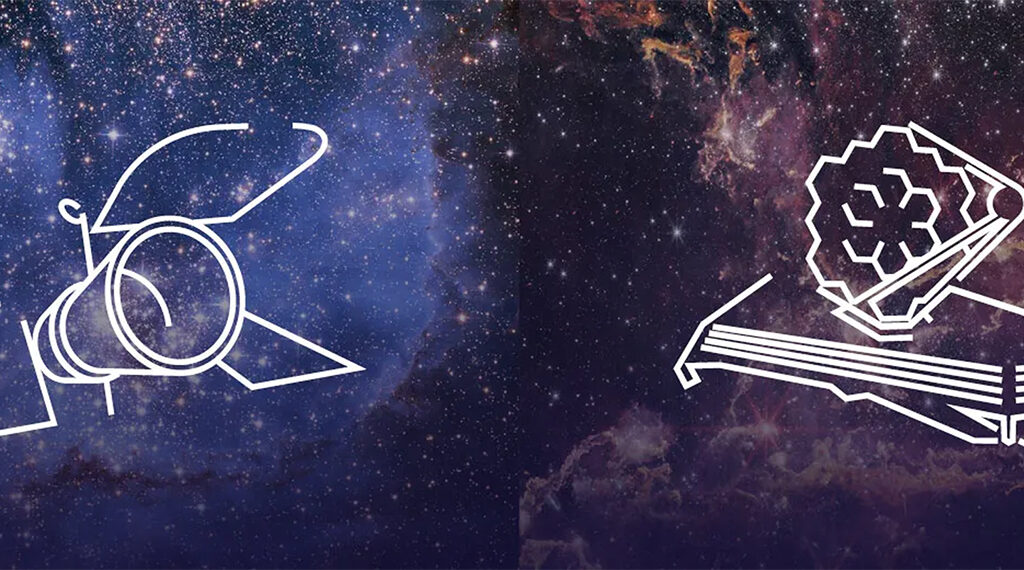
The James Webb Space Telescope (Webb) is a groundbreaking astronomical observatory designed to explore the universe in unprecedented detail. Operating primarily in the infrared spectrum, Webb captures light from the earliest epochs of cosmic history, enabling scientists to study the formation and evolution of galaxies, stars, and planetary systems. Its mission is to uncover the hidden aspects of the cosmos that have remained elusive to previous telescopes, offering insights into the origins and development of the universe.
Exploring the Universe’s Earliest Galaxies
One of Webb’s primary scientific objectives is to investigate the universe’s first galaxies. Unlike earlier instruments that provided only vague impressions, Webb delivers high-resolution images that reveal these ancient galaxies in remarkable clarity. By observing in infrared wavelengths, Webb penetrates the dense clouds of interstellar dust that obscure these distant objects, exposing young galaxies rich with newly formed stars. These observations reach back over 13 billion years, shedding light on the “cosmic dawn” – the era when the first galaxies ignited and transformed the dark universe into a luminous expanse. This research not only catalogs distant celestial bodies but also narrates the universe’s initial phases of growth following the Big Bang.
Star Formation and Nebulae: Cosmic Nurseries
Webb’s focus extends to star-forming regions filled with swirling nebulae, which serve as the universe’s stellar nurseries. Within these vast clouds of gas and dust, the telescope examines the complex interactions among magnetic fields, gas dynamics, and stellar winds that culminate in star birth. Its infrared capabilities allow it to see beyond the bright glare that limits optical telescopes, measuring the temperature, movement, and chemical makeup of these clouds with exceptional accuracy. This detailed study enhances our understanding of how stars originate and the chemical processes that eventually lead to planet formation and potentially the emergence of life.
Investigating Exoplanet Atmospheres
Webb also acts as a cosmic investigator of exoplanet atmospheres through a method called transit spectroscopy. When an exoplanet passes in front of its host star, Webb analyzes the starlight filtered through the planet’s atmosphere to identify its chemical components. This technique has revealed the presence of molecules such as water vapor, methane, and carbon dioxide, along with signs of complex weather patterns. These findings broaden the scope of planetary habitability, transforming distant exoplanets from mere points of light into dynamic worlds with unique atmospheric characteristics and potential biosignatures.
Insights into Our Solar System
Closer to home, Webb’s observations provide fresh perspectives on objects within our own solar system. Its ability to peer beneath the icy surfaces of moons like Europa and Titan uncovers evidence of subsurface oceans and chemical interactions that might support microbial life. These studies go beyond traditional planetary science, probing the potential for life in environments previously hidden from view and expanding our understanding of the conditions necessary for life beyond Earth.
Probing Black Holes and Galactic Centers
Webb’s exploration of black holes and their surrounding environments offers a glimpse into some of the most energetic and extreme phenomena in the universe. With its superior resolution and sensitivity, the telescope captures detailed images of the turbulent regions near supermassive black holes, including the swirling accretion disks and powerful jets of high-energy particles. These observations provide valuable insights into relativistic physics and reveal how black holes influence the formation and evolution of galaxies.
How Webb Connects Cosmic Scales
What distinguishes Webb’s mission is its ability to bridge the vast scales of the cosmos-from the primordial gas clouds that seeded the first stars to the intricate chemical compositions of alien atmospheres. By weaving together observations across these scales, Webb constructs a comprehensive narrative of cosmic evolution and transformation. Each dataset serves as a snapshot of the universe in flux, inviting both scientists and the public to engage with the ongoing story of space and time.
Why Webb’s Discoveries Are Crucial
The revelations from Webb challenge existing paradigms and deepen our comprehension of cosmic complexity. Its findings highlight the diversity of planetary systems, the nuanced processes driving star and galaxy formation, and the delicate balance of forces shaping the observable universe. By addressing fundamental questions-such as the origins of the cosmos, the possibility of extraterrestrial life, and the fate of stars-Webb plays a pivotal role in advancing astronomy and inspiring humanity’s quest for knowledge.
Common Misconceptions About the James Webb Space Telescope
Webb is just a more powerful version of the Hubble Space Telescope.
While Webb builds on Hubble’s legacy, it operates primarily in the infrared spectrum, allowing it to see through cosmic dust and observe earlier epochs of the universe that Hubble cannot detect.
Webb only studies distant galaxies and has no relevance to our solar system.
Webb also investigates objects within our solar system, such as icy moons, providing valuable data about their composition and potential habitability.
Real-World Applications and Impact
Beyond expanding scientific knowledge, Webb’s discoveries have practical implications for technology and education. The advanced instruments developed for Webb drive innovation in optics, imaging, and data analysis. Moreover, its captivating images and findings inspire public interest in science, fostering a greater appreciation for astronomy and encouraging future generations to pursue STEM fields. Webb’s mission exemplifies how exploring the cosmos can yield benefits that resonate far beyond the realm of space science.
FAQ
What is the main purpose of the James Webb Space Telescope?
The main purpose of the James Webb Space Telescope is to explore the universe in infrared, allowing scientists to study the formation and evolution of galaxies, stars, and planetary systems.
How does Webb differ from the Hubble Space Telescope?
Webb operates primarily in the infrared spectrum, enabling it to see through cosmic dust and observe earlier epochs of the universe that Hubble cannot detect.
What are some key discoveries made by Webb?
Webb has made significant discoveries regarding the universe’s earliest galaxies, star formation, exoplanet atmospheres, and even insights into our solar system.

Leave a Reply