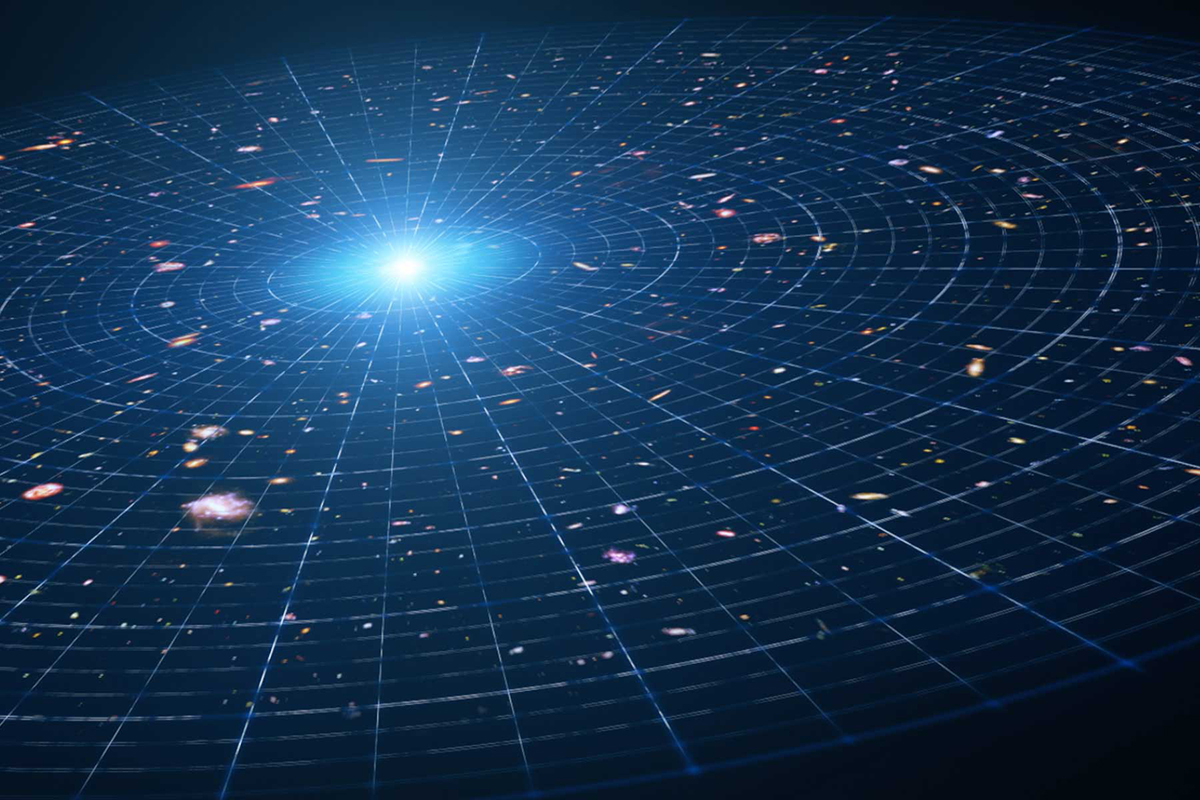
Cosmological Models Get an Upgrade: Theory Meets Precision

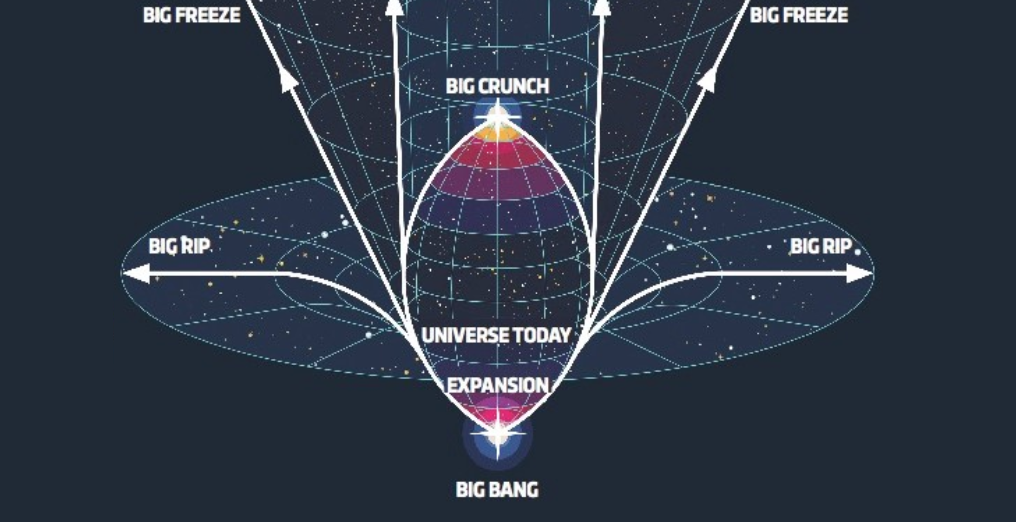
Understanding Cosmological Models Cosmological models are theoretical frameworks designed to describe the large-scale structure and evolution of the universe. These models integrate principles from physics and astronomy to explain how the cosmos originated, developed, and continues to change over time. They serve as essential tools for interpreting observational data and predicting cosmic phenomena. Early Models: […]

Read More →

Microwaves Get Polarized: Tuning Into the Early Universe

Definition of Microwave Polarization Microwave polarization describes the specific orientation of the electromagnetic waves within the microwave spectrum. This property can manifest in various forms, including linear, circular, or elliptical polarization, depending on the behavior of the electric field vector associated with the wave. Polarization arises through interactions such as scattering and emission processes, particularly […]

Read More →

Life the Universe and Everything: Physics Meets Philosophy

Definition The intersection of physics and philosophy represents a dynamic field of inquiry that explores fundamental questions about existence, the universe, and the nature of reality. This interdisciplinary approach combines scientific investigation with philosophical reflection to deepen our understanding of life and the cosmos. Physics: The branch of science concerned with the properties and interactions […]

Read More →

Where Are the Baryons? Found at Last!

Definition of Baryons Baryons are a class of subatomic particles that serve as the fundamental building blocks of matter. Composed of three quarks bound together by the strong nuclear force, which is mediated by gluons, baryons include well-known particles such as protons and neutrons. These particles are essential components of atomic nuclei, making them critical […]

Read More →

A New Twist for Stellar Magnetism: Stars That Defy Expectations

Understanding Stellar Magnetism Stellar magnetism refers to the magnetic fields generated and sustained by stars, influencing their behavior and evolution. These magnetic fields arise primarily from the movement of charged particles within a star’s interior, particularly in the convective zones near the surface. The study of stellar magnetism is crucial for comprehending various astrophysical phenomena, […]

Read More →

Cosmic Ray Theory Gets the Cold Shoulder—Again

Definition of the Cosmic Ray Climate Change Hypothesis The cosmic ray theory of climate change suggests a direct link between cosmic ray activity and Earth’s weather patterns. It proposes that variations in cosmic ray intensity influence cloud formation, which in turn affects global climate. Although this idea periodically resurfaces in public discussions, it remains a […]

Read More →

Feeding Frenzy: Big Stars Munch on Cosmic Dust

Understanding Massive Stars and Cosmic Dust The vast universe is filled with countless celestial phenomena, among which massive stars and cosmic dust play pivotal roles. These enormous stars, typically those with masses exceeding eight times that of our Sun, interact intricately with the interstellar medium (ISM), particularly with cosmic dust. This relationship is essential for […]

Read More →

Astronomers Witness the Birth of a Black Hole

Definition of Black Holes and Stellar Evolution Black holes are extraordinary cosmic objects formed from the remnants of massive stars that have undergone gravitational collapse. These entities possess gravitational fields so intense that nothing, not even light, can escape their pull, rendering them invisible to direct observation. The formation of black holes is a critical […]

Read More →