
Short Answer
Understanding Motion and Stillness in the Universe
Is there truly any entity in the vast cosmos that remains completely motionless? Could there be a particle, object, or region in space that resists the universal tendency to move and spin? While this question might initially conjure images of tranquil, frozen pockets amid the cosmic chaos, a closer examination reveals a far more intricate and fascinating reality.
Definition of Cosmic Motion and Stillness
The universe is fundamentally characterized by continuous movement. From the tiniest subatomic particles to immense galactic formations, motion and rotation are inherent properties embedded in the structure of reality itself.
- Motion:
The change in position of an object relative to a reference point, observable at all scales from particles to galaxies. - Spin (Rotation):
The angular movement of an object around its own axis, a property seen in everything from electrons to black holes. - Stillness:
The hypothetical state of absolute rest, which, due to the relative nature of motion, is practically unattainable in the universe.
The Ubiquity of Movement in the Cosmos
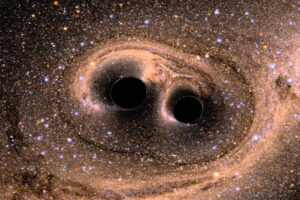
Every scale of the universe exhibits dynamic behavior. Planets revolve around stars, stars rotate on their axes, and galaxies spin within clusters. Even black holes, known for their intense gravitational pull, demonstrate rotational effects such as frame-dragging, where the fabric of spacetime itself is twisted by their spin.
Moreover, the seemingly empty vacuum of space is far from inert. Quantum fluctuations cause particles to spontaneously appear and vanish, while the cosmic microwave background radiation-a remnant from the Big Bang-permeates all directions, carrying subtle but persistent motion. This reveals that even the emptiest regions of space are teeming with activity invisible to the naked eye.
Relativity and the Concept of Absolute Rest
One of the most challenging aspects of defining stillness in space arises from Einstein’s theory of relativity. Motion is always relative, meaning an object’s velocity can only be measured in relation to another object. Consequently, an asteroid that seems stationary from one viewpoint may be moving at tremendous speeds from another perspective. This absence of a universal stationary frame means absolute stillness is essentially a theoretical abstraction rather than a physical reality.
Rotation Across Scales: From Quantum to Cosmic
Rotation is nearly universal, manifesting in both microscopic and macroscopic realms. Subatomic particles like electrons and protons possess intrinsic angular momentum, known as spin, a quantum property that defies classical analogies. On a grander scale, massive cosmic structures rotate, influencing their formation and evolution.
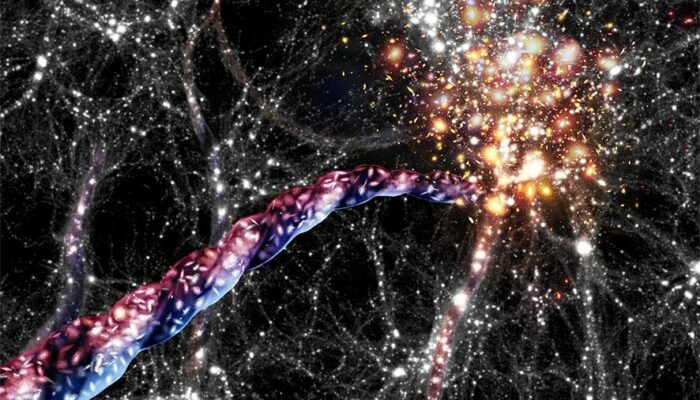
Recent discoveries of the largest known spinning structures in the universe, embedded within the cosmic web-a vast network of filaments and voids shaped by gravity-highlight the persistence of angular momentum even at unimaginable scales. This suggests that the universe continuously channels energy into motion and spin, avoiding any state of complete stillness.
Special Cases: Pulsars and Photons
Some astrophysical objects exhibit unique rotational behaviors. Pulsars, which are highly magnetized neutron stars, spin with extraordinary precision and speed, sometimes rotating hundreds of times per second. Although their rotation rates can slow over millennia, they never come to a complete stop due to the conservation of angular momentum.
Photons, the fundamental particles of light, always travel at the speed of light and have no rest mass, making rest impossible for them. Electrons, while having rest mass, also possess spin, an intrinsic quantum property essential to their identity and interactions, though it does not correspond to literal spinning.
Dark Matter, Dark Energy, and the Dynamics of the Universe
The enigmatic components of the cosmos, dark matter and dark energy, further complicate the notion of stillness. Dark matter, which constitutes a significant portion of galactic mass, reveals itself through gravitational effects and participates in the large-scale structure of the universe. Dark energy, responsible for the accelerated expansion of the cosmos, influences the dynamics of spacetime itself. Both phenomena are deeply intertwined with motion, expansion, and transformation, defying any concept of absolute rest.
Why Absolute Stillness Remains Theoretical
Given the pervasive presence of motion and spin at every level-from quantum particles to galactic superstructures-the idea of an object completely free from movement or rotation is more a conceptual ideal than a physical reality. Every element of the universe is engaged in a continuous dance of motion, governed by fundamental physical laws and conservation principles.
Significance of Cosmic Motion
The omnipresence of motion and spin is not merely incidental but foundational to the nature of existence. This relentless dynamism shapes the evolution of cosmic structures, governs particle interactions, and drives the expansion of the universe. Understanding these movements enriches our comprehension of physics, cosmology, and the intricate workings of the universe.
Summary: The Universe as a Symphony of Motion
In reflecting on the cosmos, one can appreciate the poetic paradox that stillness is fleeting, a mere whisper amid an eternal crescendo of movement. The universe, in all its complexity and grandeur, reveals that motion and spin are fundamental characteristics woven into the very fabric of reality. While the allure of a motionless object in space captivates the imagination, scientific evidence consistently shows that everything is in motion relative to something else, from the smallest quantum entities to the largest cosmic formations.
FAQ
Is there anything in space that doesn't move?
No, everything in the universe is in motion relative to something else, making absolute stillness a theoretical concept.
What is dark matter?
Dark matter is a form of matter that does not emit light or energy, detectable only through its gravitational effects on visible matter.
How does relativity affect motion?
Einstein’s theory of relativity states that motion is always relative to another object, meaning there is no absolute reference frame for stillness.
Leave a Reply