
Short Answer
Understanding Dark Energy and Cosmic Expansion
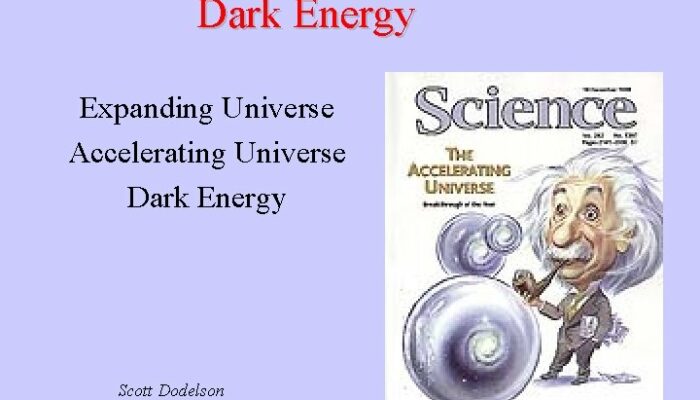
The universe can be envisioned as an immense, ever-expanding cosmic fabric, extending far beyond human perception. Central to this grand structure is dark energy, an elusive and omnipresent force that drives the universe’s accelerated expansion. This mysterious energy acts as an unseen agent, continuously pushing space to stretch faster and faster. The prospect of this acceleration persisting indefinitely invites contemplation of a future where the cosmos expands without end, shaping a destiny both awe-inspiring and quietly unsettling.
The Role of Dark Energy in the Universe
Currently, the universe resembles a balloon being inflated, with every point on its surface moving away from others as space itself grows. Dark energy functions like the invisible breath inflating this balloon, causing the expansion to speed up over time. Observations indicate that dark energy constitutes approximately 70% of the universe’s total energy content, making it the dominant factor behind the accelerating cosmic growth. If this acceleration continues unchecked, it will lead to a cosmos vastly different from the gravitationally bound universe once imagined.
Cosmic Event Horizon: The Universe’s Invisible Boundary
One profound consequence of perpetual acceleration is the emergence of a “cosmic event horizon.” Similar to how a lighthouse’s beam cannot penetrate dense fog to reach distant ships, the accelerated expansion will push galaxies beyond the limits of our observation. Light emitted from these faraway galaxies will never reach Earth again, consigning large portions of the universe to permanent darkness beyond an unseen boundary. This process isolates cosmic structures, turning the universe into a collection of solitary islands separated by vast, unreachable voids.
Transformation of Matter and Energy Over Time
As space continues to stretch with increasing intensity, the fundamental nature of matter and energy undergoes significant changes. Galaxies that currently form intricate cosmic webs will fade as their light shifts toward longer wavelengths, eventually disappearing from view. Star formation will cease in systems like our own, leaving behind cold, dim remnants orbiting in isolation. The night sky will lose its brilliance, transitioning from a tapestry of countless stars to a sparse, shadowed expanse. Thus, dark energy’s influence extends beyond geometry, altering the very experience of existence.
The Big Rip Scenario: A Hypothetical Cosmic Catastrophe
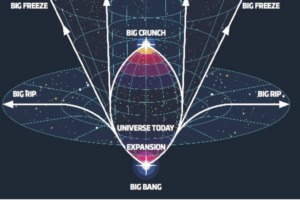
Dark energy’s true nature remains uncertain, but if its density increases over time rather than remaining constant, it could trigger a dramatic end known as the “Big Rip.” Imagine the universe as a gigantic cosmic rubber band being stretched relentlessly. In this scenario, the accelerating expansion intensifies to the point where all structures are torn apart sequentially: galaxy clusters disintegrate, galaxies lose cohesion, star systems unravel, and ultimately, atoms themselves are ripped asunder. This ultimate disintegration represents the complete breakdown of reality driven by unceasing dark energy expansion.
Endless Expansion: A Cosmic Metaphor
The universe’s continuous acceleration can be likened to an unstoppable wind sweeping across a vast landscape, reshaping and eroding everything in its path without pause. Dark energy acts as this cosmic breeze, an invisible force that patiently and inexorably molds the universe’s fate. This eternal expansion embodies a paradoxical blend of permanence and change-a cosmos that is always growing, evolving, and never static.
Dark Energy as the Architect of Cosmic Evolution
Far from being a mere mysterious force, dark energy serves as the grand designer of the universe’s unfolding story. It sculpts the cosmic narrative on scales so immense they challenge human imagination. The eternal acceleration it drives suggests a universe in constant rebirth, expanding into ever-greater immensity and complexity.
Humanity’s Place in an Accelerating Universe
Our current epoch is unique, situated at a fleeting moment before dark energy pushes distant galaxies beyond observational reach forever. This limited window offers humanity a precious opportunity to study and appreciate the cosmos in its full grandeur. Future civilizations, if they arise, may witness a far more isolated and dim universe, with night skies starkly devoid of the rich stellar displays we now enjoy. The accelerating expansion transforms cosmic observation into a race against time, emphasizing the urgency of our quest to understand the universe.
Implications for Energy, Information, and Physics
The relentless cosmic acceleration also affects the fate of energy and information. As regions of space move beyond each other’s event horizons, causal connections break down, fragmenting the universe into disconnected domains. This fragmentation challenges foundational principles in physics, such as entropy, conservation laws, and quantum information theory. It compels scientists to explore new theoretical frameworks that might reconcile dark energy’s enigmatic properties with established physical laws.
Reflecting on the Infinite Future
Contemplating a universe dominated by perpetual acceleration evokes a profound sense of wonder and mystery. Dark energy acts as the silent conductor of a cosmic symphony, orchestrating an eternal expansion that reshapes existence itself. This future is not only a scientific projection but also a poetic meditation on impermanence, scale, and the hidden forces that govern all reality.
Conclusion: The Significance of Eternal Cosmic Acceleration
If dark energy continues to drive acceleration indefinitely, the universe is destined for an extraordinary fate: expanding horizons, fading lights, and increasing isolation, alongside boundless potential for cosmic evolution on unimaginable scales. This scenario deepens our appreciation for the transient nature of our cosmic moment and invites us to embrace the majestic, sometimes somber, beauty of a universe forever stretching into the unknown.
FAQ
What is dark energy?
Dark energy is an unknown force that is causing the universe to expand at an accelerating rate.
What happens if dark energy continues to accelerate?
If dark energy continues to drive cosmic acceleration, it may lead to phenomena such as the cosmic event horizon and the Big Rip.
What is the Big Rip scenario?
The Big Rip is a hypothetical end of the universe where accelerating expansion tears apart galaxies, stars, and even atoms.

Leave a Reply