
Short Answer
Definition of a Black Hole
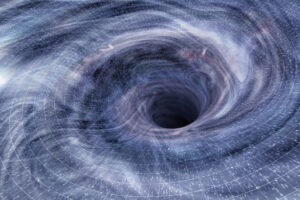
A black hole is a region in spacetime where gravitational forces are so intense that nothing, not even light or other forms of electromagnetic radiation, can escape its pull. These cosmic entities represent extreme distortions in the fabric of the universe, formed from the remnants of massive stars or other high-density phenomena. Black holes challenge our understanding of physics by pushing the limits of gravitational theory and quantum mechanics.
- Event Horizon:
The boundary surrounding a black hole beyond which no information or matter can return. - Accretion Disk:
A swirling ring of superheated gas and dust orbiting the black hole, emitting intense radiation. - Singularity:
The infinitely dense core at the center of a black hole where known physical laws break down.
Historical Context and Scientific Significance
Interest in black holes has evolved over decades, initially confined to theoretical physics and science fiction. The concept intrigued scientists and the public alike because black holes represent a paradoxical blend of invisibility and immense power. Their study has profound implications for understanding the universe’s structure, the lifecycle of stars, and the fundamental laws governing reality.
The First Image of a Black Hole: A Milestone in Astrophysics
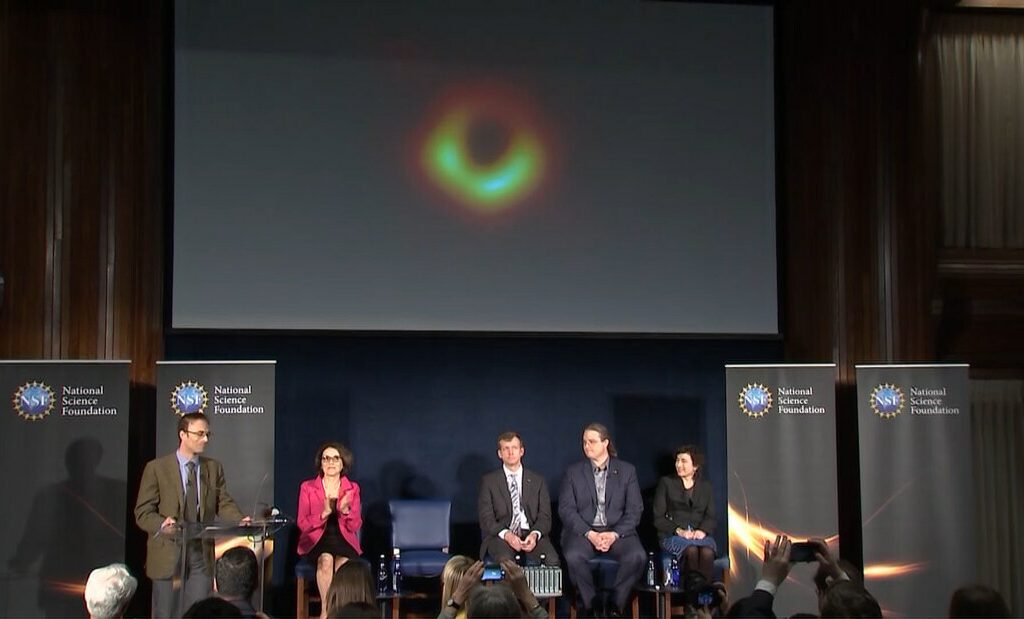
In April 2019, humanity witnessed a groundbreaking achievement: the first-ever direct image of a black hole. This image revealed a luminous, fiery ring encircling a dark center, visually confirming long-standing theoretical predictions. The glowing ring is the accretion disk, composed of gas heated to millions of degrees as it spirals inward, while the dark core represents the black hole’s shadow, shaped by gravitational lensing that bends light around the massive object.
Technological Innovation Behind the Image
Capturing this image required overcoming immense observational challenges. Black holes emit no light themselves, making traditional optical telescopes ineffective. Instead, the Event Horizon Telescope (EHT) project utilized a global network of radio telescopes spread across multiple continents. By synchronizing these instruments, scientists created a virtual Earth-sized telescope with unprecedented resolution. The vast amounts of data collected-measured in petabytes-were processed using sophisticated algorithms and powerful supercomputers to reconstruct the faint signals into a coherent image.
How the Event Horizon Telescope Works
The EHT operates on the principle of very-long-baseline interferometry (VLBI), which combines signals from widely separated radio antennas to simulate a telescope as large as the distance between them. This technique enhances resolution dramatically, enabling the observation of extremely small and distant objects like black holes.
Philosophical and Cultural Impact
The first black hole image resonates beyond science, touching on deep philosophical questions about the nature of reality and human curiosity. Black holes symbolize the boundary between the known and the unknown, evoking a mixture of fear and fascination. The image’s dark center represents the mysterious abyss, while the glowing ring offers a glimpse of understanding, reflecting timeless themes of light versus darkness and knowledge versus mystery.
Collaborative Efforts and Global Cooperation
The success of the EHT project exemplifies international scientific collaboration. Hundreds of researchers from around the world contributed expertise, resources, and technology, transcending geopolitical boundaries. This collective endeavor highlights the power of unified human effort in achieving what once seemed impossible.
Scientific Advances Following the Image
The direct visualization of a black hole has propelled astrophysical research forward. It has refined models of galactic dynamics, star formation, and high-energy phenomena near black holes. Additionally, it informs studies on gravitational waves, dark matter, and the evolution of cosmic structures, enriching our broader understanding of the universe.
Common Misconceptions About Black Holes
Black holes suck in everything around them like cosmic vacuum cleaners.
Black holes exert gravitational pull like any other massive object; objects must be within a certain proximity (event horizon) to be irreversibly drawn in.
Black holes are visible because they emit light.
Black holes themselves emit no light; the visible glow comes from the heated accretion disk surrounding them.
Why the First Black Hole Image Matters
This historic image represents more than a scientific breakthrough; it embodies humanity’s relentless quest to understand the cosmos. It bridges theoretical physics and observable phenomena, providing tangible evidence of concepts once confined to equations and simulations. The image inspires ongoing inquiry into the universe’s deepest mysteries and underscores the importance of technological innovation and global collaboration in expanding our cosmic horizons.
FAQ
What is a black hole?
A black hole is a region in spacetime with gravitational forces so intense that nothing can escape its pull, including light.
Why is the first black hole image important?
It provides direct visual evidence of black holes, confirming theoretical predictions and advancing our understanding of the universe.

Leave a Reply