
Short Answer
Understanding Dark Matter
Dark matter is a mysterious and invisible substance that does not emit, absorb, or reflect light, making it undetectable by conventional telescopes. Despite its elusive nature, it exerts a gravitational influence that shapes the structure and behavior of galaxies and the universe at large. Scientists have long been intrigued by the possibility that dark matter might not only exist in distant cosmic realms but could also be present within our own solar system or even on Earth.
Gravitational Evidence of Dark Matter
The primary evidence for dark matter arises from its gravitational effects. Observations of galaxies reveal that stars orbit at speeds that cannot be explained solely by the visible matter present. This discrepancy suggests an unseen mass-dark matter-acting as a gravitational scaffold that holds galaxies together. However, detecting dark matter within the solar system is far more difficult because the sun’s gravity overwhelmingly dominates the local environment, masking any subtle influences dark matter might have.
Dark Matter in the Solar System
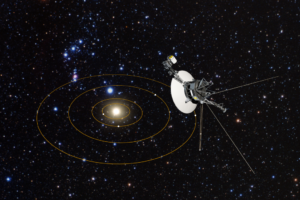
To consider the presence of dark matter near Earth, it is essential to understand the delicate gravitational interplay among the sun, planets, and smaller celestial bodies. If dark matter were abundant in the solar system, it would cause slight deviations in planetary orbits or spacecraft trajectories. Precise measurements and orbital analyses have so far revealed no significant anomalies that would indicate a substantial concentration of dark matter within the sun’s gravitational domain. The solar system’s gravitational dynamics appear finely balanced, with no clear evidence of dark matter’s direct influence.
Possible Forms and Behavior of Dark Matter
Despite the lack of clear gravitational signals, dark matter might consist of exotic particles that interact very weakly with ordinary matter and electromagnetic radiation. This weak interaction allows dark matter to form diffuse halos or transient clumps that evade detection even with sensitive instruments. Theoretical models propose that these ephemeral concentrations could subtly affect local gravitational fields or interact faintly with detectors on Earth, presenting a challenge akin to observing fleeting shadows just beyond human perception.
Dark Matter Detection on Earth
Earth continuously moves through a vast halo of galactic dark matter as it orbits the sun and the Milky Way. This movement creates a “dark matter wind” that might occasionally collide with atoms in highly sensitive terrestrial detectors. To capture these rare interactions, scientists have developed underground laboratories shielded from cosmic rays and background radiation, employing materials like liquid xenon and ultra-pure germanium crystals. These detectors operate at extremely low temperatures and are surrounded by multiple layers of shielding to isolate potential dark matter signals from noise.
Experimental Efforts and Challenges
Despite decades of rigorous experimentation, direct detection of dark matter particles remains elusive. Each null result helps refine theoretical models by narrowing the range of possible particle properties and interaction strengths. Researchers continue to enhance detector sensitivity and explore new detection methods, maintaining a persistent and precise search for the faintest indications of dark matter’s presence.
Hypotheses on Dark Matter’s Influence Within Earth
Some theories suggest that dark matter particles could accumulate inside massive bodies like Earth, potentially affecting geophysical processes. For example, dark matter trapped in Earth’s core might annihilate or decay, releasing heat that contributes marginally to the planet’s internal energy. Although this heat would be negligible compared to that generated by radioactive decay, such ideas foster interdisciplinary research linking particle physics with Earth sciences.
Gravitational Focusing and Seasonal Variations
As Earth orbits the sun, it may gravitationally concentrate dark matter particles into a localized halo, similar to how a ship creates waves at its bow. This phenomenon, known as gravitational focusing, could cause seasonal fluctuations in the flux of dark matter particles detected on Earth. Some experiments have reported annual modulation signals that might correspond to this effect, sparking ongoing debate and further investigation. Confirming such patterns would represent a major breakthrough in understanding dark matter’s local behavior.
Leading Theories and Alternative Perspectives
The true nature of dark matter remains one of the greatest mysteries in modern physics. Popular candidates include Weakly Interacting Massive Particles (WIMPs) and axions, both of which have so far evaded detection. Alternative hypotheses propose primordial black holes or modifications to gravitational theory as explanations for dark matter phenomena. Each framework influences expectations about dark matter’s presence in the solar system and guides experimental approaches accordingly.
Significance of Studying Local Dark Matter
Investigating dark matter within our solar system and on Earth bridges the vast scales of cosmology with our immediate environment. Understanding whether dark matter permeates our cosmic neighborhood or subtly interacts with our planet has profound implications for physics, astronomy, and Earth sciences. This research not only deepens our grasp of the universe’s fundamental composition but also challenges and expands the boundaries of human knowledge.
Conclusion: The Ongoing Quest
The search for dark matter near Earth is a compelling journey into the unknown, blending cosmic exploration with terrestrial science. As detection technologies advance and theoretical models evolve, the possibility of uncovering dark matter’s local presence remains an exciting frontier. This pursuit invites us to peer beyond the visible universe and unravel the hidden fabric that shapes reality itself, continuing humanity’s timeless quest to illuminate the darkness.
FAQ
What is dark matter?
Dark matter is an invisible substance that has gravitational effects but does not interact with light.
How does dark matter affect the solar system?
While dark matter may exist in the solar system, its gravitational influence is difficult to detect due to the sun's dominant gravity.
What are the challenges in detecting dark matter?
Detecting dark matter is challenging due to its weak interactions with regular matter and the need for sensitive detection methods.

Leave a Reply