
Short Answer
Definition of Astroparticle Physics
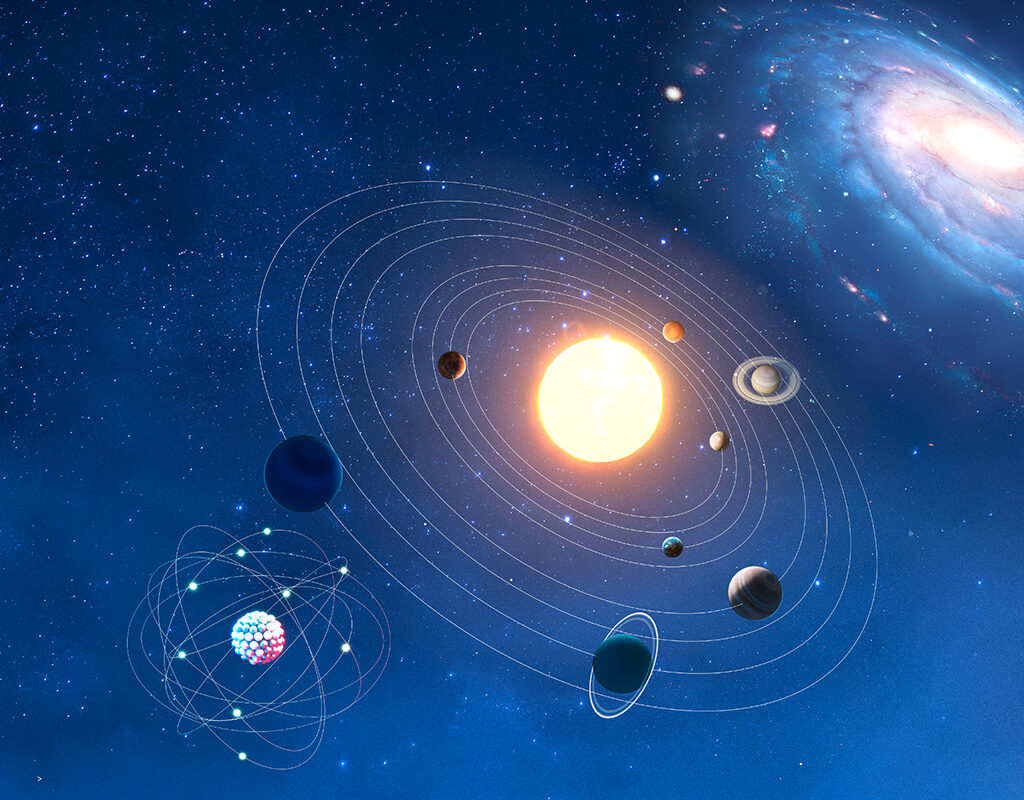
Astroparticle physics is a multidisciplinary scientific field that merges concepts from astrophysics, particle physics, and cosmology. It focuses on studying fundamental particles originating from outer space and their interactions, aiming to unravel the mysteries of the universe at both the largest and smallest scales. This domain explores the nature of matter and energy beyond Earth, providing insights into cosmic phenomena that traditional astronomy cannot fully explain.
Scope and Objectives
The primary goal of astroparticle physics is to understand the fundamental building blocks of the universe and the forces governing them by examining particles that travel through space. It addresses profound questions such as:
- Composition of the Universe:
What constitutes the visible and invisible matter in the cosmos? - Cosmic Forces:
Which unseen interactions influence the behavior and evolution of celestial bodies? - Role of Exotic Particles:
How do elusive particles like neutrinos and dark matter candidates contribute to the cosmic framework?
Key Particles in Astroparticle Physics
Astroparticle physics investigates particles that originate from beyond Earth’s atmosphere but are not limited to electromagnetic signals. These include:
- Cosmic Rays:
High-energy particles, primarily protons and atomic nuclei, that bombard Earth from outer space. - Neutrinos:
Nearly massless, electrically neutral particles that interact very weakly with matter, capable of passing through entire planets without being absorbed. - Dark Matter Particles:
Hypothetical particles that do not emit or absorb light but exert gravitational effects on visible matter.
Mechanisms and Detection Methods
Particles studied in astroparticle physics often originate from energetic cosmic events such as supernovae, gamma-ray bursts, and black hole environments. These particles travel vast distances, interacting occasionally with Earth’s atmosphere or matter, providing valuable data about their sources.
Detecting these elusive particles requires advanced technology and innovative methods:
- Neutrino Observatories:
Facilities like the IceCube Neutrino Observatory use natural mediums such as Antarctic ice to capture rare neutrino interactions deep underground or beneath ice sheets. - Gamma-Ray Telescopes:
Instruments that observe high-energy gamma radiation from space, offering clues about cosmic particle acceleration. - Underground Laboratories:
Shielded environments designed to detect weakly interacting particles like dark matter candidates by minimizing background noise.
Theoretical Foundations
The study of astroparticle physics is grounded in quantum field theory and the Standard Model of particle physics, which describe fundamental particles and forces. However, observations from cosmic phenomena often challenge these models, suggesting the existence of new physics beyond the Standard Model. The interplay between cosmology and particle physics helps scientists explore the universe’s origin, evolution, and the nature of dark matter and dark energy.
Significance of Neutrinos
Neutrinos, often called “ghost particles,” are pivotal in astroparticle physics due to their unique properties. Their weak interaction with matter allows them to escape dense astrophysical environments, carrying unaltered information from the Sun’s core or distant supernovae. This makes neutrinos invaluable messengers for studying processes invisible to electromagnetic observations, thereby expanding our understanding of the universe.
Dark Matter: The Cosmic Enigma
Dark matter constitutes about 27% of the universe’s total mass-energy but remains undetectable through conventional electromagnetic means. Its presence is inferred from gravitational effects on galaxy rotation curves and large-scale cosmic structures. Astroparticle physicists are actively searching for dark matter particles, such as Weakly Interacting Massive Particles (WIMPs) and axions, through direct detection experiments and indirect astrophysical observations. Discovering dark matter’s nature is crucial for comprehending the universe’s composition and destiny.
Collaborative and Technological Advances
Astroparticle physics thrives on the collaboration of experts from various scientific disciplines, including astrophysics, particle physics, and cosmology. This interdisciplinary approach drives innovation in experimental design and data analysis. Cutting-edge observatories and detectors distributed globally and in space work in concert to capture diverse cosmic signals, enhancing the depth and breadth of research findings.
Philosophical and Scientific Impact
Beyond its technical achievements, astroparticle physics resonates with humanity’s fundamental curiosity about existence and our place in the cosmos. By linking quantum phenomena with cosmic-scale events, it reveals the unity of natural laws across vastly different magnitudes. The field’s discoveries not only answer longstanding scientific questions but also inspire new inquiries into the universe’s deepest mysteries.
Future Prospects and Importance
Ongoing research and investment in astroparticle physics hold the promise of groundbreaking discoveries, such as identifying dark matter particles, uncovering new neutrino properties, and gaining insights into the universe’s earliest moments after the Big Bang. These advancements will significantly enhance our understanding of the cosmos and potentially revolutionize physics, technology, and cosmology.
FAQ
What is astroparticle physics?
Astroparticle physics studies cosmic particles and their interactions, bridging astrophysics and particle physics.
Why are neutrinos important in astroparticle physics?
Neutrinos provide insights into cosmic events and are crucial for understanding processes not visible through light.
What is dark matter?
Dark matter is undetectable through light but inferred from gravitational effects on visible matter.

Leave a Reply