
Short Answer
Understanding the Universe: A Complex Cosmic Fabric
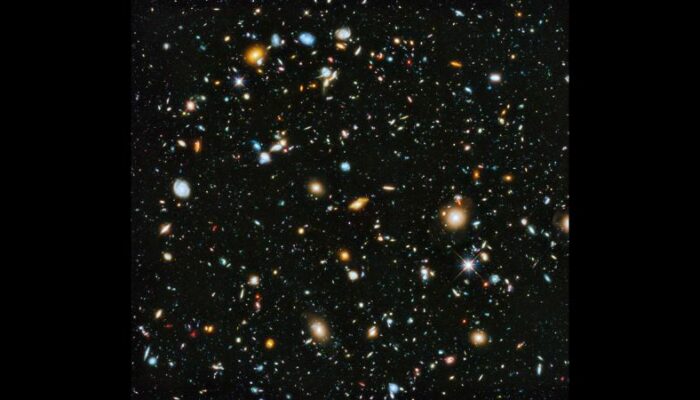
Envision the universe as an immense, shimmering tapestry interlaced with threads of light, darkness, matter, and enigma-each strand carrying secrets from ancient epochs and truths yet to be unveiled. This intricate cosmic fabric, while breathtaking in its complexity, may not be as straightforward as it appears. For centuries, humanity has positioned itself as the cosmic cartographer, charting stars and galaxies, formulating universal laws, and crafting theories to decode this grand design. Yet, what if the outlines we have meticulously drawn are mere illusions? What if our comprehension is only a shadow cast on a cave wall-an incomplete silhouette of a far stranger reality?
Definition of Modern Cosmology
Modern cosmology is the scientific study of the universe’s origin, structure, evolution, and eventual fate. It combines observational astronomy with theoretical physics to build models explaining cosmic phenomena.
- Lambda Cold Dark Matter (ΛCDM) Model:
The prevailing cosmological framework positing that the universe is composed predominantly of dark energy (Λ) and cold dark matter (CDM), which together account for over 95% of its total mass-energy content. - Cosmic Microwave Background (CMB):
The residual thermal radiation from the Big Bang, serving as a snapshot of the early universe approximately 380,000 years after its inception.
The Enigmatic Components: Dark Energy and Dark Matter
Our current cosmological model suggests that the universe is dominated by two mysterious constituents: dark energy and dark matter. Despite their overwhelming presence, both remain invisible and undetectable through direct means.
Dark Energy: The Accelerating Force
Dark energy was introduced to explain the unexpected observation that the universe’s expansion is accelerating rather than slowing down. This mysterious force is thought to permeate all of spacetime, acting as a repulsive energy that drives galaxies apart. However, its true nature remains elusive, raising questions about whether it is a fundamental property of spacetime or a byproduct of our mathematical models.
Dark Matter: The Invisible Scaffold
Dark matter acts as an unseen gravitational glue that holds galaxies and clusters together. Although its gravitational effects are evident, its composition is unknown. Scientists have proposed candidates such as Weakly Interacting Massive Particles (WIMPs) and axions, but despite extensive searches, these particles have yet to be detected. Alternative theories, like Modified Newtonian Dynamics (MOND), suggest that gravity itself might behave differently on cosmic scales, challenging the need for dark matter.
How Cosmological Observations Shape Our Understanding
Observations such as the cosmic microwave background radiation provide critical insights into the universe’s early conditions, age, and geometry. The CMB’s uniform glow and subtle fluctuations have been instrumental in refining cosmological models. Yet, anomalies in the CMB’s large-scale structure challenge the assumption of a perfectly homogeneous early universe, hinting at phenomena beyond the standard model, including cosmic inflation-a rapid expansion phase postulated to explain these irregularities.
The Big Bang and Its Philosophical Implications
The Big Bang theory describes the universe’s evolution from an extremely hot, dense singularity to its current expansive state. However, it does not address why the singularity existed or what preceded it. The singularity represents a boundary where conventional physics breaks down, leading to profound questions about the nature of space and time. Some theoretical frameworks propose the existence of a multiverse-an infinite collection of universes with varying physical laws-suggesting that our universe might be just one among countless others.
Limitations of Observation and the Cosmic Horizon
Our observable universe is limited by the speed of light and the finite age of cosmic expansion, forming a cosmic horizon beyond which information cannot reach us. This boundary restricts our knowledge to a finite region, leaving the true extent and shape of the entire universe unknown. Speculations about the universe’s topology include possibilities such as a Möbius strip or higher-dimensional manifolds, which could profoundly alter our understanding of cosmic structure.
Common Misconceptions in Cosmology
Dark energy is a well-understood force.
Dark energy remains a theoretical construct with unknown properties, introduced to explain cosmic acceleration but not yet directly observed.
Dark matter is definitively composed of WIMPs.
While WIMPs are a leading candidate, no conclusive evidence has been found, and alternative explanations like modified gravity exist.
The Big Bang explains the origin of the universe.
The Big Bang describes the universe’s evolution from a singularity but does not explain why the singularity existed or what caused it.
Why Cosmological Inquiry Is Vital
Exploring the universe’s mysteries is fundamental to advancing science and technology, enriching our understanding of existence, and inspiring innovation. Cosmology challenges our perceptions, pushing the boundaries of knowledge and fostering intellectual humility. As new technologies-such as gravitational wave detectors and advanced space telescopes-emerge, they promise to revolutionize our cosmic perspective, revealing a universe more intricate and wondrous than previously imagined.
Conclusion: Embracing the Unknown
The question of whether our current cosmological understanding is entirely or partially incorrect is not a cause for despair but a testament to the dynamic nature of scientific progress. Science thrives on questioning, revising, and expanding its frameworks. Our quest to comprehend the cosmos is an ongoing journey, inviting us to embrace complexity, nurture diverse ideas, and remain open to revolutionary discoveries. The universe, like a profound symphony or an ancient manuscript, beckons us to listen carefully, challenge assumptions, and uncover deeper truths hidden within its vast expanse.
FAQ
What is dark energy?
Dark energy is a mysterious force thought to be responsible for the accelerated expansion of the universe.
What role does dark matter play in the universe?
Dark matter acts as an invisible scaffold that holds galaxies together, although its exact composition is still unknown.
What does the Big Bang theory explain?
The Big Bang theory describes the evolution of the universe from a hot, dense state but does not account for the cause of the singularity.

Leave a Reply