
Short Answer
Understanding Dark Energy
Dark energy represents a mysterious component of the universe that drives the accelerated expansion of space itself. Unlike familiar forces, it is not a conventional force but an intrinsic property of the vacuum, influencing the cosmos in ways that challenge our traditional understanding of gravity and physics.
Gravity: The Traditional Perspective
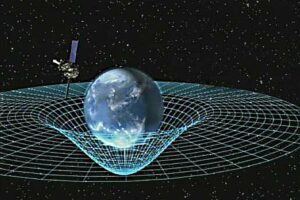
Conventionally, gravity is recognized as an attractive interaction that pulls celestial bodies such as planets, stars, and galaxies toward one another. This force, foundational to Newtonian mechanics and Einstein’s theory of general relativity, arises from the curvature of spacetime caused by mass and energy. Gravity shapes the large-scale structure of the universe by guiding the motion of matter along curved paths.
The Emergence of Dark Energy in Cosmology
In the late 20th century, observations revealed that the universe’s expansion is not slowing down due to gravity, as once expected, but accelerating. This unexpected phenomenon led to the introduction of dark energy as a dominant cosmic component responsible for this acceleration. The term “repulsive gravity” was coined as a metaphor to describe this effect, suggesting a force that counteracts gravity’s pull. However, this analogy oversimplifies the complex nature of dark energy.
Dark Energy vs. Gravity: Key Differences
- Nature of the Phenomenon:
Gravity is a force emerging from spacetime curvature caused by mass-energy, whereas dark energy is a form of energy inherent to space itself, characterized by a constant energy density. - Mechanism of Action:
Gravity attracts matter inward, while dark energy exerts a negative pressure that effectively causes the expansion of space to accelerate. - Force vs. Property:
Gravity acts as a force influencing matter’s motion, but dark energy modifies the metric of spacetime, changing how distances between objects evolve over time.
General Relativity and the Geometry of the Universe
Einstein’s general relativity redefines gravity not as a force but as the manifestation of curved spacetime geometry. Matter and energy dictate how spacetime bends, and this curvature directs the movement of matter. Dark energy alters this geometric fabric by increasing the rate at which space expands, not by exerting a repulsive force in the classical sense but by changing the underlying metric that measures spatial intervals.
The Cosmological Constant and Vacuum Energy
The cosmological constant, originally introduced by Einstein to maintain a static universe, was later repurposed to explain the accelerated expansion observed today. It represents a uniform energy density filling space, exerting a constant negative pressure that does not diminish as the universe grows. This persistent vacuum energy is fundamentally different from forces that vary with distance or mass, making the “repulsive gravity” label misleading.
Why “Repulsive Gravity” Is a Misleading Metaphor
- Misconception: Dark energy acts like a force pushing objects apart.
Correction: Dark energy changes the geometry of spacetime, causing expansion to accelerate without a classical force acting between objects. - Misconception: Gravity can be simply reversed to explain cosmic acceleration.
Correction: The acceleration arises from negative pressure and vacuum energy, not a straightforward inversion of gravitational attraction. - Misconception: Dark energy behaves like familiar forces such as electromagnetism.
Correction: Dark energy is a property of space itself, not a force mediated by particles or fields in the traditional sense.
Alternative Theoretical Frameworks
Beyond the cosmological constant, other hypotheses attempt to describe dark energy’s nature, including quintessence models, modified gravity theories, and vacuum fluctuations. These approaches emphasize subtle variations in the universe’s energy composition and spacetime dynamics rather than a simple reversal of gravitational pull.
The Importance of Precise Terminology in Cosmology
Language shapes our understanding of complex scientific concepts. While metaphors like “repulsive gravity” can aid initial comprehension, they risk embedding inaccurate mental models that hinder deeper inquiry. Employing precise terms such as “vacuum energy density” or “cosmic acceleration agent” better reflects the nuanced reality and encourages rigorous exploration of dark energy’s true nature.
Implications for Our Cosmic Understanding
Dark energy challenges the long-standing gravitational paradigm by introducing a dynamic, accelerating universe shaped by the interplay of matter, energy, and spacetime geometry. Recognizing this complexity enriches our appreciation of the cosmos as a vast, evolving entity governed by principles that transcend everyday intuition.
Conclusion: Embracing the Complexity of Dark Energy
Rejecting the simplistic notion of “repulsive gravity” invites a more sophisticated perspective on the universe’s accelerated expansion. It encourages scientists and enthusiasts alike to engage with the profound mysteries of dark energy, fostering a deeper, more accurate understanding of the cosmic forces that sculpt our reality.
FAQ
What is dark energy?
Dark energy is a form of energy that fills space and causes the universe's expansion to accelerate.
Why is dark energy not called repulsive gravity?
The term oversimplifies dark energy's role, which modifies spacetime rather than acting as a force.
What is the cosmological constant?
The cosmological constant is a term added to Einstein's equations of general relativity to explain the accelerated expansion of the universe.
Leave a Reply