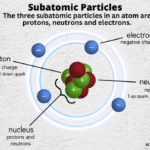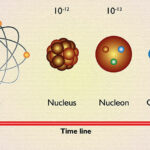
What are quarks in an atom?

Definition of Quarks Quarks are fundamental particles that serve as the essential building blocks of matter at the subatomic level. Unlike atoms, which were once considered the smallest indivisible units, quarks reside within protons and neutrons, the components of an atom’s nucleus. These particles are elementary constituents in particle physics, meaning they are not composed […]

Read More →

Lasers Linacs & Lungs: A Physicist’s Guide to Medical Marvels

Definition and Overview The intersection of laser technology, linear accelerators (linacs), and pulmonary medicine represents a fascinating convergence of physics and healthcare. This triad highlights the profound impact of advanced technologies on medical treatments, particularly in addressing lung-related conditions. By examining each component’s unique role and their combined application, we gain insight into how modern […]

Read More →

Do efforts to use ‘green energy’ actually increase pollution?

Understanding Green Energy and Its Environmental Impact In today’s world, where environmental responsibility is paramount, the conversation around green energy has gained significant momentum. Renewable energy sources such as wind, solar, and hydroelectric power are often heralded as the solution to reducing pollution and combating climate change. These alternatives to fossil fuels represent a hopeful […]

Read More →

How does quantum computing work?

Definition of Quantum Computing Quantum computing is an innovative computational approach that leverages the principles of quantum mechanics to process information. Unlike traditional computing, which uses binary bits as the smallest unit of data, quantum computing employs quantum bits or qubits. These qubits harness unique quantum phenomena, enabling the execution of complex calculations far beyond […]

Read More →

Should I Get My PhD in Biomedical Engineering? Pros and Pitfalls

Definition of Biomedical Engineering and Its Academic Pursuit Biomedical engineering is an interdisciplinary field that integrates principles from biology, medicine, and engineering to develop technologies and solutions aimed at improving healthcare. Pursuing a Doctor of Philosophy (PhD) in this area involves advanced study and research, focusing on innovative approaches to medical challenges. This academic path […]

Read More →

Why are we solid objects if all matter is made up of atoms?

Definition of Solidity Solidity refers to the characteristic state of matter in which substances maintain a definite shape and volume, exhibiting resistance to deformation. This property arises from the arrangement and interactions of atoms within a material, giving rise to the tangible, firm objects we encounter in daily life. Atoms: The fundamental building blocks of […]

Read More →

Exploding Stars Silent Space: No Gravitational Waves Detected

Understanding Silent Supernovae Within the vast expanse of the cosmos, the explosive deaths of massive stars, known as supernovae, have long been expected to produce detectable gravitational waves-ripples in the fabric of spacetime. Yet, recent observations reveal a puzzling quietness: many supernovae appear to occur without the anticipated gravitational wave signals. This unexpected silence challenges […]

Read More →

How can waste recycling connected to renewable energy?

Definition of Waste Recycling and Renewable Energy Waste recycling and renewable energy represent interconnected pillars of sustainable development. Waste recycling involves the process of converting discarded materials into reusable raw materials, thereby reducing environmental impact. Renewable energy refers to energy derived from natural, replenishable sources such as sunlight, wind, and organic waste. When combined, these […]

Read More →

Which particles in an atom are heavy particles?

Definition of Atomic Particles An atom is a fundamental unit of matter, structured much like a miniature solar system, where various particles orbit a central core. The primary constituents of an atom include protons, neutrons, and electrons. Among these, protons and neutrons are classified as heavy particles due to their substantial mass compared to electrons. […]

Read More →