
Short Answer
Definition
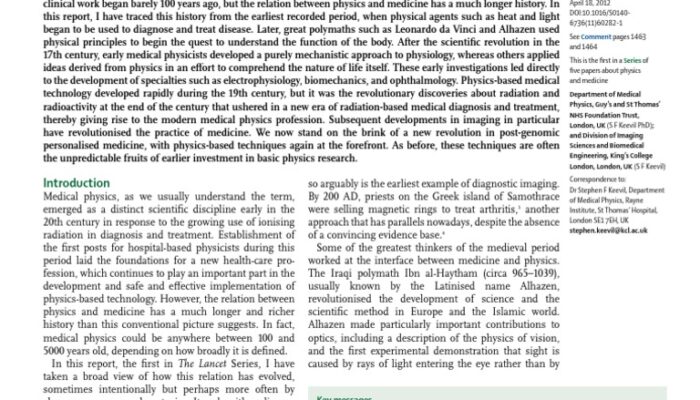
The intersection of physics and medicine represents a dynamic and evolving collaboration between two fields that, at first glance, may appear unrelated. This relationship involves applying fundamental physical laws and concepts to medical science, enhancing both diagnostic and therapeutic techniques. By leveraging physical principles, medicine gains powerful tools to better understand, visualize, and treat the human body.
- Physics:
The branch of science concerned with the nature and properties of matter and energy. - Medicine:
The science and practice of diagnosing, treating, and preventing disease. - Interdisciplinary Integration:
The fusion of physics and medicine leads to innovations such as imaging technologies, radiation therapies, and biophysical research.
Historical Background
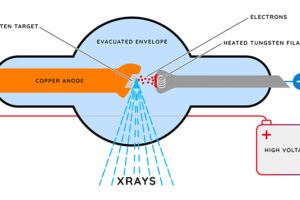
The synergy between physics and medicine has deep historical roots, marked by groundbreaking discoveries that transformed healthcare. A pivotal moment occurred in the late 19th century when Wilhelm Röntgen discovered X-rays, unveiling a new dimension in medical diagnostics. This discovery demonstrated how electromagnetic phenomena could be harnessed to visualize internal body structures non-invasively, revolutionizing clinical practice and setting the stage for future innovations.
Modern Diagnostic Applications
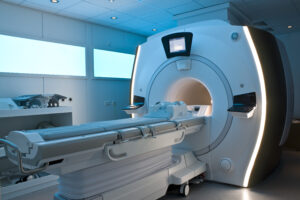
Contemporary medical diagnostics heavily rely on physical principles to provide detailed insights into the human body. Magnetic Resonance Imaging (MRI), for example, exploits nuclear magnetic resonance-a quantum mechanical effect-to generate high-resolution images of soft tissues. This capability has dramatically improved the detection and monitoring of conditions such as neurological disorders and cancers. Mastery of the underlying physics is essential for the development and effective use of these imaging modalities.
Therapeutic Contributions of Physics
Beyond diagnostics, physics plays a crucial role in treatment strategies, particularly in radiation therapy. This approach uses ionizing radiation to selectively eradicate cancerous cells while minimizing harm to healthy tissues. The success of such treatments depends on precise dosimetry, which involves calculating and controlling the radiation dose distribution. This precision necessitates close collaboration between medical professionals and physicists, fostering an interdisciplinary environment that enhances therapeutic outcomes.
Biophysics and Molecular Medicine
The field of biophysics exemplifies the integration of physical science with biological and medical research. It investigates the physical properties and behaviors of biomolecules, cellular structures, and tissues. Techniques such as molecular dynamics simulations help elucidate the structure-function relationships of proteins and nucleic acids. Additionally, innovations in drug delivery, including nanoparticle-based systems, utilize physical principles to improve targeting and efficacy, showcasing the practical benefits of this interdisciplinary approach.
Role of Physics in Health Informatics and Telemedicine
Physics also underpins advancements in health informatics and telemedicine. Computational algorithms based on physical models enhance the interpretation of complex medical data, improving diagnostic accuracy. The rise of machine learning and artificial intelligence-fields grounded in physical computing-enables healthcare providers to detect subtle patterns and anomalies that might otherwise go unnoticed. These technologies facilitate remote patient monitoring and personalized care, expanding the reach and effectiveness of medical services.
Emerging Trends and Future Directions
The future of medicine is increasingly shaped by the continued integration of physics. Personalized medicine, which tailors treatments to individual genetic and physiological profiles, relies heavily on biophysical insights and systems biology. Researchers employ physical models to predict therapeutic responses, aiming to optimize treatment plans. Additionally, advancements in imaging techniques such as positron emission tomography (PET), single-photon emission computed tomography (SPECT), and cutting-edge optical imaging methods promise to further enhance diagnostic capabilities.
Nanotechnology: A Frontier of Physics in Medicine
Nanotechnology represents a rapidly growing area where physics profoundly influences medical innovation. Materials engineered at the nanoscale exhibit unique physical properties that can be exploited for targeted drug delivery, improved imaging contrast, and sensitive diagnostics. This field exemplifies the necessity of interdisciplinary collaboration, combining expertise from physics, biology, and medicine to develop novel solutions for complex health challenges.
Common Misconceptions
Physics is only relevant to theoretical science and has little practical application in medicine.
Physics is fundamental to many medical technologies and treatments, from imaging to radiation therapy, directly impacting patient care.
Medical professionals do not need to understand physics to use diagnostic tools effectively.
A solid grasp of the physical principles behind medical devices is crucial for accurate interpretation and safe application.
Significance of Physics in Medicine
The integration of physics into medicine is vital for advancing healthcare. It enables the development of sophisticated diagnostic tools, precise treatment methods, and innovative research approaches that deepen our understanding of biological systems. This interdisciplinary collaboration not only improves patient outcomes but also drives continuous innovation, ensuring that medicine evolves alongside scientific progress.
FAQ
What are some historical milestones in the relationship between physics and medicine?
The discovery of X-rays by Wilhelm Röntgen in the late 19th century revolutionized diagnostic imaging and established a foundation for medical physics.
How does radiation therapy utilize physics principles?
Radiation therapy uses ionizing radiation and dosimetry to precisely target and destroy cancerous cells while minimizing harm to healthy tissues.
What role does nanotechnology play in medicine related to physics?
Nanotechnology exploits unique physical properties of nanoscale materials for drug delivery, imaging, and diagnostics, representing a cutting-edge application of physics in medicine.
Why is interdisciplinary collaboration important in medical physics?
Collaboration between physicists and medical practitioners ensures accurate application of physical principles in diagnostics and treatments, improving patient outcomes.



Leave a Reply