
Short Answer
Definition of Medical Isotopes
Medical isotopes are radioactive atoms used extensively in nuclear medicine for both diagnostic and therapeutic purposes. These isotopes emit radiation that can be detected by imaging devices or used to target and destroy diseased tissues, making them indispensable tools in modern healthcare.
- Diagnostic Isotopes:
Employed primarily in imaging techniques to visualize physiological processes within the body. - Therapeutic Isotopes:
Utilized to deliver targeted radiation therapy to treat various medical conditions, including cancers.
Importance of Accelerating Medical Isotope Production
The rapid production of medical isotopes is critical due to their short half-lives and high demand in clinical settings. Efficient and timely availability directly influences patient diagnosis and treatment outcomes, underscoring the need for innovative production methods that can meet growing healthcare demands.
Traditional Production Methods
Historically, medical isotopes have been produced using nuclear reactors. These reactors generate neutrons through the fission of uranium fuel, which then activate target materials to produce desired isotopes. While effective, this approach faces several challenges:
- Operational Constraints:
Reactor capacity limits the volume of isotopes produced. - Supply Chain Issues:
Dependence on high-quality uranium and complex logistics complicate consistent isotope availability. - Regulatory Hurdles:
Strict controls on radioactive materials can delay production and distribution.
Particle Accelerators as an Alternative
Particle accelerators, such as cyclotrons, offer a promising alternative to reactor-based isotope production. These devices accelerate charged particles, typically protons, using electromagnetic fields and direct them onto specific target materials to induce nuclear reactions that generate isotopes.
- Advantages:
Cyclotrons enable localized production, reduce reliance on nuclear fission, and can quickly adapt to changing clinical demands. - Common Isotopes Produced:
Fluorine-18, essential for positron emission tomography (PET) imaging, is a notable example produced via cyclotrons.
Innovations in Target Materials and Extraction Techniques
Recent advancements focus on optimizing target materials and refining radionuclide extraction to enhance isotope yield and purity. Alternative materials such as lithium and aluminum have shown promise in increasing production efficiency by improving interactions with accelerated particles.
- Enhanced Yields:
Tailored target compositions maximize isotope generation rates. - Purity Improvements:
Advanced extraction methods reduce contaminants, ensuring higher quality isotopes. - Exotic Isotopes:
These innovations open pathways to produce rare isotopes previously considered unattainable.
Role of Artificial Intelligence in Isotope Production
The integration of artificial intelligence (AI) and machine learning is revolutionizing isotope production by optimizing operational workflows. AI algorithms analyze large datasets to forecast demand, schedule production efficiently, and manage inventory, thereby minimizing waste and ensuring isotopes are available when needed.
- Demand Prediction:
Machine learning models anticipate clinical needs to align production accordingly. - Operational Efficiency:
AI streamlines scheduling and resource allocation, reducing downtime. - Real-Time Feedback:
Continuous data monitoring allows dynamic adjustments to production processes.
Clinical Applications of Medical Isotopes
Medical isotopes play a vital role in both diagnosis and treatment across various medical disciplines:
- Diagnostic Imaging:
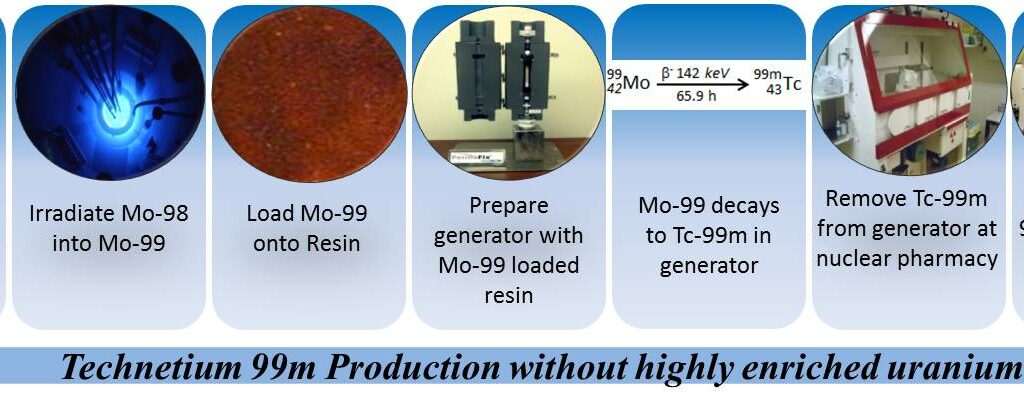
Isotopes like Technetium-99m enable detailed visualization of physiological functions, aiding early detection of diseases such as cardiac conditions and cancers. - Therapeutic Uses:
Radioisotopes such as iodine-131 provide targeted treatment for thyroid cancers, improving patient prognosis through precise radiation delivery. - Dual-Purpose Isotopes:
Emerging isotopes are designed to serve both diagnostic and therapeutic roles, enhancing treatment personalization.
Environmental and Sustainability Considerations
As healthcare systems strive for sustainability, minimizing the environmental impact of isotope production is increasingly important. Innovations include closed-loop recycling of target materials and strategies to reduce radioactive waste, contributing to greener and more sustainable nuclear medicine practices.
Summary and Future Outlook
The acceleration of medical isotope production represents a critical intersection of physics and medicine, driving improvements in patient care through technological innovation. The shift from traditional reactor-based methods to particle accelerators, combined with novel target materials and AI-driven optimization, heralds a new era in nuclear medicine. Continued research and development promise to expand isotope availability, enhance therapeutic efficacy, and promote sustainable practices, ultimately elevating the quality and accessibility of healthcare worldwide.
FAQ
What are medical isotopes?
Medical isotopes are radioactive atoms used in nuclear medicine for diagnostic and therapeutic purposes.
Why is accelerating medical isotope production important?
Accelerating production is crucial due to the short half-lives of isotopes and their high demand in clinical settings.
What are the advantages of using particle accelerators for isotope production?
Particle accelerators allow for localized production, reduce reliance on nuclear fission, and can adapt quickly to clinical needs.
How does artificial intelligence contribute to isotope production?
AI optimizes workflows, predicts demand, manages inventory, and enhances operational efficiency.



Leave a Reply