
Short Answer
Definition and Overview
Magnetic Resonance Imaging (MRI) and Nuclear Magnetic Resonance (NMR) are advanced technologies that harness the magnetic properties of atomic nuclei. Both techniques exploit the behavior of nuclei in magnetic fields, yet they serve distinct purposes across different disciplines. Understanding the fundamental differences between MRI and NMR is essential for appreciating their unique roles in medicine, chemistry, and materials science.
Fundamental Principles
At the core, both MRI and NMR operate on the principle that atomic nuclei, particularly hydrogen nuclei, align with an external magnetic field and resonate at specific frequencies. This resonance is influenced by the magnetic field strength and the chemical environment of the nuclei. Detection and analysis of these signals form the basis of both methods, but the subsequent processing and applications diverge significantly.
How Nuclear Magnetic Resonance Works
NMR spectroscopy measures the resonance frequencies of nuclei to reveal detailed information about molecular structures. By analyzing these signals, chemists can determine molecular connectivity, identify functional groups, and understand stereochemical arrangements. This makes NMR indispensable for characterizing complex organic compounds and mixtures in laboratory research.
How Magnetic Resonance Imaging Works
MRI transforms the resonance data into detailed cross-sectional images of the body, focusing primarily on soft tissues. It differentiates tissue types by exploiting variations in relaxation times (T1 and T2) of hydrogen nuclei in different biological environments. This capability allows clinicians to visualize anatomical structures and diagnose conditions such as tumors, neurological disorders, and other pathologies.
Applications and Contexts
- MRI:
Primarily used in clinical settings for non-invasive diagnostic imaging of the human body, especially soft tissues. - NMR:
Employed mainly in chemical laboratories and materials science for molecular analysis and structural elucidation.
Technical Differences
While both techniques rely on nuclear magnetic resonance, their operational scales and environments differ markedly:
- Spatial Resolution:
NMR provides molecular-level resolution, enabling detailed structural insights at the micro- and nanoscale. MRI operates at a macroscopic scale, typically imaging structures from millimeters to centimeters. - Equipment Size and Setup:
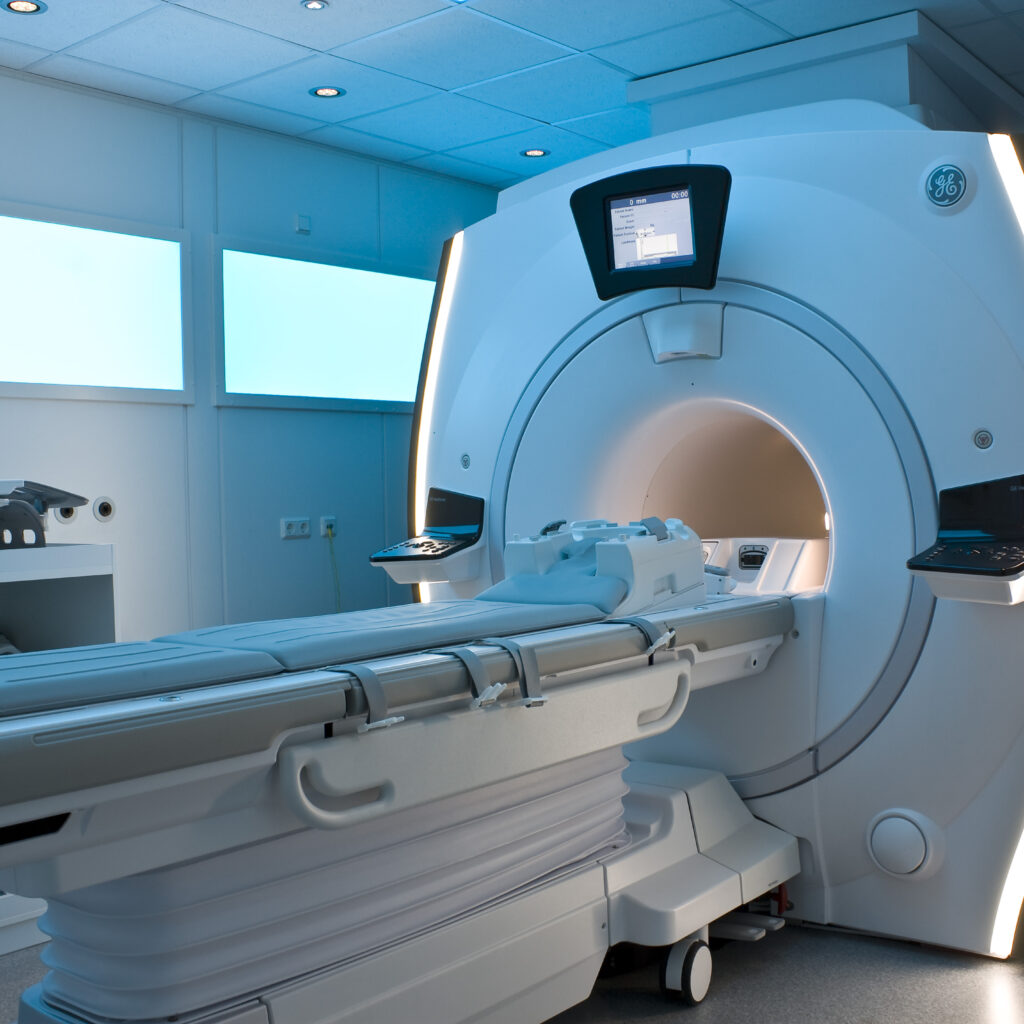
MRI machines are large, complex systems designed to accommodate patients, featuring powerful magnets and sophisticated electronics. NMR spectrometers are generally more compact, tailored for laboratory use without the need for patient interaction. - Sample Preparation:
MRI requires minimal preparation, utilizing the body’s natural water content. NMR demands carefully prepared samples, often dissolved in specific solvents to optimize spectral clarity and resolution.
Technological Advancements and Innovations
Both MRI and NMR have benefited from improvements in hardware and computational algorithms, enhancing resolution and accuracy. A notable advancement in MRI is functional MRI (fMRI), which enables real-time visualization of brain activity by detecting blood-oxygen-level-dependent (BOLD) contrast. This innovation blurs the traditional boundaries between imaging and molecular analysis, raising questions about the future convergence of MRI and NMR capabilities.
Safety Considerations
- MRI Safety:
The strong magnetic fields used in MRI pose risks for patients with metallic implants or devices, necessitating thorough screening and safety protocols. - NMR Safety:
Although less invasive, NMR involves exposure to radiofrequency fields, requiring precautions to protect operators from prolonged electromagnetic exposure during experiments.
Common Misconceptions
MRI and NMR are interchangeable terms.
While both rely on nuclear magnetic resonance, MRI is a medical imaging technique, and NMR is primarily a chemical analysis tool.
MRI can provide molecular-level information like NMR.
MRI offers macroscopic anatomical images, whereas NMR delivers detailed molecular structural data.
Significance and Future Perspectives
The distinction between MRI and NMR reflects their tailored applications in healthcare and scientific research. MRI’s role in non-invasive diagnostics has revolutionized medicine, while NMR remains a cornerstone of molecular chemistry and materials science. As technology evolves, the potential integration or hybridization of these modalities could unlock new frontiers, enabling molecular-level imaging in clinical contexts and expanding the analytical power of both fields.
Summary
In essence, MRI and NMR, though rooted in the same physical principles, diverge in purpose, scale, and application. MRI excels in visualizing anatomical structures for medical diagnosis, while NMR provides intricate molecular insights crucial for chemical and material investigations. The ongoing advancements in both areas promise exciting developments that may bridge their current gaps, fostering innovations that enhance both medical imaging and molecular analysis.
FAQ
What is the main difference between MRI and NMR?
MRI is primarily used for medical imaging, while NMR is used for analyzing molecular structures.
Can MRI provide molecular-level information?
No, MRI provides macroscopic anatomical images, whereas NMR provides detailed molecular data.





Leave a Reply