
Short Answer
Definition of the Casimir Effect and Casimir Ratchets
The Casimir effect is a fundamental phenomenon in quantum field theory, arising from the intrinsic fluctuations present in vacuum states. It manifests as an attractive force between two uncharged, conductive plates placed in close proximity within a vacuum. This force emerges due to the alteration of electromagnetic vacuum modes between the plates, a consequence of quantum fluctuations. Building on this principle, Casimir ratchets are microscopic devices designed to exploit these vacuum fluctuations to generate directed motion or perform work, presenting a novel approach to nanoscale energy conversion.
Fundamental Principles Behind the Casimir Effect
Contrary to classical intuition, a vacuum is not an empty void but a dynamic environment filled with continuous electromagnetic fluctuations. These fluctuations are described by the fluctuation-dissipation theorem, which explains how random quantum disturbances can produce observable physical forces. When two conductive plates are positioned extremely close to each other, the spectrum of allowed vacuum fluctuations between them is restricted compared to the outside, resulting in a net attractive force known as the Casimir effect. This phenomenon was first theoretically predicted by Hendrik Casimir in 1948 and has since become a cornerstone in quantum physics research.
Mechanism of Casimir Ratchets
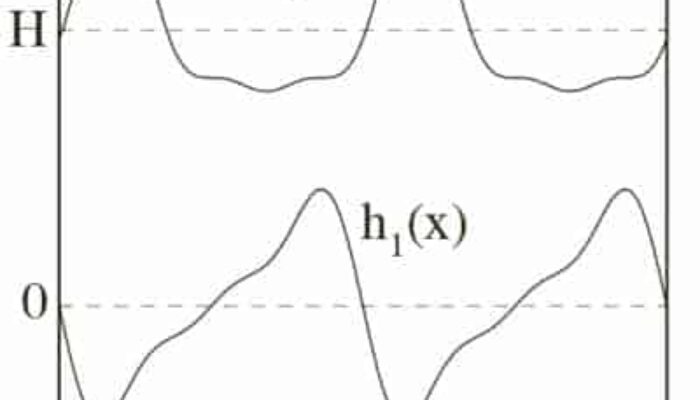
To understand Casimir ratchets, it is essential to first consider the classical ratchet mechanism. A ratchet is a mechanical system that permits motion in one direction while preventing it in the opposite direction, often through an asymmetric design. Casimir ratchets translate this concept into the quantum realm by utilizing the asymmetric interaction of vacuum fluctuations with specially designed nanoscale structures. The spatial asymmetry in these systems causes an imbalance in the vacuum forces, enabling the conversion of random quantum fluctuations into directed mechanical motion or energy transfer.
Design and Structural Asymmetry
The asymmetry necessary for Casimir ratchets can be introduced through the geometry of the interacting surfaces or the material composition. For example, surfaces with periodic corrugations or ratchet-like patterns can manipulate the distribution of vacuum fluctuations, creating non-equilibrium conditions that favor unidirectional motion. This engineered asymmetry is crucial for overcoming the inherent randomness of quantum fluctuations and achieving deterministic mechanical effects.
Mathematical Framework of the Casimir Effect
The Casimir force between two parallel plates can be expressed by the formula:
F = -frac{pi^2 hbar c}{240 d^4} A
- F: Casimir force (attractive)
- hbar: Reduced Planck constant
- c: Speed of light in vacuum
- d: Distance between the plates
- A: Surface area of the plates
This equation highlights the inverse fourth power dependence of the force on the separation distance, emphasizing the significance of nanoscale proximity for observable effects. In Casimir ratchets, this force is modulated by the asymmetric geometry to produce net directional motion.
Applications and Real-World Implications
Casimir ratchets hold promise for a variety of cutting-edge applications, particularly in fields requiring energy conversion at the nanoscale. Their ability to harness vacuum fluctuations as an energy source opens possibilities for:
- Nanoscale Machinery:
Enabling autonomous movement and work in microscopic devices without external power inputs. - Biosensors:
Enhancing sensitivity and functionality by integrating quantum fluctuation-driven components. - Energy Harvesting Systems:
Offering novel methods to convert ambient quantum vacuum energy into usable mechanical or electrical energy.
Moreover, advances in nanofabrication techniques allow for the precise construction of asymmetric structures optimized for Casimir ratchet performance, potentially revolutionizing the design of quantum-enabled devices.
Challenges in Practical Implementation
Despite the theoretical robustness of Casimir ratchets, several obstacles hinder their widespread application. Maintaining the delicate conditions necessary for effective operation at the nanoscale is challenging due to:
- Thermal Noise:
Random thermal fluctuations can mask or disrupt the subtle quantum forces driving the ratchet. - Environmental Disturbances:
External vibrations and electromagnetic interference may degrade performance. - Scaling Limitations:
Extending the principles from nanoscale devices to macroscopic systems remains an unresolved engineering challenge.
Ongoing research focuses on developing materials and designs that mitigate these issues to realize functional Casimir ratchet devices.
Interdisciplinary Significance and Future Prospects
The study of Casimir ratchets intersects multiple scientific disciplines, including quantum physics, materials science, and nanotechnology. Their potential integration into quantum computing and advanced electronic systems could lead to unprecedented efficiencies in information processing and energy management. Furthermore, the exploration of vacuum energy as a resource challenges traditional thermodynamic concepts and invites philosophical inquiry into the nature of energy and work.
Common Misconceptions About Casimir Ratchets
Casimir ratchets violate the second law of thermodynamics.
These devices do not create energy from nothing; they convert vacuum fluctuations, which are consistent with thermodynamic laws, into directed motion under specific conditions.
The Casimir effect only applies to charged particles.
The Casimir force arises between neutral conductive plates due to quantum vacuum fluctuations, independent of net charge.
Why Casimir Ratchets Are Important
Casimir ratchets represent a groundbreaking convergence of quantum theory and practical engineering, offering a pathway to harness the subtle energies of the quantum vacuum. Their development could transform energy harvesting and nanoscale device operation, contributing to sustainable technologies and advancing our understanding of quantum mechanics. As research progresses, these tiny engines may unlock new frontiers in science and technology, reshaping how we perceive and utilize energy at the smallest scales.
FAQ
What are Casimir ratchets?
Casimir ratchets are microscopic devices that exploit vacuum fluctuations to generate directed motion or perform work.
How do Casimir ratchets work?
They utilize asymmetric interactions of vacuum fluctuations with specially designed nanoscale structures to convert random quantum fluctuations into directed mechanical motion.






Leave a Reply