
Short Answer
Understanding Time-Reversal Symmetry in Particle Physics
In the field of particle physics, symmetries play a crucial role in revealing the fundamental principles that govern the universe. Time-reversal symmetry, in particular, posits that the fundamental physical processes should remain unchanged if the direction of time is reversed. This concept implies that the laws of physics are invariant whether time flows forward or backward. However, certain phenomena challenge this notion, indicating that time-reversal symmetry can be violated under specific conditions.
Overview of the BaBar Experiment
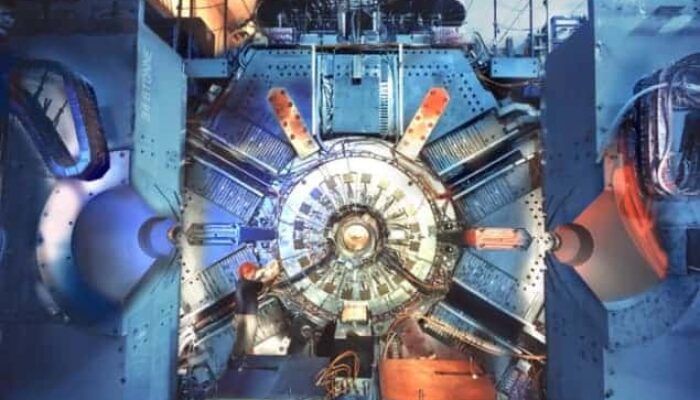
Conducted at the SLAC National Accelerator Laboratory in California, the BaBar experiment was a collaborative effort involving numerous physicists dedicated to investigating the behavior of B mesons. These particles are essential in studying CP violation, a phenomenon where the combined symmetries of charge conjugation (C) and parity (P) are not conserved. CP violation is fundamental to explaining why the universe contains more matter than antimatter, despite the Big Bang producing both in nearly equal amounts. Operating from 1999 to 2008, BaBar utilized electron-positron collisions to produce B mesons, enabling detailed analysis of their decay processes.
Definition and Significance of Time-Reversal Violation
Time-reversal violation occurs when certain physical processes do not behave identically when the direction of time is inverted. This phenomenon is a direct challenge to the assumption that the laws of physics are time-symmetric. The BaBar experiment provided the first direct evidence of this violation by observing asymmetries in the decay rates of B mesons compared to their antiparticles.
- Time-Reversal Symmetry:
The principle that physical processes should be invariant if time flows backward. - Time-Reversal Violation:
The observed phenomenon where certain particle interactions differ when time is reversed, indicating a fundamental asymmetry.
Mechanism Behind BaBar’s Discovery
The BaBar collaboration focused on measuring the differences in decay patterns between B mesons and their antiparticles. By analyzing approximately 500 million collision events, researchers detected a preference in the decay pathways that violated time-reversal symmetry. This was achieved through advanced detection systems and rigorous statistical methods, combining theoretical models with experimental data to ensure precision.
Mathematical Framework and Experimental Approach
The study of time-reversal violation involves comparing transition probabilities of particle decays and their time-reversed counterparts. If P(A → B) represents the probability of a particle transitioning from state A to state B, time-reversal symmetry implies:
P(A → B) = P(B → A)
BaBar’s measurements demonstrated that for B mesons, this equality does not hold, indicating a violation of time-reversal symmetry. The experiment employed complex algorithms to analyze decay rates and asymmetries, ensuring that the observed effects were statistically significant and not due to experimental errors.
Implications for Matter-Antimatter Asymmetry
The findings from BaBar have profound implications for understanding why the universe is dominated by matter rather than antimatter. The violation of time-reversal symmetry supports theoretical frameworks such as the Sakharov conditions, which outline the necessary criteria for generating the observed matter-antimatter imbalance. By confirming that certain interactions break time-reversal symmetry, BaBar’s results provide a crucial piece of the puzzle in explaining the cosmic predominance of matter.
Broader Impact on Physics and Philosophy
Beyond particle physics, the discovery of time-reversal violation invites deeper reflection on the nature of time and causality. It challenges the classical view of time as a reversible dimension and raises questions about the arrow of time-the unidirectional flow from past to future associated with increasing entropy. These insights have ramifications not only for theoretical physics but also for our philosophical understanding of reality.
Continuing Research and Future Prospects
The BaBar experiment’s pioneering work has laid the groundwork for ongoing and future investigations into time-reversal violation. Current research at facilities like the Large Hadron Collider builds upon BaBar’s legacy, aiming to explore B meson decays and related phenomena with even greater precision. These efforts promise to deepen our understanding of fundamental symmetries and potentially uncover new physics beyond the Standard Model.
Summary
The BaBar experiment’s first direct measurement of time-reversal violation marks a significant milestone in particle physics. By meticulously studying B meson decays, BaBar has revealed subtle asymmetries that challenge the assumption of time symmetry in fundamental interactions. This breakthrough not only advances our knowledge of particle behavior but also enriches our comprehension of the universe’s evolution and the fundamental nature of time itself.
FAQ
What is time-reversal violation?
Time-reversal violation is a phenomenon where certain physical processes do not behave identically when the direction of time is reversed, indicating a fundamental asymmetry in the laws of physics.
What was the significance of the BaBar experiment?
The BaBar experiment provided the first direct evidence of time-reversal violation by observing asymmetries in the decay rates of B mesons compared to their antiparticles.
How did BaBar measure time-reversal violation?
BaBar measured time-reversal violation by analyzing approximately 500 million electron-positron collision events, focusing on the decay patterns of B mesons and their antiparticles.






Leave a Reply