Graphene to Accelerate Genomics

Definition of Graphene and Its Role in Genomics Graphene is a unique form of carbon characterized by a single layer of atoms arranged in a two-dimensional hexagonal lattice. This extraordinary material has attracted significant interest due to its exceptional electrical, thermal, and mechanical properties. In recent years, graphene has emerged as a transformative element in […]

Read More →

Cylinders of Silence: Cloaking Devices Go 2D

Understanding Cloaking Devices Cloaking devices have fascinated scientists, engineers, and the public for decades, blending the boundaries between science fiction and cutting-edge physics. These devices, grounded in advanced material science and wave manipulation, aim to render objects invisible by controlling how light and sound waves interact with them. The concept has evolved from mere fantasy […]

Read More →

ESA Demands New Funds: Will Europe’s Space Ambitions Survive?

Overview of Europe’s Space Exploration Ambitions In an era marked by geopolitical complexities and rapid technological progress, Europe finds itself at a pivotal moment in its space exploration journey. The European Space Agency (ESA) has recently emphasized the urgent need for increased financial support to advance its goals. This situation raises a critical question: can […]

Read More →

Elementary Curiosity: The Quest for the Unknown

Definition of Curiosity Curiosity is an inherent human attribute characterized by a deep-seated desire to acquire knowledge and understand the unknown. It transcends simple inquisitiveness, representing a persistent urge to explore new ideas, environments, and concepts. This trait is fundamental to intellectual growth and innovation, driving individuals and societies toward discovery and advancement. Intrinsic Nature: […]

Read More →

Crystalline Silicon Flexes Its Potential: Ready for Next-Gen Tech

Definition and Fundamental Properties of Crystalline Silicon Crystalline silicon is a solid form of the element silicon, characterized by a highly ordered atomic lattice where each silicon atom forms covalent bonds in a tetrahedral geometry. This precise atomic arrangement endows the material with significant mechanical robustness and exceptional semiconductor capabilities. As the second most prevalent […]

Read More →

Double Funding for Daresbury: A Boost for British Science

Overview of the Daresbury Laboratory Funding Increase The recent announcement of a doubling in financial support for the Daresbury Laboratory marks a pivotal advancement in the landscape of British scientific research. Situated in Cheshire, this laboratory has historically served as a vital hub for experimental physics and cutting-edge scientific innovation within the UK. The enhanced […]

Read More →

Do Spiral Galaxies Grow From the Inside Out?

Definition of Spiral Galaxies Spiral galaxies are among the most visually striking structures in the cosmos, distinguished by their sweeping spiral arms that radiate outward from a central core. These galaxies captivate both professional astronomers and enthusiasts due to their intricate morphology and dynamic nature. Understanding how spiral galaxies develop and expand-specifically whether their growth […]

Read More →

Electromagnetic Noise May Confuse European Robins—Magnetic Disorientation?

Definition of Electromagnetic Noise and Its Environmental Impact Electromagnetic noise refers to a wide range of artificial electromagnetic radiation generated by human activities and technologies. This interference originates from sources such as radio transmitters, power lines, and various digital devices. As urbanization and technological development accelerate, the ambient electromagnetic environment becomes increasingly saturated with this […]

Read More →

EU Backs France as ITER Site: A Fusion Milestone for Europe

Overview of the ITER Project and EU Support The European Union has firmly established its strategic commitment by selecting France as the primary location for the International Thermonuclear Experimental Reactor (ITER). This landmark decision represents a significant advancement in the global pursuit of nuclear fusion technology, which aims to replicate the energy-producing processes of the […]

Read More →

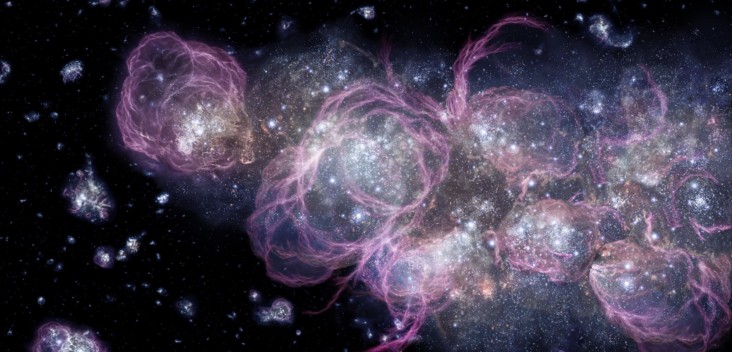
Getting the Best Glimpse of First-Generation Stars

Definition of First-Generation Stars First-generation stars, commonly referred to as Population III stars, represent the universe’s earliest stellar inhabitants. Formed from the primordial elements-primarily hydrogen, helium, and trace lithium-these stars are the foundational ancestors of all subsequent stellar populations. Their study is crucial for unraveling the origins of cosmic structures, including gases, galaxies, and the […]

Read More →