

Short Answer
Definition
The Vera C. Rubin Observatory is a groundbreaking astronomical facility designed to explore the universe beyond what is visible to the naked eye. It aims to capture dynamic cosmic phenomena and map the elusive components of the cosmos, such as dark matter and dark energy, through continuous, high-resolution sky surveys.
- Purpose:
To observe transient and subtle cosmic events that traditional telescopes often miss, providing a dynamic view of the universe. - Key Feature:
Equipped with one of the largest digital cameras ever built, enabling detailed imaging of the entire visible sky every few nights.
Exploring the Invisible Universe
While the night sky may seem calm and unchanging, it is in fact a stage for countless transient events and complex gravitational interactions. The Rubin Observatory is specifically engineered to unveil these hidden processes by capturing rapid, repeated images of the sky. This approach reveals the universe as a constantly evolving entity, rather than a static tableau.
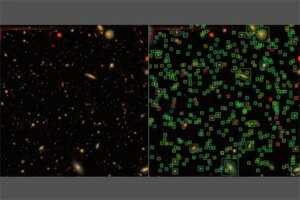
Many cosmic phenomena, such as supernovae explosions, variable stars, and near-Earth asteroids, occur on timescales and scales that require continuous monitoring. The observatory’s wide field of view-five times larger than the apparent size of the moon-allows it to detect these fleeting events in real time, providing invaluable data for understanding cosmic evolution and dynamics.

Technological Innovations Behind the Observatory
At the heart of the Rubin Observatory lies the Simonyi Survey Telescope, a marvel of optical engineering designed to maximize light collection while minimizing distortion. Its 3.2-gigapixel camera boasts a focal plane so expansive it can capture light equivalent to holding a handful of moon rocks, enabling unprecedented detail in celestial imaging.
Handling the enormous data output-tens of terabytes each night-requires advanced computational systems and machine learning algorithms. These technologies sift through vast amounts of information to identify meaningful cosmic signals amidst background noise, facilitating rapid and accurate scientific analysis.
Mapping Dark Matter and Cosmic Structures
One of the Rubin Observatory’s most significant scientific goals is to illuminate the invisible framework of the universe. Dark matter, which does not emit or absorb light, reveals its presence through gravitational lensing-bending the light from distant galaxies. By precisely measuring these distortions, the observatory will create detailed maps of dark matter distribution, exposing the cosmic web that shapes galaxy formation and large-scale structure.
Continuous Sky Survey: A Cinematic View of the Cosmos
Unlike traditional telescopes that capture isolated snapshots, the Rubin Observatory offers a continuous, cinematic survey of the sky. This method allows astronomers to track changes over time, providing insights into the temporal evolution of billions of stars, galaxies, and other cosmic entities. Such data is crucial for studying dark energy, the mysterious force driving the accelerated expansion of the universe, and for detecting transient phenomena that could reveal new physics.
Practical Applications and Global Collaboration
Beyond advancing scientific knowledge, the Rubin Observatory plays a vital role in planetary defense by identifying and monitoring potentially hazardous asteroids. Its real-time observations also support coordinated efforts within the global astronomical community, enhancing the ability to respond to and study variable celestial events.
Importantly, the observatory embraces an open data philosophy, making its extensive datasets accessible to researchers, educators, and citizen scientists worldwide. This democratization of information fosters collaboration, accelerates discovery, and invites diverse perspectives in unraveling the universe’s mysteries.
Philosophical and Scientific Significance
By revealing phenomena once hidden from view-such as the subtle footprints of dark matter and the fleeting bursts of cosmic events-the Rubin Observatory challenges our perceptions of reality and permanence. It invites reflection on humanity’s place in the cosmos and underscores the enduring human drive to not only observe but deeply understand the universe’s fundamental nature.
Why the Vera C. Rubin Observatory Matters
The Rubin Observatory represents a monumental advancement in cosmic exploration, bridging the gap between the visible and invisible realms of the universe. Its comprehensive, high-resolution surveys will transform our understanding of cosmic structure, evolution, and the forces shaping existence. By charting the unseen and transient, it enriches our cosmic narrative and deepens our connection to the vast, mysterious universe we inhabit.
FAQ
What is the Vera C. Rubin Observatory?
It is an astronomical facility designed to explore the universe’s hidden components through high-resolution sky surveys.
Why is mapping dark matter important?
Mapping dark matter helps in understanding the cosmic web that shapes galaxy formation and large-scale structure.


Leave a Reply