
Short Answer
Definition of Space Probes and Their Visibility
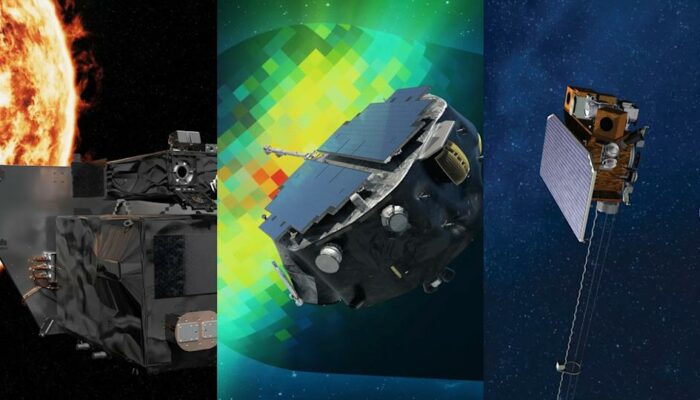
Space probes are unmanned spacecraft specifically designed to explore outer space, conducting scientific investigations far beyond Earth’s immediate environment. Unlike satellites that orbit close to Earth, these probes embark on extensive journeys across the solar system and beyond, gathering data about planets, solar winds, and the boundaries of our cosmic neighborhood. A fascinating question arises from this exploration: is it possible to observe these distant emissaries of human technology directly from Earth?
Purpose and Design of Space Probes
Each space probe is crafted with a distinct scientific mission in mind, such as analyzing planetary atmospheres, measuring solar particles, or mapping remote regions of space. Their construction often prioritizes functionality over visibility, using materials that minimize glare and reflection to optimize energy efficiency and instrument sensitivity. This design choice, while essential for mission success, makes them inherently difficult to detect visually from Earth.
Challenges in Observing Space Probes from Earth
Observing space probes from our planet presents significant obstacles. The vast distances involved mean these probes appear as minuscule points of light, often indistinguishable from stars or cosmic background. Their relatively small size and non-reflective surfaces further reduce their brightness, making them nearly invisible to the naked eye and even to many telescopes.
Distance and Apparent Brightness
As probes travel farther from Earth, their apparent magnitude-the measure of their brightness as seen from our vantage point-diminishes drastically. For example, the Voyager spacecraft, now billions of miles away, are too faint to be seen optically, detectable only through their radio transmissions.
Surface Reflectivity and Illumination
Visibility depends heavily on how much sunlight a probe reflects. Certain probes have reflective panels or antennae that can catch and reflect sunlight at specific angles, creating brief flashes or “flares” that can be detected by powerful ground-based telescopes. This phenomenon is similar to spotting the blinking lights of airplanes or satellites in Earth’s orbit.
Methods of Detecting Space Probes
Optical Observation
Using advanced telescopes, astronomers can sometimes detect probes that are relatively close to Earth, such as those in geostationary orbit or near the Moon. Lunar orbiters and landers have even been imaged indirectly through coordinated radar and optical efforts, providing visual confirmation of human-made objects on or around the Moon.
Radio Signal Tracking
When visual detection is impractical, radio astronomy offers an alternative. Space probes continuously send telemetry and scientific data back to Earth via radio waves. Large antenna arrays and specialized receivers track these signals, allowing scientists to monitor the probe’s location, speed, and status. This method highlights that our connection to distant probes is primarily technological rather than visual.
Technological Innovations to Enhance Visibility
Future space missions may incorporate design features aimed at improving the detectability of probes from Earth. These could include reflective surfaces, deployable beacons, or low-power lighting systems that make probes more visible against the dark backdrop of space. Such enhancements would not only aid scientific tracking but also engage the public by allowing direct observation of space exploration milestones.
Philosophical and Cultural Significance
The possibility of seeing space probes from Earth transcends mere observation; it symbolizes humanity’s reach into the cosmos and our relentless curiosity. Spotting a probe visually would represent a tangible connection to our ventures beyond the planet, embodying human ingenuity and the quest for knowledge. This connection fosters a deeper appreciation of our place in the universe and inspires continued exploration.
Common Misconceptions About Space Probe Visibility
Space probes can be easily seen with the naked eye.
Due to their small size, distance, and low reflectivity, space probes are generally invisible without powerful telescopes or specialized equipment.
All space probes emit visible light.
Most probes do not emit visible light; they are detected primarily through reflected sunlight or radio signals.
Probes near the Moon are impossible to image.
Lunar orbiters and landers have been imaged indirectly using radar and optical telescopes, confirming their presence.
Why Observing Space Probes Matters
Tracking and potentially observing space probes from Earth is crucial for multiple reasons. Scientifically, it aids in mission monitoring and data collection. Technologically, it drives innovation in spacecraft design and observational tools. Culturally, it strengthens public engagement with space exploration, inspiring future generations. Ultimately, these probes serve as silent ambassadors of human curiosity, bridging the vast distances of space and expanding our understanding of the universe.
Summary
While directly seeing space probes from Earth remains a formidable challenge due to their size, distance, and design, advances in technology and observational methods continue to push the boundaries of what is possible. Whether through fleeting reflective glints or radio signal tracking, these spacecraft represent humanity’s enduring desire to explore and comprehend the cosmos. As future missions incorporate visibility-enhancing features, the dream of visually witnessing our robotic explorers from Earth may soon become a reality, enriching our cosmic perspective.
FAQ
Can space probes be seen from Earth?
Generally, space probes cannot be seen with the naked eye due to their small size and distance; they require powerful telescopes for detection.
What methods are used to detect space probes?
Space probes are detected through optical observation and radio signal tracking, as they send telemetry back to Earth.
Are there any misconceptions about observing space probes?
Yes, common misconceptions include the belief that space probes can easily be seen with the naked eye and that all probes emit visible light.



Leave a Reply