
Short Answer
Definition of the NASA-ESA Partnership
The collaboration between NASA (National Aeronautics and Space Administration) and the European Space Agency (ESA) represents a significant alliance in the realm of space exploration. This partnership combines the strengths of two leading space organizations to advance scientific discovery, technological innovation, and human spaceflight. It transcends national boundaries, fostering a unified approach to exploring the cosmos and addressing challenges both in space and on Earth.
Foundations and Strengths of the Collaboration
At its core, the NASA-ESA partnership is built on complementary expertise and resources. NASA brings a rich legacy of pioneering space missions, advanced robotics, and astronautical experience, particularly in deep-space exploration. ESA contributes a broad coalition of European nations, offering diverse scientific talent and strategic assets, including Earth observation satellites and planetary research initiatives. This synergy enables a global cooperative framework that enhances mission capabilities beyond what either agency could achieve alone.
Key Joint Missions and Projects
International Space Station (ISS)
The ISS stands as a flagship example of NASA and ESA’s joint efforts. This orbiting laboratory exemplifies international cooperation, where ESA astronauts participate in extended missions alongside NASA and other partners. Research conducted aboard the ISS spans microgravity biology, materials science, and other disciplines, generating knowledge that benefits both space exploration and terrestrial applications. The continuous human presence in low Earth orbit is sustained through shared expertise and resources, pushing the boundaries of scientific understanding in real time.
Orion Multi-Purpose Crew Vehicle
Another critical collaboration is ESA’s contribution of the European Service Module (ESM) to NASA’s Orion spacecraft. The ESM provides essential functions such as power generation, propulsion, thermal regulation, and life support, enabling Orion’s missions to the Moon and beyond. This integration highlights the trust and technical cooperation between the agencies, preparing humanity for deeper space exploration.
Mars Sample Return Campaign
In the realm of unmanned exploration, NASA and ESA jointly pursue the Mars Sample Return mission, a complex endeavor to collect and return Martian soil and rock samples to Earth. This campaign combines scientific expertise and technological innovation to address the logistical challenges of interplanetary sample retrieval. The mission promises to revolutionize our understanding of Mars’ geological history and the potential for past life on the planet.
Data Sharing and Ground Infrastructure Cooperation
The partnership extends to the exchange of satellite data and ground-based infrastructure. ESA’s Sentinel satellites and NASA’s Earth Observing System provide complementary remote sensing data that support climate research, atmospheric monitoring, and disaster response. By integrating these datasets, scientists gain a comprehensive view of Earth’s environment, enhancing efforts to tackle global issues such as climate change and environmental sustainability.
Joint Training and Research Programs
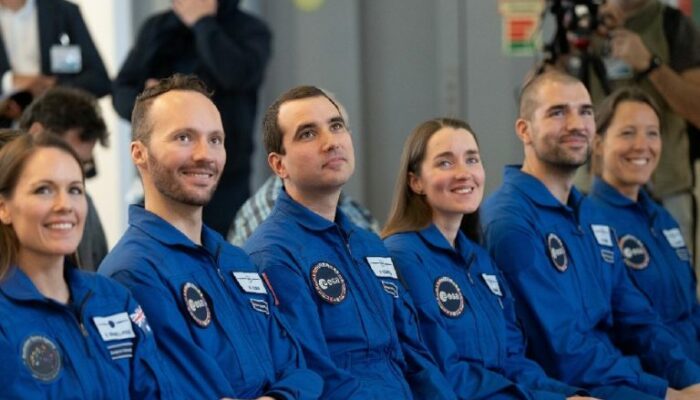
NASA and ESA also collaborate closely in astronaut training and scientific research. ESA astronauts undergo rigorous preparation at NASA facilities like the Johnson Space Center, where they engage in simulations and mission rehearsals. This shared training fosters a unified operational culture emphasizing precision, resilience, and adaptability. The exchange of personnel and expertise enriches mission planning and execution, blending diverse cultural and technical perspectives.
Governance and Diplomatic Frameworks
The success of NASA-ESA collaborations relies on well-structured governance mechanisms. Formal agreements such as Memoranda of Understanding and inter-agency protocols streamline decision-making, clarify roles, and ensure fair resource distribution. These frameworks reflect the diplomatic sophistication and mutual respect necessary to manage complex international projects across political and bureaucratic environments.
Inspirational and Philosophical Impact
Beyond tangible achievements, the NASA-ESA alliance symbolizes a collective human endeavor to explore the universe. It encourages a shift from competitive nationalistic views toward a shared vision of humanity as a single species venturing into the cosmic frontier. Space exploration thus becomes a powerful metaphor for unity, cooperation, and a common destiny, inspiring global audiences to embrace collaboration over rivalry.
Future Endeavors and Strategic Importance
Looking ahead, the partnership is poised to expand its impact through programs like Artemis, which aims to reestablish human presence on the Moon as a precursor to Mars missions. ESA’s contributions remain vital to these efforts. Additionally, joint initiatives in asteroid detection and planetary defense underscore a shared commitment to protecting Earth from extraterrestrial hazards. These projects exemplify the evolving relationship as visionary and mission-driven.
Common Misconceptions About the NASA-ESA Partnership
Space exploration is a competition between nations.
The NASA-ESA partnership demonstrates that space exploration is increasingly a collaborative effort, leveraging shared knowledge and resources for mutual benefit.
ESA’s role is limited to supporting NASA.
ESA contributes critical technologies, scientific expertise, and independent missions, making it an equal and essential partner in joint ventures.
Significance of the NASA-ESA Collaboration
The alliance between NASA and ESA is pivotal for advancing space science, technology, and exploration. By pooling resources and expertise, the partnership accelerates scientific discovery, enhances technological innovation, and fosters international goodwill. It also plays a crucial role in addressing global challenges through Earth observation and planetary defense. Ultimately, this collaboration exemplifies how international cooperation can unlock the mysteries of the universe while promoting peace and understanding on our home planet.
Conclusion: A Unified Journey into the Cosmos
The NASA-ESA partnership weaves a dynamic narrative of ambition, innovation, and shared vision. Through joint missions, technological integration, and cultural exchange, these agencies chart a course toward new frontiers in space exploration. Each step forward not only expands humanity’s reach into the cosmos but also ignites a collective sense of wonder and hope, inviting all people to look skyward with curiosity and unity.
FAQ
What is the NASA-ESA partnership?
The NASA-ESA partnership is a collaboration between the National Aeronautics and Space Administration and the European Space Agency that focuses on joint space exploration, science, and technology initiatives.
What are some key missions of the NASA-ESA collaboration?
Key missions include the International Space Station, the Orion Multi-Purpose Crew Vehicle, and the Mars Sample Return Campaign.
How does the NASA-ESA partnership benefit scientific research?
The partnership enhances scientific research through shared expertise, resources, and data, enabling more comprehensive studies of space and Earth.



Leave a Reply