
Short Answer
Definition of Space Telescopes
Space telescopes are advanced astronomical instruments positioned beyond Earth’s atmosphere to observe celestial objects and phenomena. Unlike traditional ground-based telescopes, these devices operate in the vacuum of space, enabling clearer and more comprehensive observations of the universe.
- Purpose:
To overcome atmospheric limitations and capture a wider range of electromagnetic signals from cosmic sources. - Location:
Typically placed in orbit around Earth or at strategic points in space, such as Lagrange points, to maximize observational efficiency.
Limitations of Ground-Based Telescopes
Conventional telescopes, often situated on remote mountaintops or deserts, have significantly advanced our knowledge of the cosmos. However, their capabilities are inherently restricted by Earth’s atmosphere, which interferes with incoming light and distorts images.
- Atmospheric Turbulence:
The constant movement and varying density of air layers cause light to bend unpredictably, resulting in the twinkling of stars and blurred images. - Light Absorption and Scattering:
Certain wavelengths, such as ultraviolet and infrared, are absorbed or scattered by atmospheric gases, preventing ground telescopes from detecting them effectively. - Light Pollution:
Artificial lighting from urban areas further diminishes the quality of observations by increasing background brightness.
Advantages of Deploying Telescopes in Space
Positioning telescopes beyond Earth’s atmosphere eliminates many observational barriers, offering unprecedented clarity and access to a broader electromagnetic spectrum.
- Atmospheric Independence:
Space telescopes avoid atmospheric distortion, enabling sharper and more detailed images. - Expanded Spectral Range:
They can detect ultraviolet, infrared, X-rays, and other wavelengths absorbed by the atmosphere, revealing phenomena invisible to ground-based instruments. - Reduced Light Pollution:
Operating far from Earth’s artificial lights allows for uninterrupted and sensitive observations. - Continuous Monitoring:
Space telescopes can observe targets for extended periods without interruption from day-night cycles or weather conditions.
How Space Telescopes Enhance Astronomical Research
By leveraging their unique vantage points, space telescopes enable scientists to explore cosmic events and structures with greater precision and depth.
- Studying Star Formation:
Infrared observations penetrate dust clouds to reveal newborn stars hidden from optical telescopes. - Investigating High-Energy Phenomena:
Ultraviolet and X-ray data expose energetic processes near black holes, neutron stars, and supernova remnants. - Exoplanet Discovery:
Continuous, high-precision measurements facilitate the detection of planets orbiting distant stars. - Cosmological Insights:
Observations of the cosmic microwave background and gravitational lensing help map dark matter and understand the universe’s expansion.
Technological Innovations Driven by Space Telescope Missions
The challenges of operating in space have spurred significant advancements in various scientific and engineering fields.
- Optical Engineering:
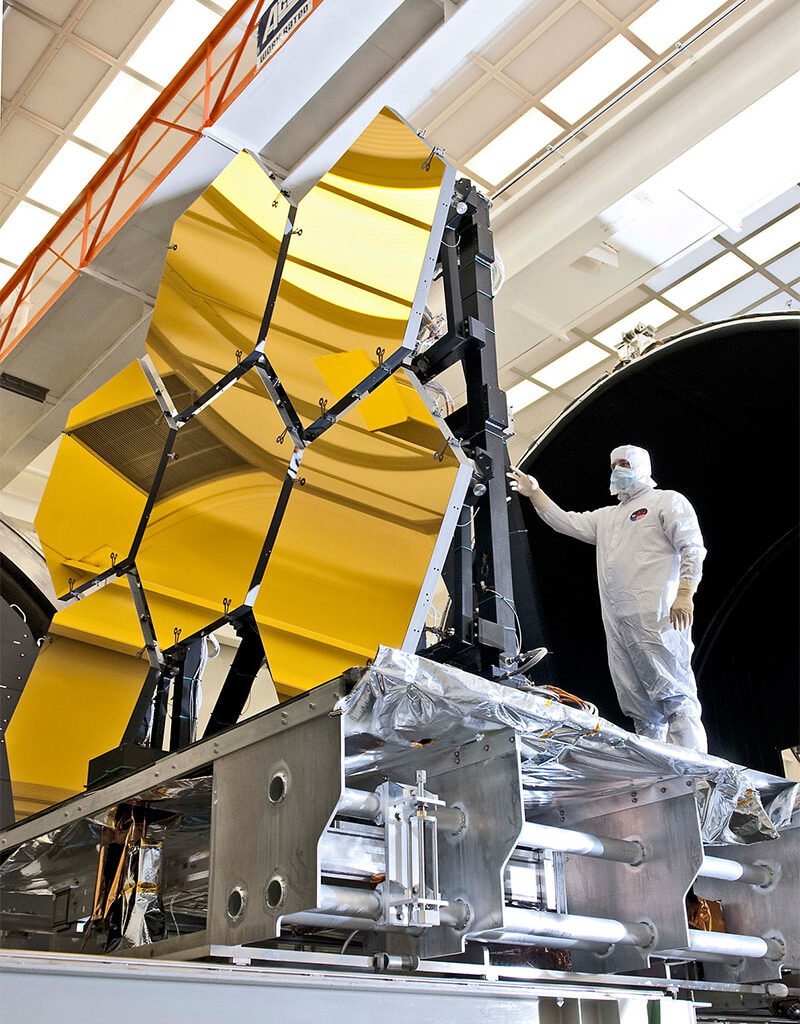
Development of segmented mirrors and deployable structures to fit large telescopes into launch vehicles. - Cryogenics:
Techniques to cool instruments to extremely low temperatures, reducing noise and enhancing sensitivity. - Robotics and Automation:
Autonomous systems for deployment, calibration, and data collection in remote environments. - Data Processing:
Advanced algorithms and computing power to handle vast amounts of observational data.
Challenges and Considerations in Space Telescope Deployment
Despite their scientific value, space telescopes involve significant risks and costs that must be carefully managed.
- Launch Risks:
Mechanical failures during launch can jeopardize the entire mission. - Maintenance Limitations:
Unlike ground telescopes, space instruments are difficult or impossible to repair once deployed. - Financial Investment:
High development, launch, and operational expenses require substantial funding and international collaboration.
Philosophical and Scientific Significance
Deploying telescopes in space represents more than a technical advancement; it marks a shift in humanity’s cosmic perspective and quest for knowledge.
- Expanded Viewpoint:
Moving beyond a geocentric outlook to a broader cosmological understanding. - Exploration of the Early Universe:
Observing the formation of the first galaxies and cosmic reionization epochs. - Human Curiosity and Perseverance:
Embodying the enduring drive to explore and comprehend the unknown.
Real-World Examples of Space Telescopes
Several landmark space telescopes have revolutionized astronomy and deepened our cosmic insights.
- Hubble Space Telescope:
Launched in 1990, it has provided iconic images and data across visible, ultraviolet, and near-infrared wavelengths. - James Webb Space Telescope:
Positioned near the second Lagrange point (L2), it specializes in infrared observations, unveiling the universe’s earliest structures. - Chandra X-ray Observatory:
Focused on high-energy X-ray emissions, it studies phenomena such as black holes and supernova remnants.
Common Misconceptions About Space Telescopes
Space telescopes only provide prettier pictures.
While they do capture stunning images, their primary value lies in gathering data across wavelengths inaccessible from Earth, enabling groundbreaking scientific discoveries.
Ground-based telescopes are obsolete.
Ground observatories remain vital, especially with adaptive optics and large apertures, complementing space-based observations.
Why Space Telescopes Are Crucial
Space telescopes are indispensable tools that expand our understanding of the universe, driving scientific progress and technological innovation. By transcending Earth’s atmospheric limitations, they unlock new realms of observation, enabling discoveries that shape our knowledge of cosmic origins, structure, and destiny. Their deployment reflects humanity’s commitment to exploration, pushing the boundaries of what is known and inspiring future generations to continue the quest for cosmic enlightenment.
FAQ
What are space telescopes?
Space telescopes are advanced astronomical instruments that observe celestial objects from beyond Earth's atmosphere, allowing for clearer and more comprehensive observations.
Why are space telescopes important?
They provide high-resolution images and access to wavelengths that are blocked by Earth's atmosphere, enabling significant scientific discoveries.
What are some challenges of space telescopes?
Challenges include launch risks, maintenance limitations, and high financial costs.

Leave a Reply