
Short Answer
Understanding the Origin of Matter in the Universe
The question of how matter originated, especially in relation to the Big Bang, invites a deep investigation into cosmology and theoretical physics. This inquiry goes beyond simple curiosity, addressing essential questions about the nature of existence and the universe we live in. To fully grasp this topic, it is important to explore the state of the cosmos before the Big Bang, the processes that led to the creation of matter, and the modern theoretical models that attempt to explain these phenomena.
Pre-Big Bang Conditions
Before the Big Bang, the universe is theorized to have existed as an extremely hot and dense singularity-a point where matter, energy, space, and time were all compressed into an infinitesimal volume. This singularity defies the conventional understanding of space and time, making it a unique and challenging subject for scientific study. Under such extreme conditions, classical theories like general relativity lose their predictive power, highlighting the limitations of our current scientific frameworks.
The Big Bang and Cosmic Inflation
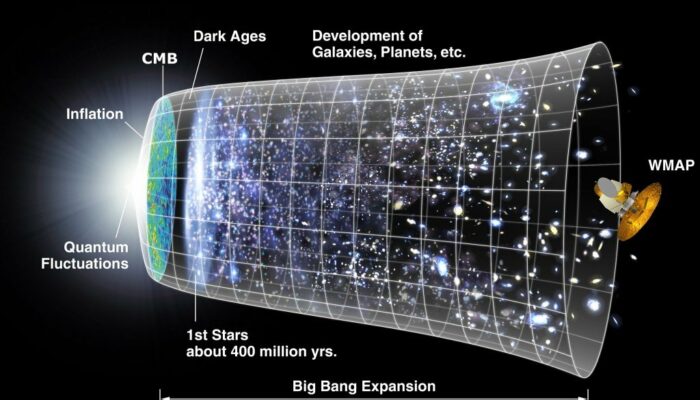
Immediately following the Big Bang, the universe experienced a phase of rapid expansion known as cosmic inflation. During this brief but dramatic period, the universe expanded exponentially, causing temperatures to drop and enabling the formation of subatomic particles. Fundamental particles such as quarks and leptons emerged, which later combined to form protons, neutrons, and electrons. These processes are governed by quantum field theory, a sophisticated framework that merges quantum mechanics with special relativity to describe particle interactions.
Baryogenesis: The Creation of Matter
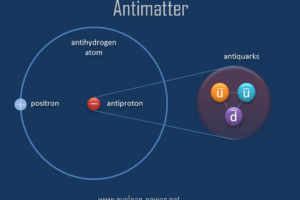
The leading explanation for the origin of matter is baryogenesis, a process that suggests an imbalance between matter and antimatter in the early universe. This asymmetry, where slightly more baryons (matter particles) than antibaryons (antimatter particles) were produced, remains a key focus of scientific research. Theories propose that during the universe’s cooling phase, certain conditions-such as CP violation, which refers to differences in the behavior of particles and their antiparticles-may have caused this imbalance. As a result, most antimatter annihilated with matter, leaving the excess matter that constitutes the universe today.
Quantum Fluctuations and Structure Formation
Alongside baryogenesis, cosmic inflation played a crucial role in shaping the large-scale structure of the universe. Tiny quantum fluctuations during inflation created slight variations in density. As the expansion slowed, these fluctuations grew into gravitational wells, which eventually led to the formation of galaxies and galaxy clusters. Observations of the cosmic microwave background radiation (CMB) provide strong evidence for these minute temperature variations, supporting the predictions made by inflationary theory.
Advanced Theoretical Perspectives
Beyond established models, cutting-edge theories in physics offer new insights into the origin of matter and the nature of the universe before the Big Bang. String theory, for example, proposes that the fundamental building blocks of matter are not zero-dimensional points but one-dimensional “strings” vibrating at different frequencies. This perspective suggests that the Big Bang might not mark the absolute beginning of time and space but could represent a transition between different cosmic states, possibly implying a cyclic or oscillatory universe. In this framework, matter arises from the vibrational patterns of strings, fundamentally altering our understanding of the cosmos.
Loop quantum gravity presents an alternative approach by quantizing spacetime itself, dividing it into discrete units. This theory envisions a “bounce” scenario, where the universe contracts before expanding again, thereby avoiding the singularity predicted by classical physics. Such models challenge traditional views and raise profound questions about the nature of time, causality, and the genesis of matter.
Current Limitations and Future Directions
Despite numerous hypotheses, empirical evidence remains limited, and many ideas about the origin of matter are still speculative. Progress depends on the integration of observational astrophysics, experimental particle physics, and theoretical research. Collaborative efforts across these disciplines are essential to deepen our understanding of cosmic origins and to unravel mysteries such as dark matter and dark energy, which continue to puzzle scientists and shape modern cosmology.
Significance of Understanding Matter’s Origin
Exploring the origin of matter linked to the Big Bang is a cornerstone of scientific inquiry, offering profound insights into the universe’s beginnings. By studying pre-Big Bang conditions, mechanisms like baryogenesis, and advanced theoretical frameworks, researchers gain a more comprehensive picture of cosmic evolution. This knowledge not only enhances our grasp of fundamental physics but also informs our understanding of the universe’s structure and our place within it. The ongoing dialogue between theory and observation promises to illuminate the enigmatic nature of reality and the fundamental essence of existence.
FAQ
What is baryogenesis?
Baryogenesis is the process postulated to explain why there is more matter than antimatter in the universe, leading to the matter that forms stars, planets, and life.
How did cosmic inflation affect matter creation?
Cosmic inflation caused the universe to expand rapidly, lowering temperatures and allowing subatomic particles to form and later coalesce into matter.
Are string theory and loop quantum gravity proven explanations for the Big Bang?
No, these remain theoretical models that provide possible insights into the universe's origin but lack direct empirical support.
Why is understanding the origin of matter important?
It helps us comprehend the fundamental nature of the universe, the laws governing it, and our own existence within it.


Leave a Reply