
Short Answer
Understanding Cosmic Expansion
The universe has captivated human curiosity for millennia, not only because of its stunning vistas but also due to the profound mysteries it harbors. One of the most compelling puzzles in contemporary astrophysics is whether the cosmos is expanding at an increasing rate. This question challenges long-standing cosmological models and invites a deeper exploration into the fundamental properties of the universe. What evidence supports this accelerating expansion, and how prepared is the scientific community to address its far-reaching consequences?
Historical Background of Universal Expansion
The revelation that the universe is expanding marked a pivotal moment in astronomy, originating from Edwin Hubble’s groundbreaking observations in the late 1920s. Hubble discovered that galaxies are moving away from us, a phenomenon now encapsulated in Hubble’s Law, which relates a galaxy’s recessional velocity to its distance. However, later observations in the 1990s introduced a surprising twist: the expansion rate is not steady but accelerating. This unexpected finding led to the proposal of dark energy, a mysterious force hypothesized to drive this acceleration.
Empirical Evidence for Accelerating Expansion
Key support for the accelerating universe comes from studies of Type Ia supernovae, which act as standard candles due to their uniform intrinsic brightness. Research conducted by the Supernova Cosmology Project and the High-Z Supernova Search Team revealed that these supernovae appeared dimmer than expected under the assumption of a decelerating cosmos. This dimness implies they are farther away than previously thought, indicating that the universe’s expansion is speeding up.
Cosmic Microwave Background Insights
Additional evidence arises from the cosmic microwave background (CMB), the residual radiation from the Big Bang. Detailed measurements from satellites such as the Wilkinson Microwave Anisotropy Probe (WMAP) and Planck have provided precise data on the early universe’s conditions. These observations suggest a flat spatial geometry and support the presence of dark energy, reinforcing the conclusion that the universe’s expansion is accelerating.
Theoretical Interpretations of Dark Energy
Despite mounting observational support, the nature of dark energy remains one of the most profound enigmas in physics. Several theoretical models attempt to explain this phenomenon:
- Cosmological Constant:
Originally introduced by Einstein, this concept treats dark energy as a constant energy density filling space uniformly. - Dynamic Scalar Fields:
These models propose that dark energy evolves over time, represented by fields that change in strength and influence. - Modified Gravity Theories:
Some hypotheses suggest that the laws of gravity themselves may differ on cosmic scales, potentially accounting for the observed acceleration without invoking dark energy.
Each framework offers intriguing possibilities but lacks definitive empirical confirmation, leaving the true nature of dark energy an open question.
Implications for the Fate of the Universe
If dark energy constitutes roughly 68% of the universe’s total energy content, as current cosmological models indicate, it profoundly influences the universe’s destiny. Several scenarios have been proposed:
- Big Freeze:
The universe continues expanding indefinitely, causing galaxies to drift apart until stars burn out and the cosmos becomes cold and dark. - Big Rip:
An extreme acceleration tears apart galaxies, stars, planets, and eventually atomic structures, disintegrating all matter.
These potential outcomes highlight the critical role of cosmic acceleration in shaping the long-term evolution of the cosmos.
Philosophical Reflections on Cosmic Acceleration
The discovery of an accelerating universe also raises profound philosophical questions about reality and human understanding. Are we merely observers constrained by our cognitive frameworks, akin to a fish unaware of the ocean’s vastness? Or is our scientific progress on the verge of a paradigm shift that will unveil deeper truths about existence? These inquiries underscore the interplay between empirical observation and interpretation in the quest to comprehend the cosmos.
The Scientific Process and Ongoing Exploration
Science advances through iterative cycles of observation, hypothesis, and experimentation. The study of cosmic acceleration exemplifies this dynamic, as new data continuously refine our models and challenge existing theories. Investigations into dark energy, supernovae, and the CMB not only deepen our understanding of the universe but also expand the boundaries of human knowledge and philosophical contemplation.
Significance of Cosmic Acceleration in Modern Science
Understanding whether the universe is expanding faster is more than an academic pursuit; it has profound implications for physics, cosmology, and our place in the universe. This phenomenon compels scientists to rethink fundamental laws and inspires a sense of wonder and humility. The accelerating cosmos invites us to broaden our intellectual horizons and appreciate the intricate and mysterious nature of reality beyond immediate perception.
FAQ
What evidence supports the accelerating expansion of the universe?
Evidence includes observations of Type Ia supernovae and measurements of the cosmic microwave background, indicating that the universe’s expansion rate is increasing.
What is dark energy?
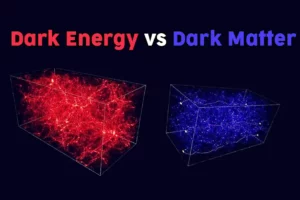
Dark energy is a mysterious force that is thought to drive the accelerating expansion of the universe, making up about 68% of the universe’s total energy content.
What are the implications of an accelerating universe?
The implications include various scenarios for the universe’s fate, such as the Big Freeze and the Big Rip, which depend on the nature of dark energy.

Leave a Reply