
Short Answer
Understanding Gravitational Waves
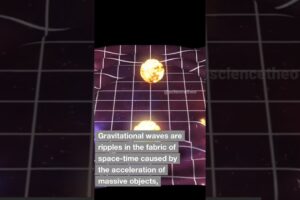
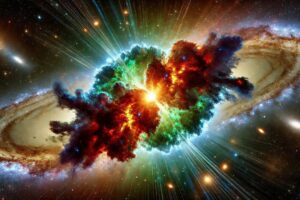
Gravitational waves are disturbances in the fabric of spacetime, generated by accelerating masses, especially during extreme cosmic events such as the collision of black holes or neutron stars. First theorized by Albert Einstein in 1916 as a consequence of his general theory of relativity, these ripples propagate outward at the speed of light, carrying information about their cataclysmic origins. The groundbreaking detection of gravitational waves by the LIGO Collaboration in 2015 inaugurated a new era in astrophysics, providing an unprecedented observational window into the universe’s most violent phenomena.
Fundamentals of String Theory
String theory emerges as a compelling framework aiming to reconcile the principles of quantum mechanics with general relativity. Unlike traditional particle physics, which treats fundamental particles as zero-dimensional points, string theory envisions them as one-dimensional vibrating strings. The vibrational patterns of these strings correspond to different particle types, potentially unifying all fundamental forces and matter within a single theoretical structure. Moreover, string theory predicts the existence of multiple dimensions beyond the familiar four, suggesting a complex multiverse that extends beyond human perception.
Interplay Between Gravitational Waves and String Theory
The relationship between gravitational waves and string theory is a subject of intense theoretical investigation. String theory’s multidimensional models-such as Type I, Type IIA, and Type IIB-offer diverse predictions about how gravitational waves might behave or interact with the fundamental strings that constitute reality. These frameworks propose that gravitational waves could carry signatures influenced by extra dimensions or exotic phenomena like Kaluza-Klein modes, which arise from the compactification of higher dimensions. However, these ideas remain largely speculative, pending experimental confirmation.
Higher-Dimensional Effects on Gravitational Waves
In string theory, the presence of additional spatial dimensions could modify the properties of gravitational waves, potentially altering their frequency, polarization, or propagation characteristics. Current gravitational wave detectors primarily capture low-frequency signals from astrophysical sources, but string theory suggests that subtle, higher-frequency effects might exist beyond their detection capabilities. This discrepancy highlights the need for advanced instrumentation capable of probing these elusive signals.
Advanced Theoretical Concepts Linking Gravity and Quantum Mechanics
Two profound theoretical constructs-the holographic principle and the Anti-de Sitter/Conformal Field Theory (AdS/CFT) correspondence-offer novel perspectives on the nature of gravity and quantum mechanics, with implications for gravitational wave physics. The holographic principle posits that all information within a volume of space can be encoded on its boundary, while AdS/CFT correspondence establishes a duality between gravitational theories in curved spacetime and quantum field theories on the boundary. These paradigms suggest that the geometry and topology of spacetime could influence gravitational wave behavior in ways that might be detectable, providing a bridge between string theory and observable phenomena.
Polarization States of Gravitational Waves in String Theory
Standard general relativity predicts two polarization modes for gravitational waves, known as the “plus” and “cross” modes. In contrast, string theory anticipates additional polarization states arising from its higher-dimensional framework. Detecting these extra polarizations would offer compelling evidence for string theory’s validity and its influence on gravitational wave physics. However, isolating and identifying these modes presents significant experimental challenges, requiring enhancements in detector sensitivity and data analysis techniques.
Quantum Gravity and Early Universe Implications
String theory’s approach to quantum gravity may profoundly affect our understanding of the early universe, particularly during the inflationary period. Gravitational waves generated in this epoch could exhibit quantum characteristics distinct from classical waveforms, influenced by string-theoretic effects. Exploring these quantum imprints involves delving into both perturbative and non-perturbative regimes of string theory, potentially revealing new insights into the universe’s birth and evolution.
Technological Advances and Future Prospects
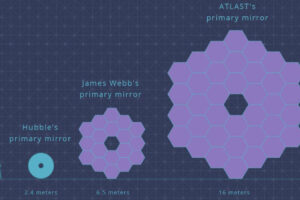
To fully explore the predictions of string theory regarding gravitational waves, advancements in detection technology are essential. Current ground-based interferometers like LIGO and Virgo are limited to certain frequency ranges. Future space-based observatories, such as the Laser Interferometer Space Antenna (LISA), aim to detect lower-frequency gravitational waves where string theory effects might be more pronounced. Enhancing detector sensitivity and expanding observational bandwidths are critical steps toward uncovering the subtle signatures predicted by string theory.
Common Misconceptions About Gravitational Waves and String Theory
Gravitational waves directly prove string theory.
While gravitational wave observations provide valuable data, they do not yet offer direct evidence for string theory, which remains a theoretical framework awaiting experimental validation.
String theory only deals with extra dimensions and has no bearing on observable phenomena.
String theory’s predictions about extra dimensions and particle interactions could influence observable gravitational wave properties, making it relevant to empirical research.
Significance of Exploring Gravitational Waves Through String Theory
Investigating gravitational waves within the context of string theory holds profound implications for both fundamental physics and cosmology. It offers a pathway to unify quantum mechanics and gravity, potentially unlocking a deeper understanding of the universe’s structure and origins. Moreover, this research drives technological innovation in detection methods and fosters interdisciplinary collaboration, pushing the boundaries of human knowledge and capability.
Summary and Outlook
The convergence of gravitational wave astronomy and string theory represents a frontier rich with theoretical challenges and experimental opportunities. While current observations have revolutionized astrophysics, the quest to detect string theory’s subtle imprints on gravitational waves continues to inspire advancements in both theory and instrumentation. As scientific inquiry progresses, the synergy between enhanced observational tools and sophisticated theoretical models may eventually unravel the complex tapestry of spacetime, revealing the fundamental nature of reality.
FAQ
What are gravitational waves?
Gravitational waves are ripples in spacetime caused by accelerating masses during cosmic events, theorized by Einstein and detected by LIGO.
How does string theory relate to gravitational waves?
String theory offers a framework that could explain the behavior of gravitational waves in higher-dimensional space, predicting effects that current detectors may not capture.

Leave a Reply