
Short Answer
Definition of Gravity and Its Fundamental Role
Gravity is a fundamental force of nature that governs the attraction between masses. It acts as a universal architect, drawing matter together and orchestrating the movements of celestial bodies. This invisible force is essential not only for maintaining the structure of the cosmos but also for creating the environmental conditions necessary for life on Earth.
- Universal Force:
Gravity influences all objects with mass, from tiny particles to massive galaxies. - Cosmic Organizer:
It shapes planetary orbits, star formation, and the large-scale structure of the universe. - Life Enabler:
By stabilizing Earth’s position and internal processes, gravity indirectly supports the emergence and sustenance of life.
Gravity’s Influence on Earth’s Stability and Habitability
At a glance, gravity’s role in keeping Earth in orbit around the Sun appears straightforward but is crucial for life. This gravitational tether ensures a stable climate by maintaining Earth’s position within the habitable zone, where temperatures allow liquid water to exist-an essential ingredient for terrestrial life.
Without gravity, Earth would drift through space, becoming a frozen, lifeless rock. Beyond orbital stability, gravity also governs Earth’s internal dynamics, such as the layering of its core, mantle, and crust. These processes drive geothermal activity and tectonics, which in turn influence atmospheric composition and the cycling of vital elements like carbon and nitrogen.
Gravity and Earth’s Internal Processes
Gravity plays a pivotal role in shaping Earth’s internal structure and geological activity:
- Layer Differentiation:
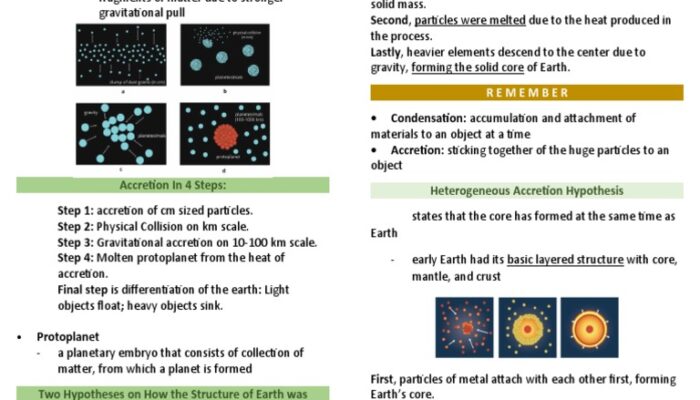
Gravity causes denser materials to sink toward the core, while lighter materials form the crust and atmosphere. - Geothermal Gradients:
The gravitationally driven stratification influences heat flow, fueling volcanic activity. - Atmospheric Formation:
Volcanic outgassing, powered by internal heat, created an atmosphere rich in gases necessary for life. - Biogeochemical Cycles:
Gravity sustains cycles like carbon and nitrogen, which are fundamental to ecosystem function and biodiversity.
Impact of Gravity on Earth’s Hydrosphere and Ecosystems
Gravity’s effect extends to Earth’s water systems, ensuring oceans remain bound to the planet’s surface. The gravitational interaction between Earth and the Moon generates tides, which create dynamic coastal environments. These tidal movements facilitate nutrient mixing and establish diverse ecological niches that promote evolutionary complexity and adaptation.
Such cyclical environmental changes driven by gravity encourage biological innovation, helping life evolve from simple organisms to complex ecosystems. Without these gravitationally induced patterns, evolutionary progress might have been severely limited.
Gravity’s Cosmic Role in Star and Planet Formation
On a grander scale, gravity is the driving force behind the birth of stars and planets. It compresses vast clouds of gas and dust, igniting nuclear fusion in stars like our Sun. These stellar furnaces produce heavier elements essential for forming rocky planets and the chemical building blocks of life.
The precise gravitational balance that places Earth within the Sun’s habitable zone ensures optimal energy input, fostering conditions suitable for life. Thus, gravity acts as a universal catalyst, enabling the chemical diversity and structural complexity necessary for biological systems.
Limitations of Gravity in Explaining Life’s Origin
While gravity establishes the environmental framework for life, it does not directly create life’s molecular complexity. Biological phenomena such as metabolism, self-replication, and consciousness arise from intricate biochemical and quantum processes occurring within gravity-defined settings.
Therefore, gravity should be viewed as a prerequisite and facilitator rather than the sole cause of life. It provides the stable conditions and cycles that allow life’s molecular machinery to develop and function.
Scientific Perspectives and Unresolved Questions
Gravity’s nature has been extensively described by Newtonian physics and Einstein’s general relativity, which excellently explain large-scale phenomena. However, integrating gravity with quantum mechanics remains a significant challenge, suggesting that our understanding of life’s origins may evolve with new scientific paradigms.
Emerging theories propose that gravitational waves or microscopic spacetime fluctuations could influence molecular evolution, hinting at deeper connections between gravity and biological processes yet to be fully understood.
Why Gravity Is Essential for Life on Earth
Gravity’s persistent pull shapes Earth’s continents, climate, oceans, and ecosystems. It governs cycles of growth and decay, birth and dormancy, linking cosmic structures to cellular functions. This omnipresent force silently orchestrates the conditions that allow complexity to emerge from simplicity.
Recognizing gravity’s profound role enriches our appreciation of life’s place in the universe. It is not merely a force of attraction but a fundamental enabler of the delicate balance that sustains life on our planet.
Conclusion: Gravity as the Foundation of Life’s Existence
Gravity stands at the core of the narrative explaining why life exists on Earth. Although it does not directly generate life, it calibrates the environments where life can arise and thrive. This invisible force weaves the fabric of cosmic and biological order, inviting ongoing exploration into the intricate interplay between physics and biology.
Our quest to understand gravity’s full impact continues to inspire scientific inquiry and philosophical reflection, revealing the profound interconnectedness of the universe and the living world.
FAQ
What are the main influences of gravity on Earth?
Gravity influences Earth's orbit, internal dynamics, hydrosphere, and ecosystems.
Is gravity the only force responsible for life?
No, while gravity provides essential conditions, other biochemical processes are crucial for life.



Leave a Reply