
Short Answer
Definition of Cosmic Rays and Their Atmospheric Role
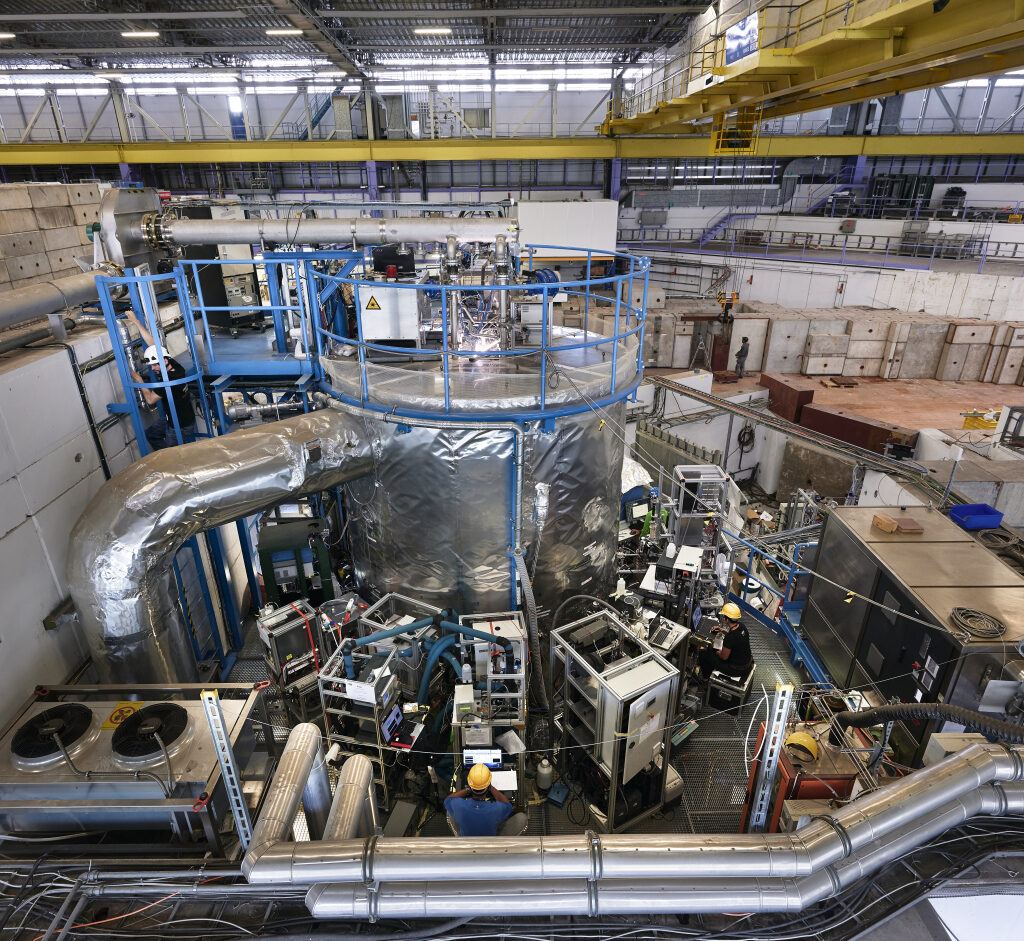
Cosmic rays are highly energetic particles that travel through space at velocities approaching the speed of light. Originating from sources beyond Earth’s atmosphere, these particles primarily consist of protons and heavier atomic nuclei. Their continuous bombardment of our planet has intrigued scientists, particularly regarding their potential influence on atmospheric processes such as cloud formation. This concept suggests that cosmic rays might act as catalysts in the nucleation of clouds, thereby playing a subtle yet significant role in shaping weather and climate patterns.
Historical Background and Discovery
The study of cosmic rays began in the early 1900s when researchers first detected these high-energy particles entering Earth’s atmosphere from outer space. Over time, investigations revealed that cosmic rays are charged particles that incessantly shower the Earth, akin to an invisible cosmic rain. As scientific understanding deepened, the possibility that these particles interact with atmospheric components opened new avenues for exploring their impact on meteorological phenomena.
Mechanism of Cloud Formation and Cosmic Ray Interaction
Clouds form when water vapor in the atmosphere condenses into tiny droplets, a process that requires the presence of aerosols-minute particles that serve as nuclei for droplet formation. Without these aerosols, water vapor would remain gaseous and clouds would not develop. Cosmic rays contribute to this process by ionizing air molecules, which leads to the generation of secondary aerosols. These newly formed particles increase the number of condensation nuclei, thereby facilitating cloud droplet formation and influencing cloud properties.
Scientific Evidence Supporting the Cosmic Ray-Cloud Hypothesis
Empirical research has uncovered correlations between cosmic ray intensity and cloud cover. Observations indicate that during periods of heightened solar activity, the sun’s magnetic field strengthens and deflects cosmic rays, resulting in a decrease in cosmic ray flux and, correspondingly, reduced cloudiness. Conversely, when solar activity wanes, cosmic ray influx increases, often accompanied by enhanced cloud formation. This inverse relationship suggests a dynamic interplay between solar cycles, cosmic radiation, and atmospheric conditions.
Atmospheric Modeling and Regional Variations
Advanced atmospheric models simulate how cosmic rays interact with air molecules to influence cloud nucleation. Data from these models, supported by observational studies, show that regions exposed to higher cosmic ray levels-such as polar areas where Earth’s magnetic shielding is weaker-experience increased cloud formation and precipitation. This regional variability highlights the complex relationship between cosmic radiation, geomagnetic fields, and local weather phenomena.
Complexities and Limitations of the Cosmic Ray Influence
While a connection between cosmic rays and cloud formation is evident, establishing direct causation remains challenging due to the multifaceted nature of climate systems. Factors such as humidity, temperature, and geographical features also play critical roles in cloud development. Therefore, cosmic rays are one of many contributors in a complex atmospheric symphony, influencing but not solely determining weather outcomes.
Implications for Climate Change and Global Temperature Regulation
The potential impact of cosmic rays on cloud dynamics carries significant implications for climate science. Increased cloud cover resulting from higher cosmic ray flux during solar minima could enhance Earth’s albedo, reflecting more sunlight and potentially cooling the planet’s surface. Conversely, reduced cosmic ray activity during solar maxima might decrease cloudiness, allowing more solar radiation to warm the Earth. Understanding these interactions is vital for refining climate models and predicting long-term temperature trends.
Interdisciplinary Significance: Bridging Astrophysics and Meteorology
The study of cosmic rays and their atmospheric effects exemplifies the intersection of astrophysics and meteorology. The modulation of cosmic ray intensity by solar activity not only informs our understanding of space weather but also reveals how extraterrestrial phenomena influence terrestrial climate systems. This interdisciplinary research enriches our comprehension of the universe’s interconnectedness and invites broader philosophical reflections on the relationship between cosmic forces and life on Earth.
Common Misconceptions About Cosmic Rays and Cloud Formation
Cosmic rays are the sole factor responsible for cloud formation.
While cosmic rays contribute to aerosol production, cloud formation depends on multiple atmospheric variables including humidity, temperature, and existing aerosol concentrations.
Increased cosmic rays always lead to more clouds and cooler temperatures.
The relationship is complex and influenced by regional and temporal factors; cosmic rays may enhance cloud nucleation under certain conditions but do not guarantee uniform climatic effects.
Why Understanding Cosmic Rays Matters
Recognizing the role of cosmic rays in atmospheric processes is crucial for advancing climate science and improving weather prediction models. Their influence on cloud formation affects precipitation patterns, temperature regulation, and ultimately, the global climate system. Moreover, studying cosmic rays deepens our insight into how extraterrestrial phenomena impact Earth, fostering a holistic view of environmental dynamics that spans from the cosmos to our atmosphere.
Conclusion: The Cosmic-Ray Connection to Earth’s Climate
The hypothesis that cosmic rays act as agents in cloud nucleation represents a profound exploration of the links between space and Earth’s climate. This concept challenges traditional perspectives on weather formation and underscores the complexity of factors shaping our environment. As ongoing research continues to unravel these intricate relationships, it enhances our understanding of both cosmic phenomena and atmospheric science, highlighting the delicate balance that sustains life on our planet within the vast universe.
FAQ
What role do cosmic rays play in cloud formation?
Cosmic rays may ionize air molecules, leading to the creation of secondary aerosols that serve as condensation nuclei for cloud droplet formation.
Is the influence of cosmic rays on climate well-established?
While evidence suggests a correlation, establishing direct causation is complex due to various atmospheric factors.


Leave a Reply