

Short Answer
Definition of Control Systems Research
Control systems research is a vital branch of engineering focused on understanding and managing the behavior of dynamic systems. It involves developing methods and technologies to regulate system outputs, ensuring stability, efficiency, and adaptability across various domains. This field continuously evolves, integrating new scientific insights and technological advancements to address increasingly complex challenges in engineering and technology.
Key Areas of Contemporary Control Systems Research
Nonlinear Control Strategies
Nonlinear control addresses systems whose behavior cannot be accurately described by linear equations. Unlike traditional linear control methods, nonlinear techniques such as sliding mode control and feedback linearization are designed to manage the complexities and unpredictability inherent in many real-world systems. These approaches improve stability and performance, especially in sectors like robotics and aerospace, where system dynamics are often highly nonlinear.
Adaptive Control Mechanisms
Adaptive control systems dynamically modify their parameters in response to changing environmental conditions or system behaviors. Recent advancements incorporate machine learning algorithms, enabling these systems to learn from past data and refine their control strategies in real-time. This adaptability is crucial for applications such as autonomous vehicles and unmanned aerial systems, where operating conditions can be highly variable and uncertain.
Robust Control Theory
Robust control focuses on designing controllers that maintain desired performance despite uncertainties and external disturbances. Techniques like H∞ and H2 control provide mathematical frameworks to ensure system resilience against model inaccuracies and environmental fluctuations. These methods are particularly important in industries such as energy management and telecommunications, where consistent reliability is essential.
Networked Control Systems (NCS)
With the rise of the Internet of Things (IoT), networked control systems have become increasingly prevalent. These systems consist of multiple interconnected devices communicating over networks, which introduces challenges like communication delays, data loss, and bandwidth constraints. Research in this area explores distributed control algorithms that enable coordinated operation among networked agents, enhancing applications in smart grids and cooperative robotics.
Quantum Control Systems
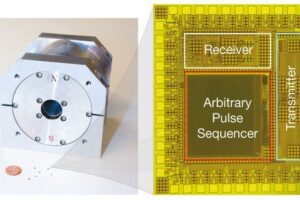
Quantum control is an emerging interdisciplinary field combining quantum physics and control engineering. It focuses on manipulating quantum states and processes to advance quantum computing and quantum information technologies. Researchers are developing control techniques that can precisely manage quantum phenomena, potentially revolutionizing computational capabilities and information processing.
Integration of Machine Learning in Control Systems
The fusion of machine learning with control theory has transformed traditional control paradigms. Reinforcement learning and other AI-driven methods allow control systems to autonomously optimize parameters and improve decision-making. This integration enhances performance in complex environments such as industrial automation and resource allocation, leveraging large datasets to predict and adapt to system behaviors.
Discrete Event System (DES) Control
Discrete event systems are characterized by state changes occurring at distinct points in time rather than continuously. Control research in this domain focuses on managing event-driven processes, which is critical in manufacturing, telecommunications, and logistics. Advanced DES control strategies enable systems to respond flexibly and efficiently to varying operational demands.
Bio-inspired Control Systems
Bio-inspired control draws inspiration from natural biological processes to develop innovative control methodologies. Techniques based on swarm intelligence, neural networks, and evolutionary algorithms allow systems to emulate adaptive and cooperative behaviors found in nature. These approaches have promising applications in environmental monitoring, disaster response, and autonomous robotics, where decentralized and resilient control is advantageous.
Verification and Validation in Control Systems
As control systems grow more complex, rigorous verification and validation (V&V) processes are essential to ensure their reliability and safety. Modern V&V techniques include formal methods and simulation-based testing to evaluate system performance under uncertainty and operational risks. These practices are critical in high-stakes fields such as aerospace and healthcare, where system failures can have severe consequences.
How Control Systems Research Advances Engineering
Control systems research drives innovation by developing methodologies that enhance system stability, adaptability, and robustness. By integrating interdisciplinary approaches-from quantum mechanics to machine learning-researchers create solutions that address real-world challenges. These advancements enable smarter automation, improved energy management, and more resilient infrastructure, ultimately contributing to technological progress and societal well-being.
Mathematical Foundations and Formulations
Control systems are often described mathematically to analyze and design controllers effectively. Key formulations include:
- State-space representation:
Describes system dynamics using vectors and matrices: dx/dt = Ax + Bu, where x is the state vector, u is the input, A is the system matrix, and B is the input matrix. - Transfer function:
Represents the relationship between input and output in the Laplace domain: G(s) = Y(s)/U(s), where Y(s) and U(s) are the Laplace transforms of output and input signals. - Robust control criteria:
H∞ control aims to minimize the worst-case gain of the transfer function from disturbance to output, ensuring performance under uncertainty.
Practical Applications of Control Systems Research
Control systems research underpins numerous real-world technologies:
- Robotics:
Nonlinear and adaptive control techniques enable precise and flexible robot motion in unpredictable environments. - Autonomous Vehicles:
Adaptive and machine learning-based controls improve navigation and decision-making in dynamic traffic conditions. - Smart Grids:
Networked control systems coordinate distributed energy resources to optimize power distribution and reliability. - Quantum Computing:
Quantum control methods facilitate manipulation of qubits for advanced computational tasks. - Manufacturing:
Discrete event system control enhances production line efficiency by managing event-driven processes. - Environmental Monitoring:
Bio-inspired control systems enable autonomous coordination of sensor networks in complex ecosystems.
Common Misunderstandings in Control Systems Research
- Misconception: Linear control methods are sufficient for all systems.
Correction: Many real-world systems exhibit nonlinear behaviors that require specialized nonlinear control techniques for effective management. - Misconception: Machine learning replaces traditional control theory.
Correction: Machine learning complements control theory by enhancing adaptability and predictive capabilities, rather than replacing foundational control principles. - Misconception: Quantum control is purely theoretical with no practical use.
Correction: Quantum control is actively being developed for practical applications in quantum computing and information processing. - Misconception: Verification and validation are optional steps.
Correction: V&V are critical to ensure safety and reliability, especially in mission-critical systems.
Significance of Control Systems Research
The study and advancement of control systems are fundamental to modern engineering and technology. By improving system performance, reliability, and adaptability, control systems research enables innovations that impact transportation, energy, healthcare, manufacturing, and beyond. Its interdisciplinary nature fosters the integration of emerging technologies, ensuring that engineered systems can meet the demands of increasingly complex and dynamic environments.
Future Prospects in Control Systems Research
The trajectory of control systems research points toward greater interdisciplinary collaboration, integrating artificial intelligence, biotechnology, and sustainable engineering practices. Emphasis on resilience and environmental sustainability will shape new control paradigms, addressing global challenges such as climate change and resource management. Continued innovation promises to unlock novel applications and enhance the capabilities of engineered systems across diverse sectors.
Frequently Asked Questions (FAQ)
What are the primary focus areas in modern control systems research?
Current research emphasizes nonlinear control, adaptive systems, robust control theory, networked control, quantum control, machine learning integration, discrete event system control, and bio-inspired methodologies.
How does machine learning enhance control systems?
Machine learning enables control systems to autonomously adjust parameters, optimize performance through reinforcement learning, and improve decision-making by analyzing large datasets in real-time.
Why is quantum control important?
Quantum control leverages quantum mechanics to manipulate quantum states, facilitating advancements in quantum computing and information technologies with potential for transformative computational power.
What role do verification and validation play in control systems?
Verification and validation ensure that control systems operate safely and reliably by rigorously testing their performance under uncertain and variable conditions, which is vital in critical applications.
What future trends are anticipated in control systems research?
Future directions include deeper integration with AI, biotechnology, and renewable energy, alongside a focus on sustainability, resilience, and the development of innovative control frameworks.
FAQ
What are the main types of modern control systems research?
Modern control systems research includes nonlinear control techniques, adaptive control, robust control theory, networked control systems, quantum control, integration of machine learning, discrete event system control, and bio-inspired control systems.
How is machine learning integrated into control systems?
Machine learning is used in control systems to enable adaptive adjustments, optimize control parameters through reinforcement learning, and improve decision-making processes in real-time, enhancing efficiency and reliability.
What is the significance of quantum control systems?
Quantum control systems leverage principles of quantum mechanics to manage quantum states and protocols, offering potential breakthroughs in quantum computing and information processing.
Why is verification and validation important in control systems?
Verification and validation ensure the reliability and safety of control systems, especially in critical applications like aerospace and healthcare, by rigorously testing system performance under uncertain conditions.
What future trends are expected in control systems research?
Future trends include interdisciplinary integration with AI, biotechnology, renewable energy, and an emphasis on sustainability, resilience, and novel paradigms in control theory and applications.


Leave a Reply