
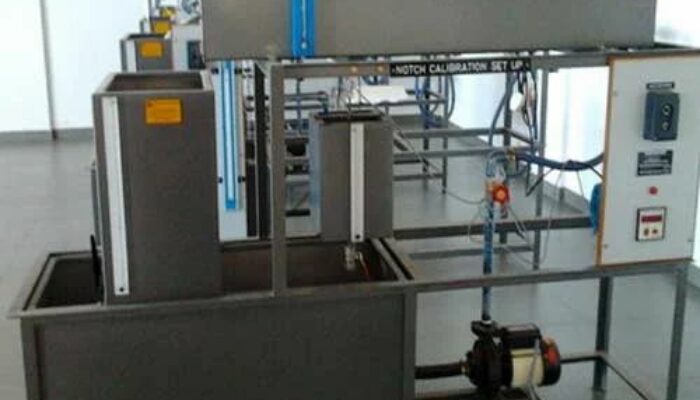
Short Answer
Definition of Notch Calibration
Notch calibration is a precise engineering procedure focused on adjusting and verifying the dimensions and shape of a notch used in hydraulic systems. This process ensures that the notch delivers consistent and reliable measurements of fluid flow, pressure, and force. Essentially, a notch acts as a controlled passageway through which fluid flows predictably, enabling accurate monitoring and management of hydraulic parameters.
Fundamentals of Notch Design in Fluid Dynamics
In fluid mechanics, a notch typically features a specific cross-sectional profile-commonly triangular or rectangular-that regulates the discharge rate of fluid. The design of the notch is crucial because it governs how gravitational potential energy of the fluid converts into kinetic energy as it passes over the notch’s edge. This energy transformation is fundamental to calculating flow rates and other hydraulic characteristics.
- Notch Geometry:
The shape and dimensions of the notch directly influence flow behavior and measurement accuracy. - Hydraulic Head:
The height of the fluid above the notch, which affects the velocity and volume of flow. - Fluid Properties:
Density and viscosity of the fluid impact flow dynamics and calibration outcomes. - Gravitational Force:
Gravity drives the fluid movement over the notch, integral to energy conversion.
Mechanics Behind Notch Calibration
The calibration process involves fine-tuning the notch’s physical parameters to ensure that flow measurements are both precise and repeatable. This is achieved by conducting controlled experiments, often using calibrated tanks or flumes, where fluid flow over the notch is measured under standardized conditions. The goal is to determine the coefficient of discharge (Cd), a dimensionless value representing the ratio between actual and theoretical flow rates.
Mathematical Framework and Formulae
The flow rate (Q) over a notch can be expressed mathematically as:
Q = Cd × A × √(2gH)
- Q: Flow rate of the fluid
- Cd: Coefficient of discharge, indicating flow efficiency
- A: Cross-sectional area of the notch throat
- g: Acceleration due to gravity
- H: Hydraulic head or height of fluid above the notch
This formula encapsulates the relationship between physical parameters and flow, allowing engineers to predict and control fluid behavior accurately.
Practical Applications and Examples
Notch calibration is vital in various real-world scenarios where precise fluid measurement is essential:
- Irrigation Systems:
Calibrated notches help regulate water delivery to crops, optimizing resource use and minimizing waste. - Industrial Fluid Management:
Accurate flow measurement ensures efficient containment and processing of liquids in manufacturing. - Environmental Monitoring:
Notches are used in stream gauging stations to monitor water flow and quality in natural waterways.
Challenges and Common Misunderstandings
- Misconception: A notch’s shape does not significantly affect flow measurement.
Correction: The geometry of the notch critically influences flow characteristics and must be precisely calibrated. - Misconception: Once calibrated, a notch does not require further adjustment.
Correction: Environmental changes such as sediment buildup or corrosion necessitate periodic recalibration to maintain accuracy.
Technological Advances in Notch Calibration
Modern technology has revolutionized notch calibration by introducing digital flow measurement tools and advanced software. These innovations enable real-time data acquisition, interactive visualization, and sophisticated simulations of fluid dynamics. Such tools enhance the precision and efficiency of calibration, allowing engineers to predict flow behavior with unprecedented accuracy.
Importance of Notch Calibration in Engineering and Sustainability
Accurate notch calibration is fundamental to engineering disciplines that rely on fluid control and measurement. It ensures operational efficiency, safety, and reliability in hydraulic systems. Beyond technical benefits, calibrated notches contribute to sustainable water management by reducing waste and optimizing fluid use in agriculture, industry, and environmental conservation.
Summary
In essence, notch calibration represents a critical intersection of physics, mathematics, and engineering craftsmanship. By meticulously adjusting the notch’s dimensions and validating its performance, engineers transform a simple structural feature into a powerful tool for understanding and controlling fluid flow. This process not only enhances system efficiency but also supports broader goals of sustainability and precision in fluid dynamics.
FAQ
What is the purpose of calibrating a notch?
To ensure accurate and consistent measurement of fluid flow rates by adjusting and validating the notch's shape and size.
Which factors impact notch calibration accuracy?
Notch shape, fluid density, gravitational force, throat area, and environmental changes such as sediment or corrosion.
What is the coefficient of discharge in notch calibration?
A dimensionless value representing the ratio of actual to theoretical flow, crucial for precise flow measurement.
Why is periodic recalibration important?
To maintain measurement accuracy by compensating for environmental wear and changes affecting the notch.
How do modern technologies aid notch calibration?
By providing real-time data, advanced simulations, and interactive visualization tools to enhance precision.



Leave a Reply