
Short Answer
Understanding Gravity and Mass
Have you ever wondered how an invisible and intangible phenomenon like gravity can hold massive celestial bodies such as planets and stars, as well as everyday objects like yourself, firmly in place? Is there a hidden attribute of mass that warps the fabric of space, drawing objects toward it? This intriguing question invites us to explore the profound relationship between mass and gravity in clear and accessible terms.
Definition of Gravity and Mass
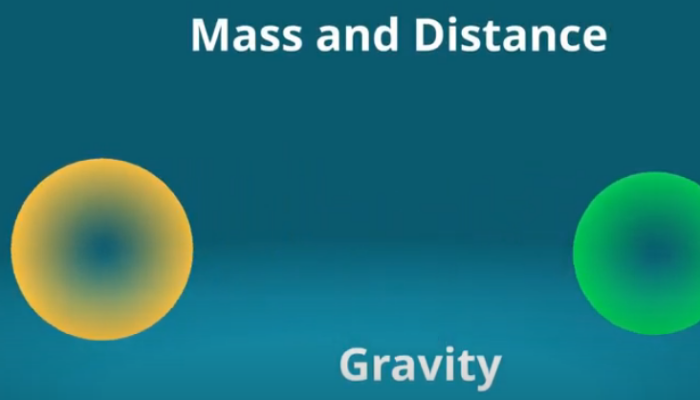
Gravity is the natural phenomenon by which objects with mass attract one another. Mass refers to the quantity of matter contained within an object, and it is this property that generates gravitational attraction.
- Gravity:
A force that pulls objects toward each other, dependent on their masses and the distance between them. - Mass:
The measure of matter in an object, which determines the strength of its gravitational influence.
Historical Perspective: From Newton to Einstein
Our everyday experience, such as watching an apple fall to the ground, provides a simple glimpse into gravity’s effects. Sir Isaac Newton formulated the Universal Law of Gravitation, which mathematically describes how every mass attracts every other mass with a force proportional to their masses and inversely proportional to the square of the distance separating them. However, Newton’s theory did not explain why gravity exists-only how it operates.

It was Albert Einstein who revolutionized our understanding with his General Theory of Relativity. Einstein proposed that mass does not merely exert a force but actively shapes the geometry of space and time itself. Space-time can be envisioned as a flexible fabric that bends and curves in response to mass, much like a heavy object distorts a trampoline’s surface. This curvature directs the motion of nearby objects, causing them to move as if pulled by an invisible force.
How Mass Creates Gravity: The Space-Time Fabric
Gravity arises not from a direct pulling force but from the warping of space-time caused by mass. Objects move along curved paths called geodesics, which represent the shortest routes in this distorted geometry. The greater the mass, the more pronounced the curvature, which explains why massive bodies like stars and planets dominate their surroundings gravitationally.
Smaller objects, such as moons and satellites, orbit these larger masses because they follow the curved trajectories shaped by the mass-induced warping of space-time. This perspective transforms gravity from a mysterious force into a natural consequence of the geometry of the universe.
Gravitational Fields and Their Influence
To visualize gravity, imagine each mass enveloped by an invisible gravitational field extending through space. This field weakens with distance but remains ever-present, influencing the motion of other masses that enter its domain. The interaction of multiple gravitational fields results in the complex gravitational dynamics observed in planetary orbits, tides, and the movement of galaxies.
Extreme Gravitational Phenomena: Black Holes
When mass becomes extraordinarily concentrated, as in black holes, the curvature of space-time intensifies to such an extent that not even light can escape. This extreme warping validates Einstein’s theory and highlights the immense power mass holds in shaping gravity. Black holes represent the ultimate demonstration of mass’s ability to manipulate the fabric of space-time.
Gravitational Effects Beyond Mass: Light Bending
Interestingly, even massless particles like photons are affected by gravity. When light passes near a massive object, its path bends-a phenomenon known as gravitational lensing. This effect illustrates that gravity influences the structure of space itself, guiding the movement of all entities regardless of their mass.
Why Mass and Gravity Are Essential
Imagining a universe without gravity reveals a chaotic and unrecognizable cosmos. Without the gravitational pull generated by mass, planets would drift away from stars, moons would lose their orbits, and the fundamental force that maintains cosmic order would vanish. Life on Earth depends on gravity to retain the atmosphere and water, making the interplay between mass and gravity crucial for existence.
Summary: The Interplay Between Mass and Gravity
The question of how mass creates gravity unfolds as a story of interaction between matter and the invisible geometry of space-time. Mass dictates the curvature of space-time, and this curvature directs the motion of objects. Gravity, therefore, is not merely a force but a fundamental characteristic of the universe, intricately linked to the presence of mass.
Significance in Science and Everyday Life
Understanding gravity as a manifestation of curved space-time deepens our appreciation of the cosmos beyond everyday experiences. Gravity, born from the intrinsic property of mass, is the architect of the universe’s grand celestial choreography, governing the motion of planets, stars, and galaxies, and sustaining life on Earth.

Leave a Reply