
Short Answer
Definition and Overview of MRI and PET Scans
Magnetic Resonance Imaging (MRI) and Positron Emission Tomography (PET) scans are two leading diagnostic imaging techniques widely used in modern medicine. Each modality serves distinct purposes by providing different types of information about the human body. While MRI focuses on detailed anatomical visualization, PET scans reveal functional and metabolic processes. Together, they offer complementary insights essential for accurate diagnosis and treatment planning.
Fundamental Principles Behind MRI and PET
Magnetic Resonance Imaging (MRI)
MRI is grounded in the phenomenon of nuclear magnetic resonance. This non-invasive method capitalizes on the magnetic properties of hydrogen protons, which are abundant in the body’s water molecules. When placed in a strong magnetic field, these protons align and emit radiofrequency signals upon excitation. Advanced computational algorithms then translate these signals into high-resolution images that depict the fine structural details of soft tissues. This makes MRI particularly valuable in examining the brain, spinal cord, joints, and other soft tissue structures.
Positron Emission Tomography (PET)
In contrast, PET imaging is based on nuclear medicine principles involving radioactive tracers. These radiopharmaceuticals emit positrons after being introduced into the body, typically via intravenous injection. When a positron encounters an electron, they annihilate each other, producing gamma rays that are detected by the PET scanner. This process enables visualization of metabolic and biochemical activity within tissues, providing critical information about cellular function, especially useful in oncology and neurology.
Distinct Imaging Objectives
The primary difference between MRI and PET lies in their diagnostic focus:
- MRI:
Primarily used for anatomical imaging, MRI excels at delineating the physical structure of organs and tissues. It is adept at identifying abnormalities such as tumors, lesions, and degenerative changes by producing detailed contrast between different soft tissues. - PET:
Focuses on functional imaging by mapping metabolic activity. PET scans are instrumental in detecting cancerous growths based on their glucose uptake, monitoring treatment response, and evaluating neurological disorders by assessing brain metabolism.
Contrast Agents and Safety Considerations
Contrast in MRI
To enhance image clarity, MRI often utilizes gadolinium-based contrast agents. These agents improve visualization of blood vessels and pathological tissues. Although generally safe, gadolinium carries risks for patients with impaired kidney function, potentially leading to nephrogenic systemic fibrosis, a rare but serious condition.
Radiotracers in PET
PET scans employ radioactive tracers, which expose patients to low levels of ionizing radiation. While the radiation dose is carefully controlled, minimizing exposure remains a priority to reduce the risk of radiation-induced complications. Advances in tracer development and dose optimization continue to improve the safety profile of PET imaging.
Patient Experience and Procedure Duration
The patient’s experience during MRI and PET scans differs notably:
- MRI:
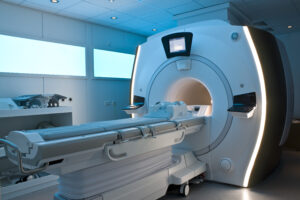
Typically lasting from 15 to 60 minutes, MRI requires patients to lie still inside a narrow, cylindrical magnet. This environment can provoke claustrophobia or anxiety in some individuals. To address this, newer MRI machines feature open designs, though sometimes at the expense of image resolution. - PET:
The PET procedure generally takes about 30 minutes of scanning time but includes an additional waiting period of 30 to 60 minutes after tracer injection to allow for adequate distribution. This preparatory phase can affect scheduling and patient convenience.
Synergistic Use in Oncology
In cancer diagnosis and management, MRI and PET scans are often combined to leverage their complementary strengths. MRI provides detailed anatomical maps of tumor location and extent, while PET offers metabolic data that helps assess tumor aggressiveness and response to therapy. This integrated approach enhances staging accuracy and informs personalized treatment strategies.
Emerging Trends: Hybrid Imaging Technologies
Recent advancements have led to the development of hybrid PET/MRI scanners, which merge the anatomical precision of MRI with the metabolic insights of PET in a single imaging session. This innovation promises to streamline diagnostic workflows, reduce patient burden, and improve diagnostic accuracy, marking a significant leap forward in medical imaging technology.
Why Understanding MRI and PET is Crucial
Grasping the differences and applications of MRI and PET scans is vital for healthcare professionals and patients alike. These imaging modalities not only facilitate early and accurate diagnosis but also guide effective treatment planning across a range of medical conditions. Their complementary nature enriches our understanding of human health, enabling more precise and personalized medical care.
Common Misconceptions About MRI and PET
MRI exposes patients to harmful radiation.
MRI uses magnetic fields and radio waves, not ionizing radiation, making it safer in terms of radiation exposure compared to PET.
PET scans only detect cancer.
While PET is widely used in oncology, it also plays a significant role in diagnosing neurological and cardiovascular diseases by assessing metabolic function.
FAQ
What is the main purpose of an MRI?
MRI is primarily used for detailed anatomical imaging of soft tissues.
What does a PET scan detect?
A PET scan focuses on detecting metabolic activity and can identify conditions such as cancer.
Are MRI scans safe?
Yes, MRI scans are safe as they do not use ionizing radiation.



Leave a Reply