
Short Answer
Definition of Gravity and Dark Energy
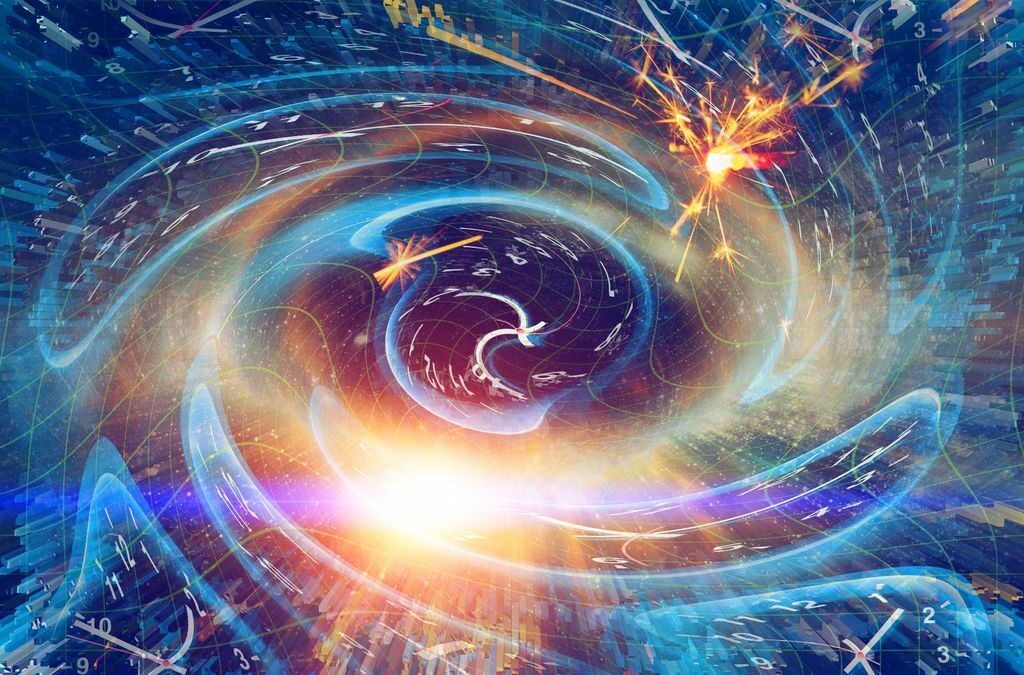
Gravity and dark energy are two fundamental yet contrasting forces that shape the universe. Gravity is the attractive force responsible for the formation and cohesion of cosmic structures such as planets, stars, and galaxies. It warps spacetime and governs the motion of celestial bodies. In contrast, dark energy is a mysterious repulsive force that accelerates the expansion of the universe, pushing matter apart on the largest scales. Together, these forces create a dynamic tension that influences the cosmos’s past, present, and future.
- Gravity:
A universal force of attraction that pulls matter together, shaping the large-scale structure of the universe. - Dark Energy:
An enigmatic form of energy that permeates space and drives the accelerated expansion of the universe.
The Cosmic Interaction: Gravity Versus Dark Energy
The universe is engaged in a profound tug-of-war between gravity and dark energy. Gravity acts to cluster matter, forming galaxies and cosmic webs, while dark energy exerts a counteracting push that accelerates the universe’s expansion. Discovered through observations of distant supernovae in the late 20th century, dark energy now accounts for roughly 68% of the universe’s total energy content. This opposition between an attractive and a repulsive force presents one of the most significant puzzles in modern cosmology.
Nature and Theories of Dark Energy
Dark energy’s true essence remains elusive. The most widely accepted model treats it as a cosmological constant-a fixed energy density inherent to empty space that causes a uniform acceleration of cosmic expansion. Alternative theories propose dynamic fields, such as quintessence, which vary over time and space, potentially explaining the acceleration without a constant vacuum energy. These competing hypotheses continue to fuel debate and research, as the physical origin of dark energy is still unknown.
Reevaluating Gravity: Modified Theories and Alternatives
In light of the cosmic acceleration, some scientists question whether gravity behaves exactly as described by Newtonian physics or Einstein’s General Relativity on the largest scales. Modified gravity theories suggest changes to the classical understanding of gravity to explain cosmic acceleration without invoking dark energy. Examples include f(R) gravity, scalar-tensor models, and theories involving extra dimensions. These frameworks propose that gravity’s apparent weakening at vast distances might be a manifestation of more complex gravitational dynamics.
Observational Techniques in Studying Cosmic Expansion
Testing the interplay between gravity and dark energy relies on extensive astronomical observations. Large-scale surveys map the distribution and movement of galaxies across billions of light-years, providing insights into the universe’s expansion history and structure formation. Techniques such as baryon acoustic oscillations, gravitational lensing, and redshift-space distortions are crucial for distinguishing the effects of gravity from those of dark energy and for detecting any deviations from standard gravitational laws.
Dark Matter’s Role in the Cosmic Framework
Dark matter, an invisible but gravitationally influential component of the universe, adds complexity to the cosmic balance. Although it does not emit or absorb light, dark matter’s gravitational pull is essential for galaxy formation and clustering. If gravity behaves differently on cosmic scales, our understanding of dark matter’s distribution and quantity may require revision. The intricate relationship among dark matter, gravity, and dark energy remains a central focus in cosmological research.
Quantum Gravity and Its Potential Insights
Efforts to unify gravity with quantum mechanics may provide breakthroughs in understanding the cosmic acceleration. Theories such as loop quantum gravity, string theory, and emergent gravity explore gravity’s behavior at the smallest scales, potentially revealing new physics that could explain dark energy. Although still speculative, these approaches might uncover whether dark energy arises from quantum gravitational effects or if gravity itself exhibits novel properties beyond classical descriptions.
Implications for the Universe’s Ultimate Fate
The ongoing contest between gravity and dark energy determines the long-term evolution of the cosmos. Should gravity regain dominance or alter its behavior, it could slow or reverse the accelerated expansion, possibly leading to a “big crunch” or cyclic universe scenarios. Conversely, if dark energy continues to prevail, the universe may face a “big freeze” or “big rip,” where galaxies drift apart indefinitely and cosmic structures disintegrate. Understanding this balance is crucial for predicting the universe’s destiny.
Future Directions and Challenges
Upcoming observational missions equipped with cutting-edge technology aim to enhance our understanding of cosmic expansion and gravitational phenomena. Next-generation space telescopes, gravitational wave detectors, and comprehensive sky surveys will deliver higher precision data. However, challenges persist, including detecting subtle signals of modified gravity, interpreting complex data, and integrating diverse theoretical models. Progress will depend on interdisciplinary collaboration across astrophysics, particle physics, and cosmology.
Significance of the Gravity and Dark Energy Interplay
The dynamic between gravity and dark energy encapsulates some of the deepest mysteries in physics and cosmology. While dark energy currently drives the universe’s accelerated expansion, the possibility that gravity might reassert itself invites profound questions about the nature of the cosmos. This interplay not only challenges established scientific paradigms but also propels ongoing exploration into the fundamental laws governing reality. As observational and theoretical tools advance, unraveling this cosmic rivalry remains a central quest in understanding the universe.

Leave a Reply