
Short Answer
Definition of Electromagnetic Fields
Electromagnetic fields (EM fields) are fundamental physical entities that arise from electrically charged particles. They encompass both electric and magnetic components, which together influence the behavior and movement of charged particles in space. These fields are essential to understanding a wide range of natural phenomena and underpin many modern technologies.
- Electric Field:
A region around a stationary electric charge where other charges experience a force. It radiates outward from the charge and is described by Coulomb’s law. - Magnetic Field:
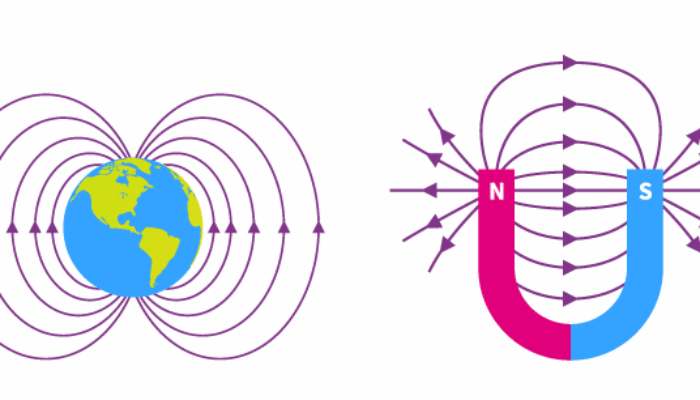
A field generated by moving electric charges (currents) or changing electric fields, which exerts forces on other moving charges and magnetic materials.
Fundamental Principles Behind Electromagnetic Fields
Electromagnetic fields emerge from the interplay between electricity and magnetism, two aspects of a single unified force described by classical electromagnetism. Stationary charges produce electric fields, while moving charges or time-varying electric fields generate magnetic fields. This intrinsic connection is formalized in Maxwell’s equations, which unify electric and magnetic phenomena into a coherent theoretical framework.
Generation of Electric Fields
When an electric charge remains at rest, it creates an electric field that extends radially outward. The strength and direction of this field at any point in space can be calculated using Coulomb’s law, which states that the force between two charges is proportional to the product of their magnitudes and inversely proportional to the square of the distance between them.
Creation of Magnetic Fields by Moving Charges
Once charges begin to move, they produce magnetic fields in addition to electric fields. For example, an electric current flowing through a conductor generates a magnetic field that circles the wire, a relationship often visualized using the right-hand rule. This phenomenon is the basis for electromagnets, electric motors, and transformers.
Electromagnetic Induction and Its Applications
Electromagnetic induction occurs when a changing magnetic field induces an electric current in a nearby conductor. This principle is fundamental to the operation of electric generators, which convert mechanical energy into electrical energy by moving conductors through magnetic fields. The dynamic interaction between electric and magnetic fields in this process exemplifies the dual nature of electromagnetism and its practical utility.
Quantum Perspective on Electromagnetic Fields
At the quantum level, electromagnetic fields are quantized into particles called photons, which carry electromagnetic energy. Quantum electrodynamics (QED) provides a framework for understanding how photons mediate electromagnetic interactions, exhibiting both wave-like and particle-like properties. This duality challenges classical interpretations and deepens our understanding of light and electromagnetic radiation.
Mathematical Framework: Maxwell’s Equations
Maxwell’s equations mathematically describe how electric and magnetic fields are generated and altered by charges and currents:
- Gauss’s Law for Electricity:
(nabla cdot mathbf{E} = frac{rho}{varepsilon_0})
Electric field divergence relates to charge density (rho). - Gauss’s Law for Magnetism:
(nabla cdot mathbf{B} = 0)
There are no magnetic monopoles; magnetic field lines are continuous. - Faraday’s Law of Induction:
(nabla times mathbf{E} = -frac{partial mathbf{B}}{partial t})
Changing magnetic fields induce electric fields. - Ampère’s Law with Maxwell’s Addition:
(nabla times mathbf{B} = mu_0 mathbf{J} + mu_0 varepsilon_0 frac{partial mathbf{E}}{partial t})
Magnetic fields arise from electric currents (mathbf{J}) and changing electric fields.
Where (mathbf{E}) is the electric field, (mathbf{B}) is the magnetic field, (rho) is charge density, (mathbf{J}) is current density, (varepsilon_0) is the permittivity of free space, and (mu_0) is the permeability of free space.
Practical Examples of Electromagnetic Fields
Electromagnetic fields are ubiquitous in everyday life and technology:
- Power Transmission:
High-voltage power lines carry electric currents that generate magnetic fields, enabling the distribution of electricity over long distances. - Wireless Communication:
Radio waves, microwaves, and other electromagnetic waves transmit information through space, facilitating mobile phones, Wi-Fi, and broadcasting. - Medical Imaging:
Technologies like MRI use strong magnetic fields and radio waves to create detailed images of the human body. - Electric Motors and Generators:
Devices that convert electrical energy to mechanical energy and vice versa rely on electromagnetic principles.
Common Misunderstandings About Electromagnetic Fields
- Misconception: Electric and magnetic fields can exist independently.
Correction: According to Maxwell’s equations, changing electric fields produce magnetic fields and vice versa; they are inherently linked aspects of the electromagnetic force. - Misconception: Magnetic fields are only produced by magnets.
Correction: Magnetic fields also arise from moving electric charges, such as currents in wires, not just permanent magnets. - Misconception: Electromagnetic fields are purely classical phenomena.
Correction: At microscopic scales, electromagnetic interactions are quantized and described by quantum electrodynamics.
Significance of Electromagnetic Fields in Science and Technology
Electromagnetic fields are central to both fundamental physics and practical applications. They explain the behavior of atoms and molecules, influence chemical reactions, and are critical in biological processes. Technologically, they enable the operation of countless devices that power modern life, from communication systems to medical diagnostics. Understanding and harnessing electromagnetic fields continue to drive innovation and deepen our comprehension of the universe.
FAQ
What is an electromagnetic field?
An electromagnetic field is a physical field produced by electrically charged particles, consisting of electric and magnetic components.
How is an electromagnetic field generated?
An electromagnetic field is generated by stationary electric charges creating electric fields and moving charges producing magnetic fields.
What are Maxwell's equations?
Maxwell's equations describe how electric and magnetic fields are generated and altered by charges and currents.






Leave a Reply