
Short Answer
Definition of Magnetic Resonance Imaging (MRI)
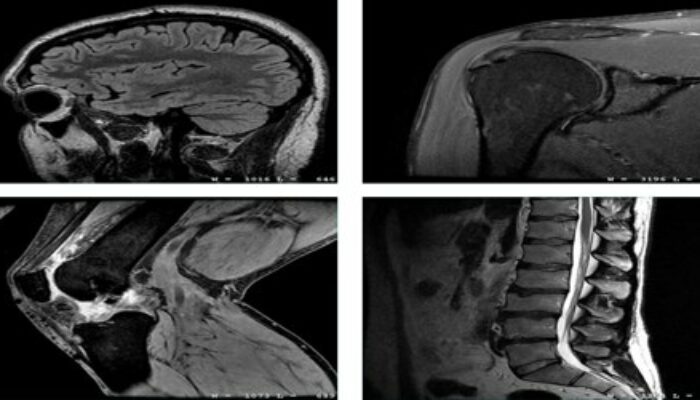
Magnetic Resonance Imaging (MRI) is an advanced diagnostic technique that merges principles of physics and biology to produce detailed images of the internal structures of the human body. Unlike traditional imaging methods, MRI offers a non-invasive way to visualize soft tissues, organs, and other anatomical features with exceptional clarity, revealing intricate details that are often hidden beneath the surface.
Fundamental Principles of MRI
At the heart of MRI lies the phenomenon of nuclear magnetic resonance (NMR), which involves the magnetic properties of certain atomic nuclei when subjected to an external magnetic field. The human body, composed largely of water, contains abundant hydrogen nuclei, making them the primary focus for MRI scanning.
- Magnetic Alignment:
When placed in a strong magnetic field, typically between 1.5 and 3.0 teslas, hydrogen nuclei spins align either parallel or antiparallel to the field. - Radiofrequency Excitation:
A radiofrequency pulse is applied, causing these aligned spins to absorb energy and move to a higher energy state. - Signal Emission:
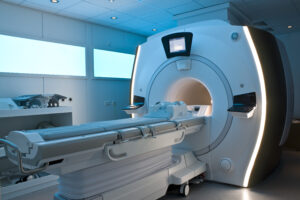
As the nuclei relax back to their original alignment, they emit energy signals that are captured by the MRI scanner. - Image Formation:
These signals are processed to create detailed images representing the internal anatomy.
Mechanism of Image Contrast in MRI
The quality and contrast of MRI images depend on how different tissues respond to magnetic fields and radiofrequency pulses. This response is characterized by two key relaxation times:
- T1 Relaxation (Spin-Lattice Relaxation):
The time it takes for hydrogen nuclei to realign with the magnetic field after excitation. - T2 Relaxation (Spin-Spin Relaxation):
The time required for the spins of neighboring nuclei to lose phase coherence.
Variations in T1 and T2 relaxation times among tissues create contrast, enabling differentiation between healthy and diseased areas.
Clinical Applications of MRI
MRI has become an essential tool across multiple medical disciplines due to its ability to provide high-resolution images without ionizing radiation.
- Neurology:
MRI excels in visualizing brain anatomy, detecting tumors, strokes, and neurodegenerative disorders by clearly distinguishing gray and white matter. - Orthopedics:
It is invaluable for assessing soft tissue injuries, cartilage damage, and ligament tears, offering insights that X-rays cannot provide. - Oncology:
MRI aids in tumor detection, staging, and monitoring treatment response, often enhanced by contrast agents like gadolinium to highlight lesions.
Advanced MRI Techniques
Innovations in MRI technology have expanded its diagnostic capabilities beyond static imaging.
- Functional MRI (fMRI):
This technique maps brain activity by measuring blood flow changes, revealing functional connectivity and brain responses during cognitive tasks. - Diffusion-Weighted Imaging (DWI):
DWI assesses the movement of water molecules within tissues, providing early detection of conditions such as stroke by highlighting cellular integrity.
Future Directions in MRI Technology
The evolution of MRI continues to push the boundaries of medical imaging, promising enhanced resolution and faster diagnostics.
- Ultra-High-Field MRI:
Scanners with stronger magnetic fields aim to deliver unprecedented image detail and specificity. - Quantum Coil Design:
Emerging quantum technologies may improve signal detection, increasing image clarity. - Artificial Intelligence Integration:
AI-driven analysis is expected to accelerate image interpretation, improving diagnostic accuracy and efficiency.
Why MRI is Crucial in Modern Medicine
MRI represents a pivotal advancement in healthcare, combining scientific innovation with clinical utility. Its ability to non-invasively visualize internal structures with remarkable detail aids in early diagnosis, treatment planning, and monitoring across a wide range of medical conditions. By bridging the gap between physics and medicine, MRI continues to enhance patient outcomes and deepen our understanding of human anatomy and pathology.
Summary
Magnetic Resonance Imaging stands as a sophisticated fusion of science and technology, offering unparalleled insights into the human body. From its foundational physics to its diverse clinical applications and ongoing technological advancements, MRI remains an indispensable diagnostic tool. As research and innovation progress, MRI’s role in medicine is set to expand further, promising even greater contributions to health and disease management.
FAQ
What is MRI used for?
MRI is used for diagnosing and monitoring various medical conditions, particularly in neurology, orthopedics, and oncology.
Is MRI safe?
Yes, MRI is considered safe as it does not use ionizing radiation.
How does MRI work?
MRI works by aligning hydrogen nuclei in a magnetic field and detecting the signals emitted as they return to their original state.



Leave a Reply