
Short Answer
Definition of the Axial Higgs Boson
The axial Higgs boson is a significant particle hypothesized within extensions of the Standard Model of particle physics. It plays a crucial role in advancing our understanding of how particles acquire mass and the underlying symmetries of the universe. Unlike the conventional Higgs boson, the axial Higgs exhibits distinct spin and parity properties, making it a unique and intriguing subject in theoretical and experimental physics.
Historical Background and Theoretical Foundations
The journey to comprehending the axial Higgs boson begins with the original Higgs boson, proposed by Peter Higgs and others in the 1960s. The Higgs mechanism explained how fundamental particles gain mass through spontaneous symmetry breaking of the electroweak force. This breakthrough led to a global experimental effort, culminating in the 2012 discovery of the Higgs boson at CERN’s Large Hadron Collider (LHC). However, theoretical models extending beyond the Standard Model, such as supersymmetry and composite Higgs theories, predict the existence of additional Higgs-like particles, including the axial Higgs boson.
Characteristics and Theoretical Models
The axial Higgs boson arises from advanced theoretical frameworks that propose modifications to the Higgs field. It is characterized by axial vector properties, differing from the scalar nature of the standard Higgs boson. These models suggest that the axial Higgs could reveal deeper symmetries and dualities in particle interactions, potentially bridging gaps in our understanding of fundamental forces and matter composition.
Experimental Detection and Methodologies
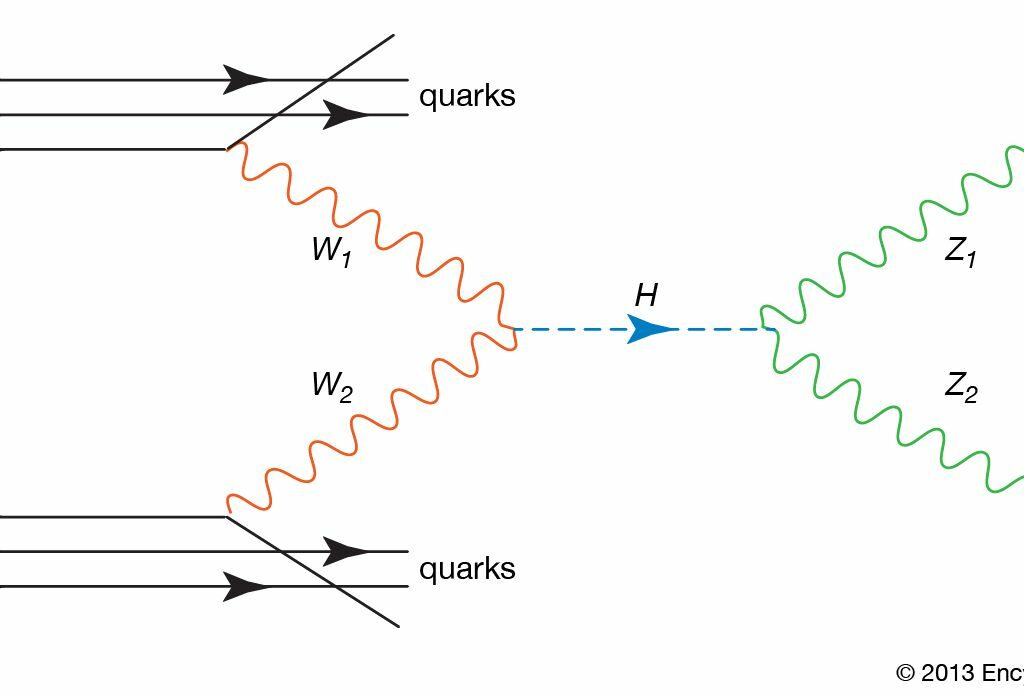
Detecting the axial Higgs boson required innovative experimental strategies grounded in high-energy particle physics. The LHC, with its unparalleled collision energies, served as the primary instrument for producing and observing rare particles. Physicists designed experiments to identify unique decay channels and production mechanisms specific to the axial Higgs, focusing on interactions involving vector bosons that produce distinctive signatures in detector data.
Data Collection and Analysis
During proton-proton collisions at near-light speeds, detectors recorded immense volumes of data, capturing the complex aftermath of particle interactions. Extracting signals indicative of the axial Higgs boson involved filtering through background noise and identifying anomalous energy distributions and decay patterns. Advanced statistical tools and machine learning algorithms were employed to discern meaningful correlations and validate potential discoveries.
Collaborative Verification
The confirmation of the axial Higgs boson’s existence was a collective effort, involving physicists worldwide who rigorously analyzed data, debated interpretations, and refined theoretical models. This collaborative approach ensured that findings met stringent scientific standards, minimizing the risk of false positives and enhancing the robustness of the conclusions.
Significance and Implications
The identification of the axial Higgs boson marks a milestone in particle physics, opening new avenues for exploring the universe’s fundamental structure. It provides insights into symmetry breaking mechanisms beyond the Standard Model and may offer clues about dark matter and the conditions of the early universe. This discovery enriches our comprehension of the cosmos and exemplifies humanity’s relentless pursuit of knowledge.
Common Misconceptions About the Axial Higgs Boson
The axial Higgs boson is just another name for the standard Higgs boson.
The axial Higgs boson is a distinct particle predicted by theories beyond the Standard Model, possessing different spin and parity properties than the scalar Higgs boson discovered in 2012.
The axial Higgs boson has already been definitively discovered.
While experimental evidence is compelling, the axial Higgs boson remains a subject of ongoing research and verification within the physics community.
Real-World Applications and Future Prospects
Although primarily a theoretical and experimental pursuit, understanding the axial Higgs boson has practical implications for future technologies. Insights gained from studying this particle could influence the development of advanced materials, quantum computing, and energy generation. Moreover, it enhances our fundamental grasp of the universe, potentially guiding new physics beyond current paradigms.
FAQ
What is the axial Higgs boson?
The axial Higgs boson is a particle hypothesized in theoretical models that extend the Standard Model, characterized by distinct spin and parity properties.
How is the axial Higgs boson different from the standard Higgs boson?
Unlike the standard Higgs boson, the axial Higgs boson exhibits axial vector properties and is predicted by theories beyond the Standard Model.






Leave a Reply