

Short Answer
Definition of Cosmic Element Formation
The origin of elements in the universe traces back to the earliest moments following the Big Bang, the event that initiated the expansion of space and time. This process encompasses the creation of fundamental particles and the subsequent synthesis of atomic nuclei, laying the groundwork for all matter observed today. Understanding how the first elements formed provides crucial insight into the evolution of the cosmos and the material composition of stars, planets, and life itself.
Early Universe Conditions and Particle Genesis
Immediately after the Big Bang, the universe existed in an extremely hot and dense state. Within fractions of a second, a rapid expansion phase called cosmic inflation occurred, smoothing out the fabric of space and establishing the large-scale uniformity observed in the cosmos. As the universe cooled, it transitioned into a quark-gluon plasma-a highly energetic state where quarks and gluons moved freely. This environment enabled the formation of protons and neutrons, the baryonic particles that serve as the building blocks of atomic nuclei.
Big Bang Nucleosynthesis: Formation of Light Elements
Approximately three minutes post-Big Bang, the universe had cooled sufficiently for protons and neutrons to combine through nuclear reactions in a period known as Big Bang Nucleosynthesis. This epoch produced the first atomic nuclei, predominantly hydrogen isotopes (including deuterium), helium, and trace amounts of lithium and beryllium. The resulting elemental composition was roughly 75% hydrogen and 25% helium by mass, with minute quantities of heavier light elements. These primordial abundances set the stage for the chemical evolution of the universe.
- Hydrogen:
The simplest and most abundant element, serving as the primary fuel for star formation. - Helium:
The second most abundant element, crucial for stellar structure and fusion processes. - Lithium and Beryllium:
Produced in trace amounts, these elements would later be replenished through stellar nucleosynthesis.
Stellar Nucleosynthesis and the Birth of Heavier Elements
Several hundred million years after the Big Bang, the first generation of stars, known as Population III stars, formed from clouds of primordial hydrogen and helium. These massive stars ignited nuclear fusion at extraordinary rates, synthesizing heavier elements such as carbon, oxygen, and iron within their cores. The life cycles of these stars culminated in supernova explosions, dispersing these newly forged elements into the interstellar medium and enriching the cosmic environment.
Subsequent Generations of Stars and Elemental Enrichment
The debris from Population III stars seeded the formation of later stellar populations-Population II and Population I stars. These stars incorporated heavier elements, or “metals” in astronomical terms, facilitating the development of complex planetary systems and the chemical diversity necessary for life. This ongoing cycle of star formation and death has progressively increased the universe’s elemental complexity.
The Role of Gravity and Dark Matter in Cosmic Structure Formation
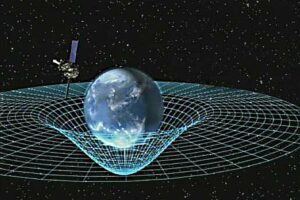
Gravitational forces have been fundamental in shaping the universe’s large-scale structure by drawing matter together to form galaxies and clusters. Dark matter, an invisible and enigmatic component of the cosmos, is believed to have played a critical role by providing additional gravitational pull that helped baryonic matter coalesce into the first galaxies. The interaction between visible matter and dark matter remains a central topic in modern cosmology, influencing theories about the universe’s early development.
Observational Evidence: Cosmic Microwave Background Radiation
The cosmic microwave background (CMB) radiation serves as a relic snapshot of the universe approximately 380,000 years after the Big Bang. Variations in the temperature of the CMB correspond to density fluctuations in the early universe, which later evolved into galaxies and larger cosmic structures. Studying the CMB has been instrumental in confirming theoretical models of the universe’s origin and elemental formation.
Common Misconceptions About Element Formation
Hydrogen and helium are the only elements formed after the Big Bang.
While hydrogen and helium dominate, trace amounts of lithium and beryllium were also produced during Big Bang Nucleosynthesis.
All elements were created during the Big Bang.
Heavier elements beyond lithium were primarily synthesized later inside stars through nuclear fusion.
Dark matter is made of ordinary atoms.
Dark matter is non-baryonic and does not interact with light, differing fundamentally from ordinary matter.
Significance of Element Formation in the Universe
The genesis of elements following the Big Bang is foundational to the existence of stars, planets, and life. The initial abundance of hydrogen and helium provided the fuel for star formation, while stellar nucleosynthesis created the heavier elements essential for planetary formation and biological processes. Understanding these processes enriches our comprehension of cosmic history and the fundamental forces shaping the universe.
Summary
The formation of the universe’s first elements was a complex sequence of events beginning with the Big Bang and continuing through stellar evolution. From the rapid expansion and cooling of the early universe to the nuclear reactions within the first stars, these processes established the elemental diversity observed today. Ongoing research in cosmology and astrophysics continues to unravel the intricate narrative of how matter came to be, deepening our understanding of the cosmos and our place within it.
FAQ
What elements were formed first in the universe?
The first elements formed were primarily hydrogen and helium, with trace amounts of lithium and beryllium, during the Big Bang nucleosynthesis.
Did all elements form during the Big Bang?
No, heavier elements beyond lithium were primarily synthesized later inside stars through nuclear fusion.
What role does dark matter play in element formation?
Dark matter provides additional gravitational pull that helped baryonic matter coalesce into the first galaxies, influencing cosmic structure formation.
How is the cosmic microwave background related to element formation?
The cosmic microwave background radiation is a relic snapshot of the universe that provides evidence for the density fluctuations that led to the formation of galaxies and elemental enrichment.




Leave a Reply