
Short Answer
Definition of Telescopes as Time Machines
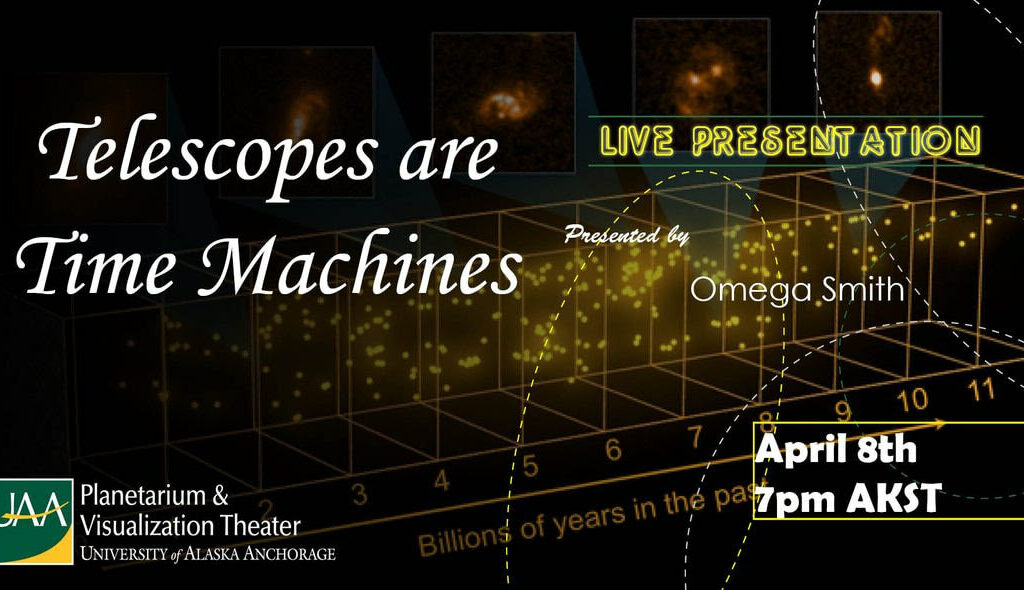
Telescopes are often described metaphorically as “time machines” because they allow us to observe light that has traveled vast distances over extended periods. This concept arises from the finite speed of light, which means that when we look at distant celestial bodies, we are actually seeing them as they existed in the past. Thus, telescopes serve as instruments that reveal the universe’s history by capturing ancient photons, effectively providing a glimpse into earlier epochs of cosmic evolution.
The Science Behind the Time Machine Metaphor
The foundation of this metaphor lies in the fundamental properties of light and space. Light travels at a constant speed of approximately 186,282 miles per second (299,792 kilometers per second). Although incredibly fast, this speed is not instantaneous, so light emitted from distant stars, galaxies, or nebulae takes years, centuries, or even billions of years to reach Earth. Consequently, observing these objects through telescopes means witnessing their past states rather than their current conditions.
Light Travel Time and Cosmic Distances
- Speed of Light:
The finite velocity of light creates a natural delay between the emission of photons and their detection on Earth. - Distance and Time:
The farther an object is, the older the light we observe, allowing telescopes to function as windows into the distant past.
Illustrative Examples of Cosmic Time Travel
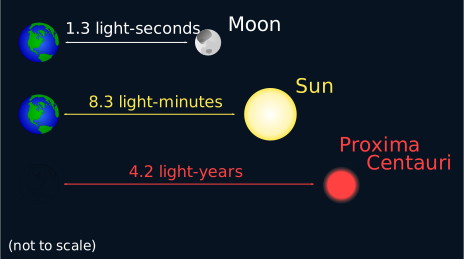
One of the most striking examples is the Andromeda Galaxy, located about 2.5 million light-years away. When astronomers observe Andromeda, they see it as it was 2.5 million years ago, long before modern humans existed. This image is not a real-time snapshot but a historical record frozen in cosmic time. Similarly, even our Sun is seen as it appeared roughly eight minutes ago, due to the time it takes sunlight to reach Earth.
Limitations of the Time Machine Analogy
While the idea of telescopes as time machines is compelling, it is important to clarify what this metaphor does and does not imply. Telescopes do not enable physical travel through time or alter the flow of temporal events. Instead, they collect and focus photons emitted in the past, allowing scientists to reconstruct and analyze ancient light. The observer remains fixed in the present, and no actual temporal displacement occurs.
Technological Enhancements
Modern advancements such as adaptive optics, space-based observatories, and multi-wavelength detection techniques enhance our ability to capture and interpret this ancient light with greater clarity and detail. These technologies expand the temporal and spatial reach of telescopes, revealing previously hidden aspects of the universe’s history.
Understanding the Relationship Between Light, Distance, and Time
The interplay between these factors transforms astronomical observation into a form of cosmic archaeology. By studying light from distant phenomena like supernovae, astronomers can trace the universe’s expansion and investigate enigmatic forces such as dark energy. This dynamic perspective reveals that celestial objects are not static but part of an evolving cosmic narrative spanning billions of years.
Philosophical and Relativistic Implications
The metaphor also invites reflection on the nature of time, causality, and human perception. Observing an event after it has occurred highlights the relativity of simultaneity, a concept central to Einstein’s theory of relativity. If one could instantaneously reach the source of the observed light, the “now” experienced there would differ significantly from the “now” perceived on Earth, underscoring the complex fabric of spacetime.
Multispectral Observations and Their Significance
Telescopes operate across the electromagnetic spectrum, including radio waves, infrared, ultraviolet, X-rays, and gamma rays. Each wavelength unveils distinct aspects of cosmic history, from star formation to black hole activity. This comprehensive approach enriches our understanding of the universe’s timeline and challenges simplistic views limited to visible light.
The Broader Impact and Continuing Quest
While telescopes illuminate the distant past, they also emphasize the vastness and complexity of the cosmos. Each photon captured carries a fragment of history and a hint of mystery, pushing the boundaries of current technology and knowledge. This ongoing journey of discovery reflects humanity’s relentless pursuit to decode the universe’s messages embedded in ancient light.
Conclusion: Telescopes as Windows to the Universe’s Past
In summary, telescopes do not facilitate literal time travel but possess the remarkable ability to capture light emitted long ago, effectively showing us distant cosmic events as they unfolded in the past. This capability invites a profound shift in perspective, encouraging us to view the universe as a dynamic historical record. Through these instruments, the story of existence is revealed, encoded in the light that has traversed the vast expanses of spacetime. Thus, telescopes stand as powerful portals through which we witness the timeless saga of the cosmos.
FAQ
How do telescopes function as time machines?
Telescopes function as time machines by allowing us to observe the light from distant celestial bodies, which takes years, centuries, or even billions of years to reach Earth, showing us those objects as they were in the past.
What is the speed of light?
The speed of light is approximately 186,282 miles per second (299,792 kilometers per second), which is finite and causes a delay in our observations of distant objects.
Can telescopes actually travel through time?
No, telescopes do not enable physical time travel; they only allow us to see light emitted in the past.
What are some examples of cosmic time travel?
Examples include observing the Andromeda Galaxy as it was 2.5 million years ago and viewing the Sun as it appeared eight minutes ago.
Leave a Reply