

Short Answer
Definition of a Master’s Degree in Physics
A Master’s degree in Physics represents an advanced level of education that builds upon undergraduate studies by exploring specialized and complex topics within the field. This graduate qualification equips students with a deeper understanding of physical principles and research methodologies, preparing them for diverse professional opportunities across multiple sectors.
Career Opportunities for Physics Master’s Graduates
Graduates holding a Master’s in Physics have access to a broad spectrum of career paths due to the interdisciplinary nature of the discipline. Their expertise is highly valued in academia, industry, technology, healthcare, and beyond.
Academic and Research Roles
One of the primary career trajectories for Master’s graduates is within academia. These programs emphasize both research skills and teaching capabilities, enabling graduates to serve as teaching assistants, lecturers, or instructors at universities and community colleges. This involvement not only deepens their own knowledge but also allows them to contribute to the education of future physicists.
Beyond teaching, many physicists engage in research activities that drive scientific progress. Collaborations with research institutions or government agencies enable them to explore areas such as condensed matter physics, particle physics, and other fundamental domains. Their work often leads to innovative discoveries that can reshape scientific understanding.
Industry and Technology Sectors
Physics graduates frequently transition into the private sector, where their analytical and quantitative skills are in high demand. The technology industry, including software development, telecommunications, and data analytics, actively recruits physicists for their problem-solving abilities and expertise in computational modeling and statistical analysis.
Similarly, the financial sector offers lucrative roles for physicists, particularly in quantitative analysis, financial modeling, and risk management. Their training in evaluating complex systems and interpreting data trends equips them to optimize investment strategies and support informed decision-making.
Manufacturing, Engineering, and Healthcare Applications
In manufacturing and engineering, physics principles such as mechanics and materials science are applied to product development, quality assurance, and process improvement. Physicists contribute to enhancing operational efficiency and fostering innovation in industries ranging from automotive to aerospace.
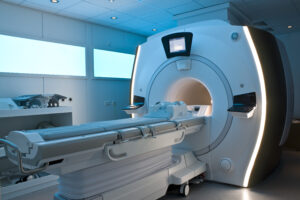
Medical physics is a specialized field where physics intersects with healthcare technologies like MRI, CT scans, and radiation therapy. Master’s graduates often work in clinical settings to ensure the safe and effective operation of medical equipment, playing a vital role in advancing diagnostic and therapeutic techniques.
Emerging Fields: Renewable Energy and Aerospace
The growing emphasis on sustainable energy solutions has opened new avenues for physicists in renewable energy sectors. Their knowledge of thermodynamics and fluid dynamics is crucial in developing technologies such as solar panels, wind turbines, and advanced battery systems, supporting the global shift toward cleaner energy sources.
In aerospace, physicists apply aerodynamic theories, materials science, and computational fluid dynamics to the design and analysis of aircraft and spacecraft. Their contributions span research, development, and system evaluation, driving innovations in transportation and space exploration.
Defense, Security, and Entrepreneurship
National defense and security agencies also rely on physicists for developing advanced technologies including radar, satellite communications, and cybersecurity solutions. The analytical rigor cultivated through physics education is essential for addressing complex security challenges.
Additionally, many physics graduates channel their skills into entrepreneurship, founding startups that focus on technological innovation and scientific advancements. By transforming theoretical knowledge into practical applications, they stimulate economic growth and technological progress.
Why a Master’s in Physics is Valuable
The comprehensive training provided by a Master’s degree in Physics fosters a versatile skill set that is applicable across numerous industries. Graduates are equipped to adapt to evolving scientific and technological landscapes, contribute to meaningful research, and drive innovation. Their ability to analyze complex problems and develop solutions positions them as key contributors to advancements in science, technology, and society.
Summary
In essence, earning a Master’s degree in Physics opens doors to a wide array of professional opportunities spanning academia, industry, healthcare, renewable energy, aerospace, defense, and entrepreneurship. The advanced knowledge and skills gained empower graduates to excel in diverse roles, engage in impactful research, and lead technological innovations that address contemporary challenges and shape the future.
FAQ
What types of jobs can I get with a Master's in Physics?
Graduates can work in academia, industry, healthcare, renewable energy, and aerospace, among other fields.
Is a Master's in Physics worth it?
Yes, it provides advanced knowledge and skills that open up a wide range of professional opportunities.




Leave a Reply