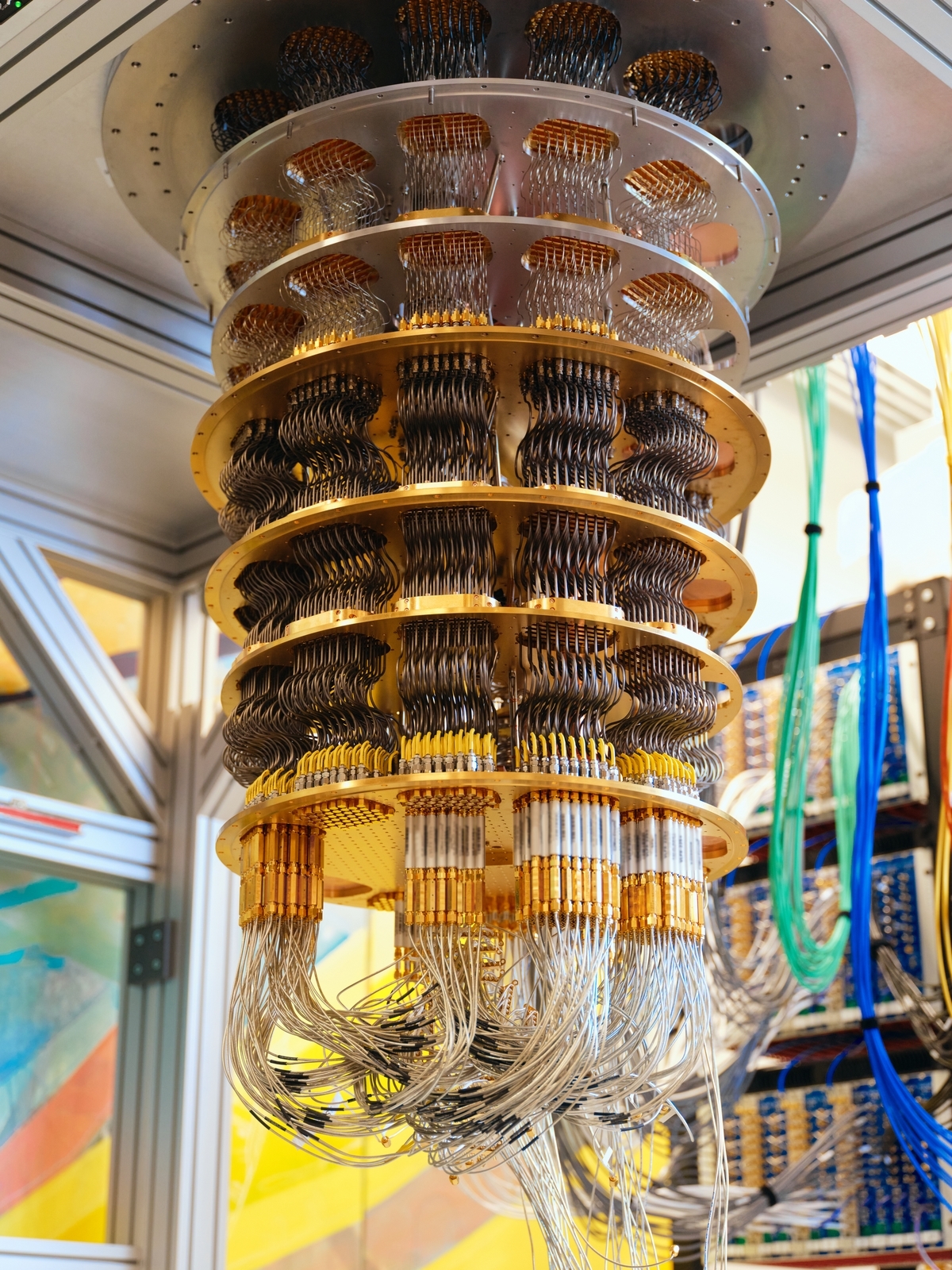
Is there a quantum computer up and running?

Definition of Quantum Computing Quantum computing represents a groundbreaking shift in computational technology, leveraging the principles of quantum mechanics to process information in fundamentally new ways. Unlike classical computers that use bits as the smallest unit of data, quantum computers utilize quantum bits, or qubits, which can exist in multiple states simultaneously. This capability enables […]

Read More →

Is a quantum computer in a Bose-Einstein state (BEC)?

Definition of Bose-Einstein Condensate and Quantum Computing Quantum computing signifies a revolutionary shift in computational methods, merging principles from quantum mechanics with computer science. Central to this field is the concept of quantum states, which underpin the operation of quantum computers. A Bose-Einstein Condensate (BEC) is a distinct state of matter formed when bosonic particles […]

Read More →

What is the strongest quantum computer in the world?

Understanding Quantum Computing Quantum computing represents a revolutionary shift in how information is processed, leveraging the principles of quantum mechanics to perform calculations far beyond the reach of classical computers. Unlike traditional bits that exist strictly as 0s or 1s, quantum bits, or qubits, can exist in multiple states simultaneously due to superposition. This unique […]

Read More →

Is a quantum computer just a fast computer?

Understanding Quantum Computing At first glance, quantum computers might appear to be simply faster versions of traditional classical computers. However, this superficial comparison overlooks the profound differences that define these two computational frameworks. To truly grasp the essence of quantum computing and how it contrasts with classical computing, it is essential to delve into their […]

Read More →

Is a quantum computer in a Bose-Einstein state (BEC)?

Definition of Bose-Einstein Condensate and Quantum Computing Bose-Einstein condensate (BEC) is a state of matter formed when bosons-particles that follow Bose-Einstein statistics-are cooled to temperatures near absolute zero, causing them to occupy the same quantum state. This phenomenon, first theorized by Satyendra Nath Bose and Albert Einstein, results in macroscopic quantum effects such as superfluidity […]

Read More →

How can a large scale quantum computer be built?

Definition of Large-Scale Quantum Computing Large-scale quantum computing refers to the development and operation of quantum computers that utilize thousands to millions of quantum bits (qubits) to perform computations far beyond the capabilities of classical supercomputers. These advanced machines harness the principles of quantum mechanics to process information in fundamentally new ways, promising breakthroughs in […]

Read More →

Can a quantum computer produce a brain?

Understanding the Intersection of Quantum Computing and the Brain The convergence of quantum computing and neuroscience sparks profound intrigue, especially when pondering the question: “Is it possible for a quantum computer to create a brain?” This query transcends a simple thought experiment, touching on deep philosophical and scientific themes related to consciousness, cognition, and computational […]

Read More →

Why is it so hard to make a quantum computer?

Understanding Quantum Computing Quantum computing represents a cutting-edge intersection of physics and computer science, poised to transform our approach to computation. Despite its promising potential, the development of a fully operational quantum computer remains a formidable challenge. This difficulty stems from the complex principles of quantum mechanics and numerous practical obstacles. Exploring these challenges sheds […]

Read More →

Does the quantum computer exist today?

Understanding Quantum Computing Quantum computing represents a revolutionary approach to processing information, grounded in the principles of quantum mechanics-the branch of physics that describes the behavior of particles at the atomic and subatomic levels. Unlike traditional computers that use bits as the smallest unit of data, quantum computers operate with quantum bits, or qubits. These […]

Read More →

How Quantum computer works – TechnoGlobal?

Definition of Quantum Computing Quantum computing is an innovative computational approach that harnesses the principles of quantum mechanics to process information in ways fundamentally distinct from classical computing. By utilizing quantum phenomena such as superposition and entanglement, quantum computers can perform complex calculations more efficiently, potentially transforming various scientific and technological fields. Fundamental Concepts of […]

Read More →