Earth’s Hum Reveals Hidden Depths: Listening to the Planet’s Whisper

Definition of Earth’s Hum Earth’s hum refers to the continuous, low-frequency vibrations that emanate from our planet, creating a subtle yet persistent background resonance. Unlike the sharp sounds produced by earthquakes or volcanic eruptions, this hum is a faint, ongoing oscillation generated by natural geophysical processes. It represents a complex symphony of seismic waves that […]

Read More →

Physics Grand Challenges for the U.S.

Overview of Contemporary Physics Challenges in the United States Physics, a field rich with complex and often perplexing phenomena, continuously pushes the boundaries of human knowledge and challenges established scientific doctrines. The United States, as a leader in scientific innovation, faces a series of profound challenges within physics that not only require resolution but also […]

Read More →

Ghostly Gamma Rays: Faint Bursts at the Edge of Space

Definition of Gamma Rays Gamma rays represent the highest-energy segment of the electromagnetic spectrum, characterized by their extremely short wavelengths and immense penetrating power. These rays are a form of ionizing radiation, capable of traversing vast cosmic distances and providing critical information about some of the universe’s most violent and energetic events. Energy Range: Gamma […]

Read More →

Falling for Science: Rethinking Gravity’s Simple Truths

Understanding Gravity: A Fundamental Force Gravity is a universal force that influences the movement of objects both on Earth and throughout the cosmos. Despite its everyday presence and seemingly straightforward nature, gravity encompasses a complex array of scientific principles that merit detailed exploration. This article, titled “Falling for Science: Rethinking Gravity’s Simple Truths,” aims to […]

Read More →

Frogs Turn to Physics: The Science of a Leap

Definition The leap of a frog represents a fascinating intersection of biological design and physical laws. It is a complex movement that showcases evolutionary adaptations and fundamental principles of mechanics, illustrating how living organisms harness energy and force to achieve remarkable feats of motion. Biological Aspect: The leap is powered by specialized muscles and anatomical […]

Read More →

The Proton’s Spin: Gluons Get In On the Action

Understanding Proton Spin The spin of the proton remains one of the most captivating puzzles in particle physics. While protons are well-known as essential building blocks of atomic nuclei, their intrinsic angular momentum-referred to as spin-is far from a simple characteristic. Instead, it embodies a complex interplay of the fundamental particles residing within the proton. […]

Read More →

Multiple Cosmic Impacts: Earth’s History Written in Craters

Definition of Cosmic Impacts on Earth Cosmic impacts refer to collisions between Earth and extraterrestrial objects such as meteoroids, asteroids, and comets. These high-energy events leave distinct marks on the planet’s surface, known as impact craters, which serve as geological records of Earth’s interactions with the wider cosmos. These craters are not only physical imprints […]

Read More →

Time Dilation vs Quantum Superposition: Can Both Exist?

Definition of Time Dilation and Quantum Superposition Time dilation and quantum superposition are two fundamental yet distinct phenomena that reveal the intricate workings of the universe. Time dilation, rooted in Einstein’s theory of relativity, describes how time is not an absolute constant but varies depending on relative motion and gravitational influence. Quantum superposition, a key […]

Read More →

Fractional Charge: A Mind-Bending Discovery

Definition of Fractional Charge Fractional charge refers to the phenomenon where particles exhibit electric charges that are fractions of the elementary charge, rather than whole integer multiples. Traditionally, electric charge is understood as quantized in units of the elementary charge, such as those carried by electrons and protons. However, fractional charge challenges this notion by […]

Read More →

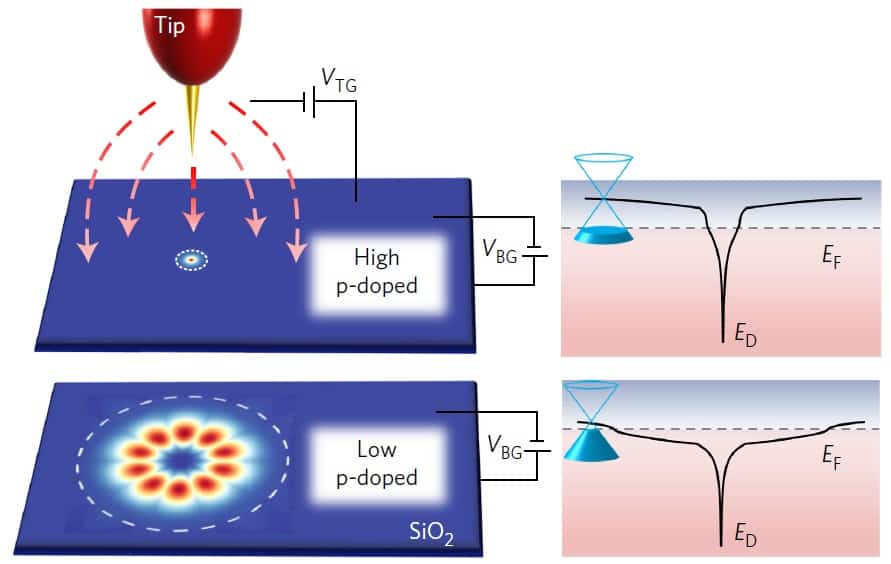
Quantum Eyeglass: Electrons Zoom in on Single Atoms

Definition of Quantum Eyeglass The Quantum Eyeglass is an advanced technological instrument designed to observe, control, and interact with electrons at the scale of individual atoms. Rooted in the principles of quantum physics, this device transcends traditional optical limitations, enabling scientists to explore atomic and subatomic phenomena with unprecedented clarity. It represents a significant leap […]

Read More →