
Short Answer
Understanding Sunlight in Outer Space
Envision the Sun as a gigantic cosmic beacon, its radiant light piercing the infinite darkness of space. On Earth, we are familiar with sunlight gently filtering through our atmosphere, casting warm tones of gold, amber, and blue across the landscape. However, beyond the protective layer of our atmosphere, the nature of sunlight’s visibility transforms dramatically, raising the question: can sunlight be seen in the vast emptiness of outer space?
Definition and Nature of Sunlight
Sunlight consists of countless photons-tiny packets of electromagnetic energy-that travel at an astonishing speed of approximately 186,282 miles per second. These photons journey across the cosmos, carrying the energy that sustains life on Earth. The way we perceive sunlight depends heavily on the medium through which it passes.
- On Earth:
The atmosphere acts as a filter and diffuser, scattering shorter wavelengths of light. This scattering produces the blue sky during the day and the vibrant reds and purples of sunrise and sunset. - In Space:
The absence of an atmosphere means there is no scattering. Sunlight travels as a direct, intense beam, unsoftened and sharply defined.
How Sunlight Appears in the Vacuum of Space
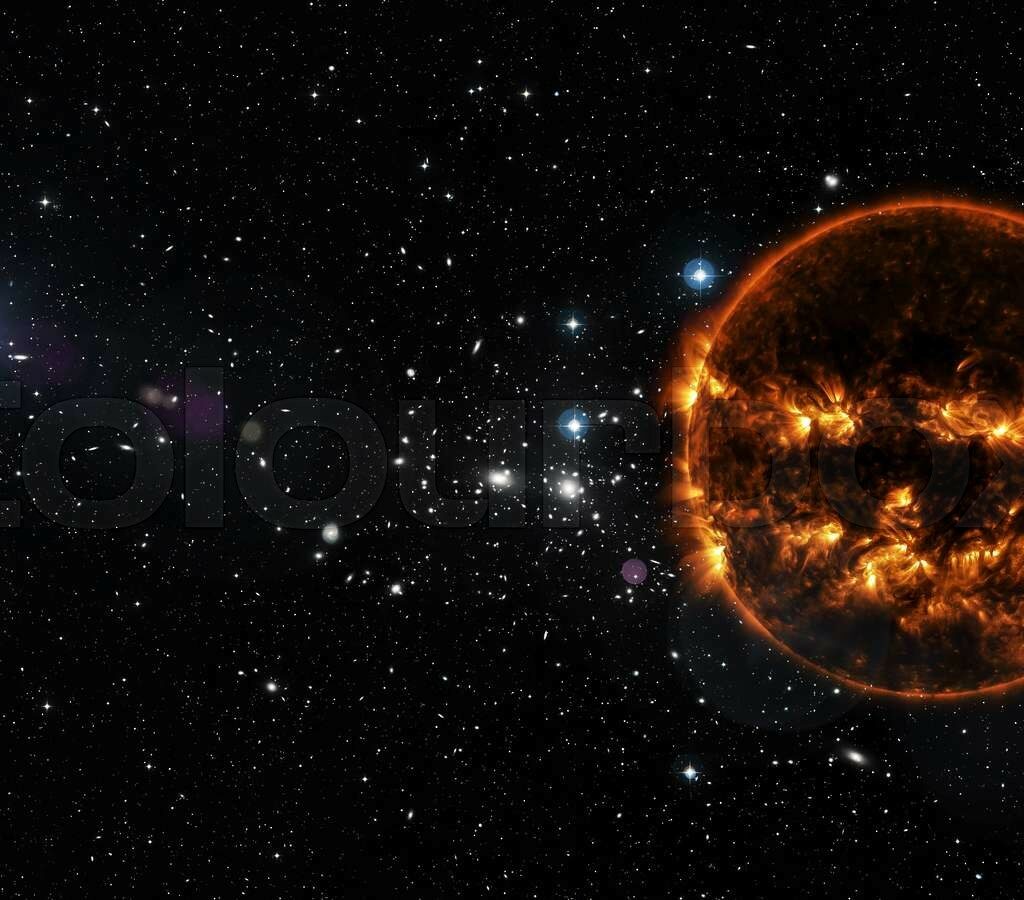
Without atmospheric particles to scatter light, the Sun in space is seen as a brilliant, sharply outlined sphere of intense brightness. Astronauts observing the Sun from orbit describe it as a dazzling, unwavering orb, lacking the soft glow or halo familiar to terrestrial observers. The surrounding space remains pitch black because there is no medium to reflect or diffuse the sunlight.
Visibility of Sunlight Beyond the Sun Itself
While the Sun itself is vividly visible, sunlight traveling through the vacuum of space is invisible unless it interacts with matter. Light requires particles-such as dust, gas, or surfaces-to scatter or reflect photons, making the light perceptible to the human eye. This explains why the vast expanse of space appears predominantly dark despite the Sun’s powerful illumination.
Interaction of Sunlight with Celestial Objects
Sunlight becomes visible in space primarily through its interaction with other bodies:
- Planets and Moons:
These bodies reflect sunlight, allowing us to see them as bright objects against the dark backdrop of space. - Space Dust and Comets:
Dust particles and cometary comas scatter sunlight, creating visible glows and tails. - Auroras:
On Earth and other planets, charged particles energized by solar radiation interact with magnetic fields, producing luminous auroras that extend into space.
Experiencing Sunlight During Spacewalks
Astronauts venturing outside their spacecraft encounter a striking contrast: the Sun shines with blinding intensity, while the surrounding void remains an absolute black. This stark difference highlights the absence of atmospheric diffusion and the directness of sunlight in space. The illuminated surfaces of spacecraft glow fiercely, while shadows plunge into deep darkness, creating a dramatic chiaroscuro effect.
Scientific and Technological Insights
Modern technology has enabled us to capture the Sun’s raw power in exquisite detail. Space probes and satellites reveal the Sun’s corona, solar flares, and the subtle illumination of planetary atmospheres. These observations confirm that sunlight in space is a concentrated beam of energy, visible only where it strikes matter, leaving the rest of the cosmos enveloped in darkness.
Common Misconceptions About Sunlight in Space
Space is filled with ambient sunlight like on Earth.
Without an atmosphere, there is no scattering of light, so space appears mostly dark except where sunlight directly illuminates objects.
The Sun’s light dims in space.
The Sun’s brightness remains intense and unfiltered in space, often appearing even more brilliant than from Earth.
Why Understanding Sunlight in Space Is Important
Recognizing how sunlight behaves in the vacuum of space is crucial for astronomy, space exploration, and understanding the fundamental interactions between light and matter. It informs the design of spacecraft, the safety of astronauts, and the interpretation of celestial observations. Moreover, it deepens our appreciation of the Sun’s role as a solitary, powerful source of energy illuminating the vast cosmic arena.
Summary: The Duality of Light and Darkness in Space
Sunlight in outer space presents a unique phenomenon: a fiercely bright, sharply defined source of illumination set against an immense, silent void. Unlike the diffuse glow experienced on Earth, sunlight in space is visible only where it directly contacts matter, creating a haunting interplay of light and shadow. This duality underscores the profound relationship between radiant energy and the emptiness of the cosmos, inviting reflection on the nature of visibility and the grandeur of our star’s unfiltered brilliance.
FAQ
Can sunlight be seen in outer space?
Yes, but it is only visible when it interacts with matter; otherwise, space appears dark.
What happens to sunlight in space?
In space, sunlight travels as a direct beam without scattering, making it appear intense and unfiltered.


Leave a Reply